How to Get Into Deerfield Academy: Acceptance Rate, College Matriculation, and Admission Strategy
By Rona Aydin
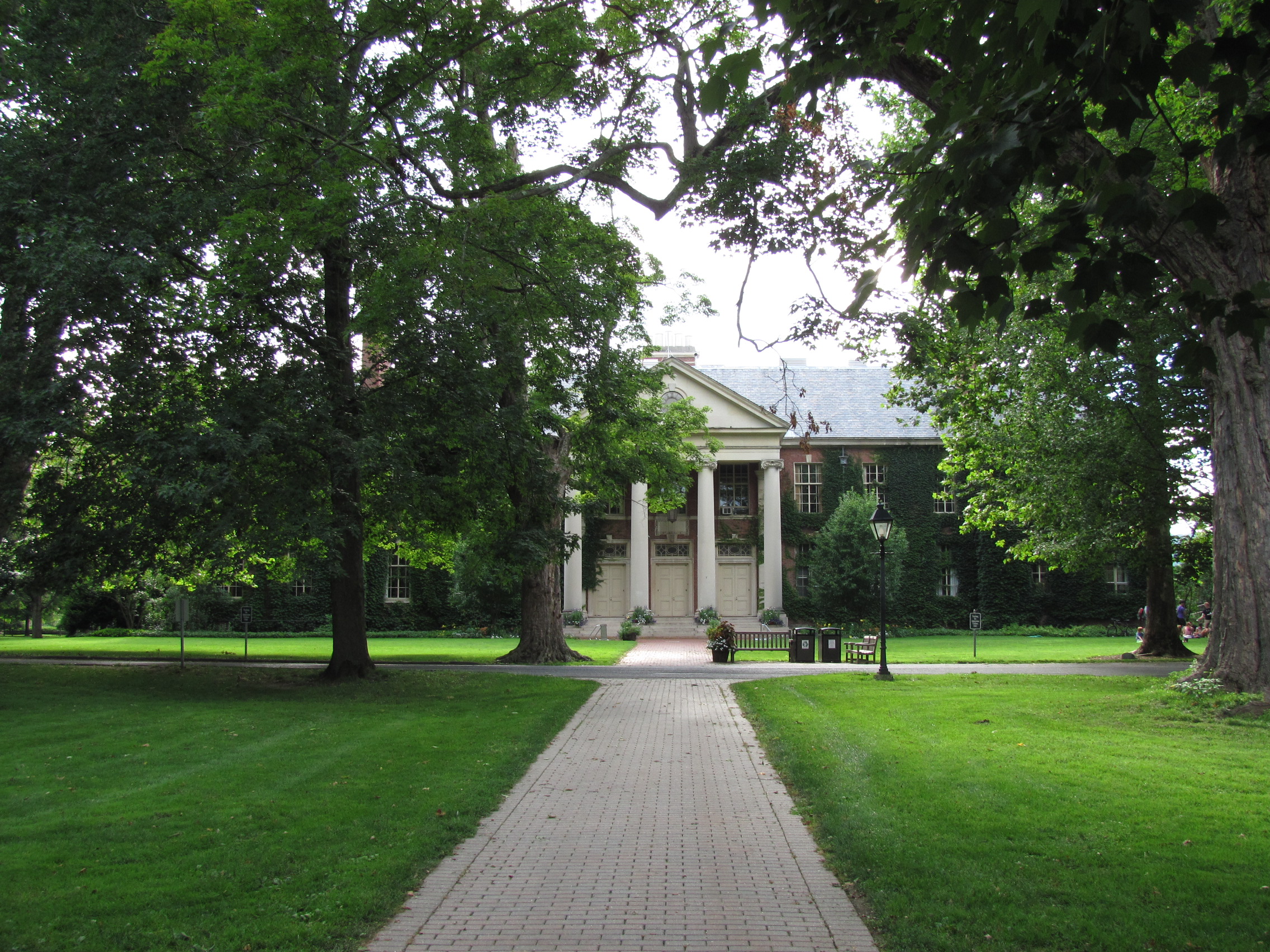
TL;DR: Deerfield Academy’s acceptance rate is approximately 17% (Deerfield Office of Admission; institutional reporting 2024-25), placing it among the most selective independent boarding schools in the United States. Founded in 1797, Deerfield is one of the oldest secondary schools in the country, located on a rural 450-acre campus in the historic village of Deerfield, Massachusetts. The academy enrolls approximately 649 students across grades 9-12 plus a postgraduate year. Boarding tuition for 2024-25 is approximately $74,440. Deerfield is a member of the Eight Schools Association, the Ten Schools Admission Organization, and the Six Schools League athletic conference. The school is known for its sit-down family-style meals, intentional traditional culture, and strong matriculation to Harvard, Yale, and elite peer universities. For families navigating Deerfield admission strategy or planning college applications during the Deerfield years, schedule a consultation with Oriel Admissions.
What is Deerfield Academy’s acceptance rate?
Deerfield Academy’s acceptance rate is approximately 17% in recent cycles (Deerfield Office of Admission; institutional reporting 2024-25). Deerfield admits approximately 175-200 new students per year from an applicant pool that exceeds 1,500 candidates, with heaviest competition at the freshman entry point. The school’s acceptance rate places it squarely among the most selective boarding schools in the United States, alongside Phillips Exeter Academy, Phillips Andover, Choate Rosemary Hall, Hotchkiss, and St. Paul’s.
Strong applicants present academic profiles in the top 5-10% of their middle school class, standardized test scores at or above the 90th percentile on the SSAT or ISEE, two to three teacher recommendations, a student essay, parent statement, and admission interview. Deerfield places particular weight on character and demonstrated commitment to community, reflecting the school’s distinctive culture: students attend sit-down family-style meals, follow an academic dress code (blazers and ties or equivalents), and participate in traditions that bind the residential community.
Where do Deerfield graduates matriculate to college?
Deerfield’s college matriculation outcomes rank among the strongest at any US secondary school. Recent matriculation data shows substantial enrollment at Harvard, Yale, Princeton, Stanford, MIT, and the elite non-Ivies (Stanford, MIT, Caltech, Duke, Northwestern, Johns Hopkins, Vanderbilt, Rice, Carnegie Mellon, WashU, Notre Dame). The five-year matriculation list also includes top liberal arts colleges (Williams, Amherst, Pomona, Swarthmore, Bowdoin, Middlebury) and elite public flagships (UVA, UC Berkeley, University of Michigan, UNC Chapel Hill, UT Austin).
Deerfield notable alumni include King Abdullah II of Jordan, Senator John McCain, financier Henry Kravis, baseball commissioner Bart Giamatti, and many others. The academy’s rural Massachusetts location (90 miles west of Boston, accessible from Hartford and Springfield) creates a distinctive residential community culture that admissions officers at top universities recognize. For broader context on elite US universities’ acceptance rates, see our Ivy League acceptance rates analysis.
| Matriculation Tier | Approx. Share of Class | Representative Schools |
|---|---|---|
| Harvard, Yale, Princeton, Stanford, MIT (HYPSM) | Substantial | Harvard, Yale, Princeton, Stanford, MIT |
| Top-25 US Universities | Substantial | Penn, Brown, Cornell, Dartmouth, Columbia, Duke, Northwestern, Johns Hopkins, Caltech |
| Top-50 US Universities | Substantial | Vanderbilt, Rice, Carnegie Mellon, WashU, Notre Dame, UVA, UCLA, UC Berkeley, Michigan, UNC |
| Elite Liberal Arts Colleges | Substantial | Williams, Amherst, Pomona, Swarthmore, Bowdoin, Middlebury, Wellesley |
Source: Deerfield College Counseling Office published matriculation data; institutional reporting via boarding school admissions aggregators 2024-25.
What does it cost to attend Deerfield Academy?
Deerfield Academy’s 2024-25 boarding tuition is approximately $74,440, with day tuition lower (Deerfield Business Office published rates). Additional costs include textbooks, personal expenses, optional off-campus study programs, athletic equipment, and senior-year college application costs. Total cost of attendance for boarding students approaches $77,000-$79,000 per year before financial aid. Deerfield’s tuition is competitive with peer Ten Schools members and slightly below Phillips Andover ($76,731 boarding) and Hill School ($78,300 boarding).
Deerfield operates one of the most generous financial aid programs in US secondary education. Beginning in the 2025-26 school year, the academy announced that U.S. families with household incomes under $150,000 pay zero tuition, and families earning above $150,000 pay no more than 10% of their verified income in tuition and fees per child (Deerfield Academy Office of Admission; Greenfield Recorder September 2024). The Wall Street Journal noted that the $150,000 threshold is nearly double the median U.S. household income. The initiative is open to U.S. families with two years of verifiable W-2 income and assets consistent with their income profile.
Approximately 39% of Deerfield students receive financial aid, with the average boarding grant covering approximately 82% of total tuition (Deerfield Academy 2024-25 School Profile). The fiscal year 2026 financial aid budget is $15.9 million, a 6% increase to support the new income-tiered initiative. Deerfield commits to meeting 100% of demonstrated financial need for admitted families. Although the new policy does not apply to international students, the academy commits to meet 100% of an admitted international student’s demonstrated financial need.
What makes Deerfield distinctive among elite boarding schools?
Three institutional features distinguish Deerfield Academy from peer boarding schools. First, the 450-acre rural campus in the historic village of Deerfield, Massachusetts – one of the oldest continuously inhabited villages in New England, with colonial-era buildings that integrate seamlessly with the academy’s 18th and 19th century architecture. Second, the academic dress code: all students wear blazers or sportscoats with collared shirts, and boys wear neckties, reflecting Deerfield’s commitment to traditional residential school culture.
Third, the sit-down family-style meal program: students and faculty gather for required seated meals throughout the week, creating the kind of substantive cross-class and cross-faculty conversations that build the close community Deerfield is known for. The academy’s Six Schools League athletic rivalries (with Phillips Andover, Phillips Exeter, Choate, Hotchkiss, and Taft) provide structured competitive athletics. Deerfield’s identity as a member of the Eight Schools Association and Ten Schools Admission Organization positions it within the elite Northeast boarding school peer set. For families weighing the broader value of elite educational pathways, see our ROI analysis on elite education.
When and how should families apply to Deerfield?
The Deerfield application timeline runs on a defined annual cycle. The application deadline is typically January 15 for entry in September that year. Deerfield accepts the Gateway to Prep School Application (recommended) or the Standard Application Online (SAO). Required materials include school transcripts from the current and prior two academic years, SSAT or ISEE standardized test scores (TOEFL accepted for international students), two to three teacher recommendations, a student essay, parent statement, and admission interview.
Interviews can be conducted on campus, virtually, or with Deerfield representatives in major metropolitan areas. On-campus interviews are strongly preferred and pair with a campus tour through Deerfield’s historic village. Decisions are typically released on March 10. Most Deerfield applicants are also applying to Phillips Exeter, Phillips Andover, Choate, Hotchkiss, and Lawrenceville; the strategic baseline for affluent families pursuing elite boarding schools is to apply to 4-8 schools across selectivity tiers.
How does Deerfield compare to other Ten Schools peers?
Deerfield (649 students) sits in the mid-range of Ten Schools enrollment – smaller than Phillips Exeter, Phillips Andover, Lawrenceville, and Choate (all 800+) but larger than Hotchkiss, St. Paul’s, Hill, and Taft (each 540-700). The 17% acceptance rate is competitive with peer schools. Tuition at approximately $74,440 boarding sits in the middle of Ten Schools peer tuitions, below Phillips Andover, Hill, and Taft but above Phillips Exeter ($69,537) and Choate ($69,370).
Deerfield’s most distinctive comparative position among Ten Schools peers is its commitment to traditional residential school culture: the academic dress code, sit-down family meals, and intentional cultivation of community traditions distinguish Deerfield from more academically progressive peers. The 450-acre rural campus in historic Deerfield village offers a different residential experience than the more urban-adjacent campuses of Phillips Exeter (50 min from Boston) and Phillips Andover (21 miles from Boston).
How does Deerfield prepare students for elite college admissions?
Deerfield’s College Counseling Office is among the strongest in US secondary education, with established relationships at virtually every selective US university. Each senior is assigned a college counselor in junior year who works closely with the family through the application process. Deerfield students benefit from intentional course rigor design: rigorous core academic disciplines, substantive AP-level or equivalent depth in chosen interest areas, and strong arts or athletics commitments that round out the application file.
Selective university admissions officers read Deerfield applications in the context of historical Deerfield cohorts and current applicant pool strength. Students who pursue the most rigorous coursework, engage substantively with the residential community, and develop strong relationships with faculty for recommendation letters tend to compete strongly against peer applicants from feeder secondary schools. For families seeking additional strategic support that complements the school’s College Counseling Office, independent advising from Oriel Admissions can supplement what Deerfield provides. For school-list construction principles, see our reach, match, and safety school guide.
What does the day student experience at Deerfield look like?
Deerfield enrolls a smaller day-student population than peer schools, primarily from the Deerfield, Greenfield, South Deerfield, and broader Pioneer Valley region of western Massachusetts, with some commuting from Northampton and Amherst metro areas. Day students participate fully in academic and co-curricular life and have access to athletics, arts, clubs, and the school’s programming. The day-student population is smaller than at urban-adjacent peer schools because of Deerfield’s rural location.
The trade-off for day students is reduced immersion in the residential community that defines much of the Deerfield experience. Dorm life, evening dining hall conversations, weekend campus activity, and informal Six Schools League athletic events are central to how Deerfield builds peer and faculty relationships. The strongest day-student outcomes typically involve active engagement with weekend programming, athletics, and frequent campus presence outside required class time.
Frequently Asked Questions About Deerfield Academy
Yes; Deerfield Academy is coeducational, enrolling both young men and women, though it has a long history that included periods as a boys’ school before fully transitioning to coeducation. Today it offers a coed boarding and day experience. Families researching the school should know it educates all genders together across academics, athletics, and residential life, so the historic single-sex reputation no longer reflects the current student body or campus culture.
No; Deerfield Academy is a nonsectarian, secular school with no formal religious affiliation or required worship, welcoming students of all faiths and backgrounds. While it has historic New England roots, it does not impose any particular religious practice. Families of any belief or none can attend comfortably, so the school’s traditions reflect its prep-school heritage and values rather than a specific religious identity or doctrinal requirement for students.
Deerfield maintains a low student-faculty ratio typical of elite boarding schools, supporting small, discussion-based classes and close mentorship between teachers and students. Exact figures shift year to year, but the intimate scale is central to the experience. Families should expect classes far smaller than at most public high schools, with significant individual attention, which is one of the core advantages families weigh when considering the substantial cost of a school like Deerfield.
Yes; as a residential boarding school, many Deerfield faculty live on campus, often in or near the dormitories, serving as dorm parents, coaches, and mentors in addition to teaching. This immersive model means adults are closely involved in students’ daily lives beyond the classroom. Families considering boarding should understand this round-the-clock faculty presence is fundamental to the structure, support, and supervision that define the residential experience at schools like Deerfield.
Like many elite boarding schools, Deerfield sets expectations around phone and device use to protect focus, community, and residential life, with specific rules that can evolve over time. Policies often limit devices during classes, study hours, or meals. Because these guidelines change and matter to many families, parents should confirm the current technology and phone policy directly with the school, since approaches to student device use at boarding schools continue to develop.
Yes; like its peer schools, Deerfield includes world language study as part of its graduation expectations, offering several languages and encouraging sustained study toward proficiency. The specific number of years required and languages offered can change. Families should review the current curriculum and graduation requirements with the school, but students should expect meaningful language study to be a standard component of the rigorous college-preparatory program Deerfield provides.
Deerfield, like many elite boarding schools, emphasizes character, integrity, and community standards, typically articulated through stated expectations or an honor principle that governs academic honesty and conduct. The exact form and name can vary. Families should ask the school about its specific standards and disciplinary philosophy, since these values shape daily life and how the community responds to lapses, and they reflect the kind of environment Deerfield aims to cultivate.
Many elite boarding schools encourage or expect some form of service and community engagement, and Deerfield emphasizes contribution to its community and beyond, though whether a fixed number of service hours is formally mandated can vary. Service often features prominently in school life regardless. Families interested in this aspect should confirm the current expectations with the school, since the emphasis on service reflects the values these institutions seek to instill in students.
Sources: Deerfield Academy Office of Admission; Wikipedia institutional history; Boarding School Review profile; National Center for Education Statistics; Gateway to Prep School Application; Ten Schools Admission Organization.
About Oriel Admissions
Oriel Admissions is a Princeton-based college admissions consulting firm advising families nationwide on elite university admissions strategy. Our team brings deep expertise across every dimension of the application, and our distinctive 360 approach develops strategy, positioning, activities, essays, and interviews as one coherent whole. To discuss your family’s admissions strategy, schedule a consultation.