AI Major vs Computer Science: What an Artificial Intelligence Degree Covers and Who Should Choose It
By Rona Aydin
What Is an AI Major?
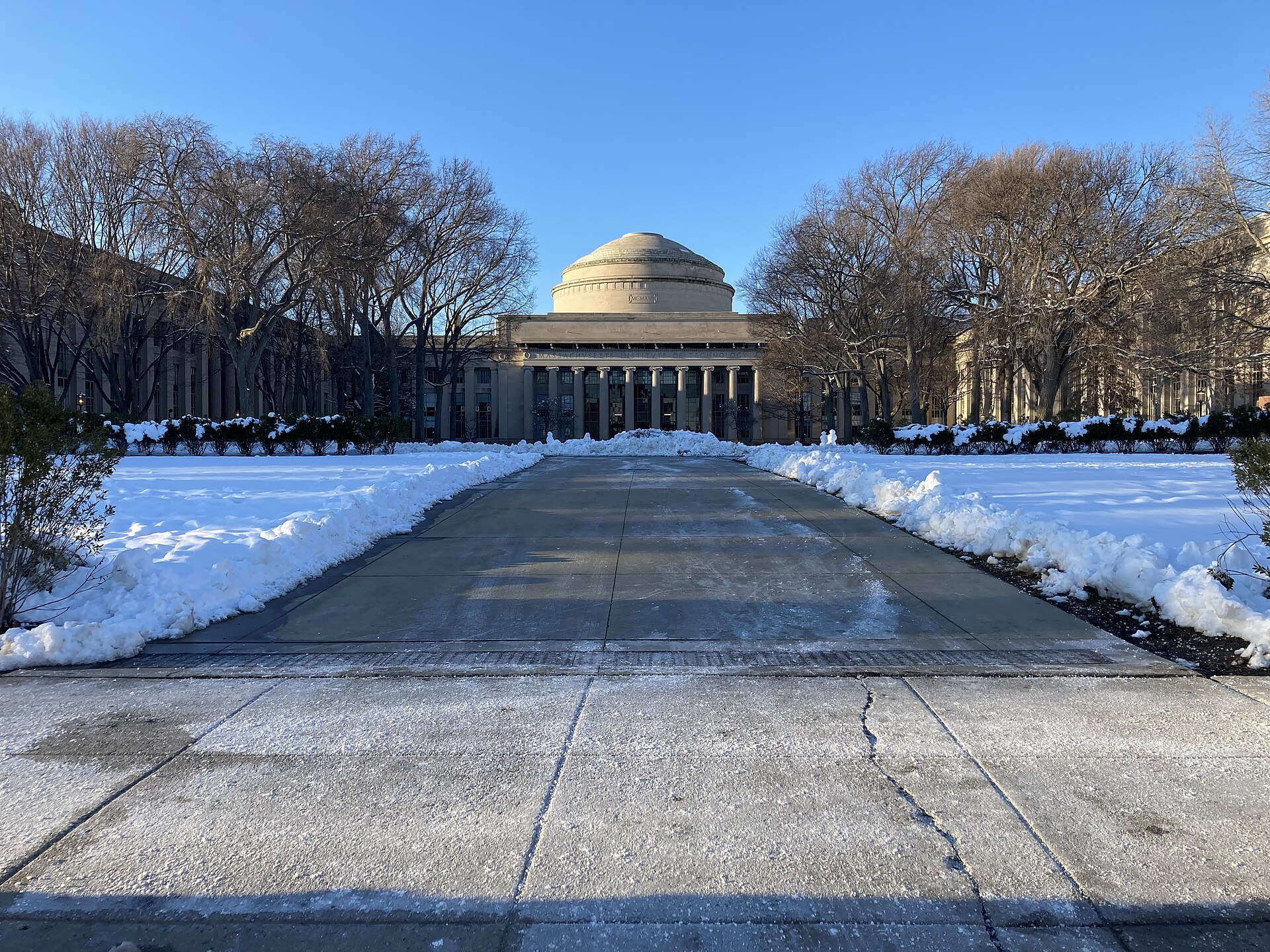
An AI major is a bachelor’s degree in which artificial intelligence is the field of study, not an elective area inside another degree. Carnegie Mellon introduced its degree in fall 2018 and describes it as the nation’s first. MIT students have been able to declare Course 6-4, Artificial Intelligence and Decision Making, since fall 2022. Penn Engineering announced what it called the first such degree in the Ivy League on February 13, 2024, and Northwestern and USC enroll their first cohorts in fall 2026.
The degrees have a common shape. Penn describes its program as providing the mathematical and algorithmic foundations of AI techniques along with hands-on experience in programming and in using AI tools and foundation models. Carnegie Mellon describes a curriculum in computer science, mathematics, statistics, computational modeling, machine learning, and symbolic computation, with required coursework in ethics and social responsibility.
How Is an AI Major Different From a Computer Science Major?
Carnegie Mellon is the clearest case because both degrees sit in the same school and the program’s own FAQ compares them directly.
| Requirement | Computer science at Carnegie Mellon | Artificial intelligence at Carnegie Mellon |
|---|---|---|
| Computing core | Five core courses in programming, data structures, systems, and theory | The same five core courses |
| Course that differs | Algorithm design and analysis | An additional statistics course |
| Depth requirement | A minor or concentration | Three core courses in artificial intelligence |
| Electives | Four in the subject area, plus two school-wide electives | Four AI cluster electives, plus two school-wide electives |
| Ethics and communication | A technical communications course, with a choice that covers ethics | A required ethics course |
| Major printed on the diploma | Computer Science | Artificial Intelligence |
The same FAQ adds that all majors in the School of Computer Science have equal priority for enrollment in the school’s courses. A computer science student there can take the same machine learning classes as a student in the AI program. What changes is what is required and what is optional.
At Penn the contrast is wider because the AI degree draws on two departments. The six-unit AI core requires at least one course in each of six categories: introduction to AI, machine learning, signals and systems, optimization and control, vision and language, and an AI project. Signals, control, and optimization come from electrical and systems engineering, and a computer science student would not normally be required to take them.
| Area of the Penn BSE in Artificial Intelligence | Course units |
|---|---|
| Mathematics and natural science | 7 |
| Computing | 5 |
| AI core | 6 |
| AI electives | 6 |
| Senior design | 2 |
| Technical electives | 3 |
| General electives, including one AI ethics course and one cognitive science course | 8 |
| Total | 37 |
MIT frames its degree around decision making. Course 6-4 requires three mathematics subjects, two foundation subjects, and five Center subjects, and a student’s subjects must together cover data-centric, model-centric, decision-centric, computation-centric, and human-centric areas.
Which Colleges Offer the Degree?
Oriel Admissions counts at least seven selective universities that now grant the degree, and they differ in how a student enters.
| University | Degree | First offered | When the major is chosen |
|---|---|---|---|
| Carnegie Mellon | BS in Artificial Intelligence | Fall 2018 | Spring of the first year, after admission to the School of Computer Science |
| MIT | SB in Artificial Intelligence and Decision Making (Course 6-4) | Fall 2022 | After enrolling; MIT admits to the university, not to a major |
| Penn | BSE in Artificial Intelligence | Fall 2024 | On the application to Penn Engineering |
| UC San Diego | BS Artificial Intelligence | Fall 2025 curriculum is the earliest posted | On the application; no internal switches in for 2026-2027 |
| Northwestern | BSE with a major in AI | Fall 2026 | After enrolling, by change of major form |
| USC | BS in Artificial Intelligence | Fall 2026 | On the Common Application |
| Purdue | BS and BA in Artificial Intelligence | In the current catalog | The BS is listed by Purdue Admissions as a major to apply to |
Can a Student Study AI Inside a Computer Science Degree?
Yes, and at several leading departments it is the only way. Stanford offers a BS in Computer Science with an Artificial Intelligence subplan. Georgia Tech builds its computer science degree from nine Threads, of which Artificial Intelligence is one, and each student selects two. UC Berkeley lists computer science, data science, and statistics as the undergraduate majors of its College of Computing, Data Science, and Society, with artificial intelligence taught inside computer science.
Universities that do have the degree usually offer smaller commitments as well. Carnegie Mellon has supported an AI minor and an additional major, open to students from any primary major, since spring 2022. Northwestern lets students in any of its schools add AI as a second major. Our guide to the best colleges for computer science covers the programs where AI is reached through the computer science degree, and the comparison of Stanford and MIT shows two different structures side by side.
Is an AI Major Harder to Get Into Than Computer Science?
None of the program pages gives a separate acceptance rate for the degree, so the answer depends on the door. At Carnegie Mellon there is one door: every applicant applies to the School of Computer Science, and the choice between computer science and AI comes in the spring of the first year. The program says it has admitted anywhere from 35 to 50 new AI majors in the past and has not turned anyone down to date, while reserving the right to cap the number.
At Penn, an applicant to Penn Engineering can declare the AI major on the application. At UC San Diego the door is narrower: only students admitted directly to the major may study it in 2026-2027, and the department will not approve switches from its other computing majors. Our guide to computer science admission structures explains why the structure, not the name of the major, drives the odds, and our data on acceptance rates by major shows the size of the gap.
Does the Name of the Major Matter After Graduation?
There is little outcome data yet, because the first Ivy League cohort that applied to an AI major as high school students entered in fall 2025. Two things are documented. Carnegie Mellon tells its AI students that the degree shows Artificial Intelligence, not Computer Science, as the major, and that they will need to make clear on a resume which degree they hold because it is new. And the Bureau of Labor Statistics lists a master’s degree as the typical entry-level education for computer and information research scientists, the occupation closest to AI research, with a 2025 median pay of $140,300 and projected growth of 22% from 2025 to 2035.
Student demand is moving toward the new degrees. In a Computing Research Association survey in fall 2025, 62% of responding departments reported falling bachelor’s enrollment across their computing programs, while a higher proportion of departments reported increases in artificial intelligence, data science, cybersecurity, and computer engineering majors than in computer science.
Who Should Choose an AI Major and Who Should Choose Computer Science?
An AI major suits a student who already knows that machine learning is the goal and who enjoys statistics and continuous mathematics. The required coursework leaves less room for operating systems, networks, compilers, and security, and it puts more weight on probability, linear algebra, and optimization.
Computer science suits a student who wants the broader foundation or who is not yet sure which part of computing will hold their interest. At universities such as Carnegie Mellon, where both degrees share a core and course access, a computer science student gives up very little by waiting. Oriel Admissions advises a student who is leaning toward AI to apply to it directly at universities where the AI major must be chosen on the application and cannot be entered later. Our guide to choosing an intended major covers how the first-choice and alternate majors are read.
What Should a Student Take in High School to Prepare?
Mathematics is the common requirement. Carnegie Mellon’s degree requires seven mathematics and statistics courses, and Penn’s requires seven course units of mathematics and natural science. A high school student should plan to finish calculus, take statistics if it is offered, and write programs in Python. The syllabus of the USA AI Olympiad, which covers linear algebra, probability and statistics, derivatives in multivariable calculus, and machine learning, is a useful picture of where the field starts. Students who want a project or a research experience to show can start with our guide to research in high school.
Frequently Asked Questions
An AI major is an undergraduate degree in artificial intelligence. It combines a computer science core with mathematics, statistics, machine learning and ethics coursework. Carnegie Mellon introduced its degree in fall 2018 and describes it as the first in the nation.
No, but the two overlap. At Carnegie Mellon both degrees require the same five core computing courses. The AI degree replaces algorithm design and analysis with a statistics course and adds three required AI courses and an ethics course.
Carnegie Mellon, MIT, Penn, UC San Diego, Purdue, Northwestern and USC are among the universities that grant an undergraduate degree in artificial intelligence. Northwestern and USC enroll their first students in fall 2026.
Yes. Penn Engineering announced its BSE in Artificial Intelligence on February 13, 2024 and described it as the first undergraduate major of its kind in the Ivy League.
None of the program pages gives a separate acceptance rate for it. At Carnegie Mellon both majors are entered through the School of Computer Science. At UC San Diego only students admitted directly to the AI major may study it in the 2026 to 2027 academic year. Oriel Admissions advises checking how each university admits to the major before applying.
Yes. Stanford, Georgia Tech and UC Berkeley teach AI inside the computer science degree, and Carnegie Mellon gives all majors in its School of Computer Science equal priority for its courses.
The Carnegie Mellon degree requires seven mathematics and statistics courses, including calculus in three dimensions, linear algebra, probability and regression. Penn requires seven course units of mathematics and natural science.
At Carnegie Mellon it does. The program states that the degree shows Artificial Intelligence as the major, not Computer Science, and advises students to make that clear on a resume.
Sources: Carnegie Mellon School of Computer Science: B.S. in Artificial Intelligence FAQ, Carnegie Mellon BSAI curriculum, Penn Engineering: B.S.E. in AI curriculum, MIT EECS: 6-4 Artificial Intelligence and Decision Making, MIT Admissions: majors and minors, UC San Diego CSE: B.S. Artificial Intelligence, Northwestern Engineering: new AI major, USC Viterbi: undergraduate degree in artificial intelligence, Stanford Bulletin 2026-27: Computer Science (BS), Georgia Tech catalog: Bachelor of Science in Computer Science, Computing Research Association: 2025 undergraduate computing enrollment survey, Bureau of Labor Statistics: Computer and Information Research Scientists, USA AI Olympiad syllabus
About Oriel Admissions
Oriel Admissions is a Princeton-based college admissions consulting firm advising families nationwide on elite university admissions strategy. Our team brings deep expertise across every dimension of the application, and our distinctive 360 approach develops strategy, positioning, activities, essays, and interviews as one coherent whole. To discuss your family’s admissions strategy, schedule a consultation.