What are the acceptance rates at Harvard and MIT for the Class of 2030?
Harvard did not publicly release Class of 2030 acceptance statistics, continuing a policy adopted with the Class of 2029. The most recent confirmed figures are an acceptance rate of approximately 4.2%, with 2,003 admits from 47,893 applications for the Class of 2029 (Harvard Common Data Set 2025-2026; Harvard Crimson). MIT's Class of 2030 acceptance rate was approximately 4.6%, with 1,299 admits from 28,349 applications (MIT Office of Admissions, March 2026). MIT's smaller class size (~1,150 enrolling) reflects its tighter undergraduate enrollment relative to Harvard's ~1,650 enrolling per class.
| School | Class of 2030 Admit Rate | Applications | Admitted | Yield | Median SAT |
|---|---|---|---|---|---|
| Harvard | ~4.2%* | ~47,893* | ~2,003* | ~83% | 1500-1580 |
| MIT | ~4.6% | ~28,349 | ~1,299 | ~85% | 1530-1580 |
Both schools have yields above 80%, the highest of any universities in the United States. The combined Harvard-MIT cross-admit cohort (students admitted to both) typically splits approximately 50-55% to MIT and 45-50% to Harvard, varying by intended major – STEM-focused students lean MIT, broader-interest students lean Harvard.
How do the early application options differ at Harvard and MIT?
Harvard offers Restrictive Early Action (REA), which is non-binding but restricts applicants from applying to other private universities' binding Early Decision programs. Harvard REA admit rate runs approximately 8-9% versus 3-4% Regular Decision (Harvard College Admissions). MIT offers non-restrictive Early Action (EA), which is non-binding and explicitly compatible with REA at HYPS. MIT EA admit rate runs approximately 5-6% versus 4-5% Regular Decision (MIT Office of Admissions). The MIT EA selectivity advantage is smaller than Harvard's REA advantage, reflecting MIT's preference to evaluate applicants on the merits rather than reward early commitment. Critically, the two early options are compatible: an applicant can apply REA to Harvard AND EA to MIT in the same November 1 deadline cycle. This is one of the strongest early-application combinations available for STEM-and-liberal-arts-focused applicants.
| Early Application Dimension | Harvard | MIT |
|---|---|---|
| Early program type | Restrictive Early Action (REA / Single-Choice EA) | Non-restrictive Early Action (EA) |
| Binding? | No (decision by May 1) | No (decision by May 1) |
| Restrictions on applying early elsewhere | Cannot apply ED or EA to other private universities; may apply to public universities and international institutions | May not apply to other restrictive/single-choice EA programs, but compatible with REA at HYPS |
| Early deadline | November 1 | November 1 |
| Most recent published early admit rate | ~8.7% (Class of 2028; not released for Class of 2029-2030) | ~6.0% (Class of 2029: 721 of 12,053) |
| Class of 2030 early outcome | Data not released | ~5.5% (655 of 11,883) |
| Recent Regular Decision admit rate | ~2.7% (Class of 2028) | ~3-4% (Class of 2029) |
| % of class typically admitted via early round | ~40-44% | ~50% |
| Deferral rate (early applicants not admitted) | ~83% deferred (Class of 2028) | ~62-65% deferred |
| Can apply Harvard REA + MIT EA in same cycle? | Yes – the policies are mutually compatible; MIT is exempted from Harvard’s REA restrictions because MIT EA is non-restrictive | |
What does the academic curriculum look like at each school?
Harvard offers approximately 50 concentrations (Harvard's term for majors) across humanities, social sciences, sciences, and engineering through the Harvard College, Harvard School of Engineering and Applied Sciences (SEAS), and joint programs. Harvard's General Education requirements include four required Gen Ed courses across categories (Aesthetics and Culture, Histories Societies Individuals, Science and Technology in Society, Ethics and Civics), plus a writing course and a quantitative reasoning course. Concentrations require approximately 12-16 courses depending on department. MIT's curriculum centers on the General Institute Requirements (GIRs): two semesters each of calculus and physics, plus one semester each of chemistry and biology, plus eight HASS (humanities, arts, social sciences) courses, plus a Communication-Intensive requirement and a laboratory requirement. Every MIT undergraduate completes the GIRs regardless of major. MIT majors (called "Courses" numbered 1-24) require an additional 12-16 courses beyond the GIRs.
Which school is stronger for computer science and engineering?
MIT is the global leader in undergraduate computer science and engineering, with the largest and most resource-rich programs of any university. MIT Course 6 (Electrical Engineering and Computer Science) enrolls approximately 35-40% of MIT undergraduates and produces graduates who place into FAANG, top quantitative firms, and PhD programs at the highest rates of any program globally. MIT's engineering programs (Aeronautics and Astronautics, Mechanical Engineering, Chemical Engineering, Biological Engineering, Civil and Environmental Engineering, Materials Science, Nuclear Science) are uniformly top-five nationally. Harvard's computer science (Concentration in Computer Science within SEAS) is excellent but operates at smaller scale; Harvard SEAS is approximately one-quarter the size of MIT engineering. For students whose primary academic identity is computer science or engineering, MIT offers depth that Harvard cannot match. For students who want strong CS or engineering combined with significant exposure to humanities, social sciences, government, or pre-med, Harvard offers more flexibility.
How do humanities, social sciences, and pre-professional programs compare?
Harvard offers substantially broader and deeper humanities, social sciences, and pre-professional programs. Harvard Government, Harvard Economics, Harvard History, Harvard English, Harvard Philosophy, and Harvard Classics are all top-three programs nationally with the deepest faculty rosters in their fields. Harvard pre-med advising is the strongest in elite higher education, with structured Concentration tracks (Human Developmental and Regenerative Biology, Neuroscience, Molecular and Cellular Biology) feeding directly into top medical schools. Harvard pre-law advising and the Harvard Government concentration produce the highest law school placement rates of any undergraduate program. MIT offers limited humanities and social science depth (the HASS requirement is real but small in scale), no formal pre-med track, and a smaller pre-law pipeline. For pre-medical applicants, Harvard Concentration in Human Developmental and Regenerative Biology produces stronger advising and outcomes than any MIT pathway. For pre-law and government careers, Harvard is the clear choice over MIT.
How do financial aid policies compare for higher-income families?
Harvard and MIT both meet 100% of demonstrated financial need without loans and are need-blind for all applicants including international students. Both use the CSS Profile to determine need. For families with incomes between $200,000 and $400,000 HHI, expected institutional grant aid typically ranges from $20,000 to $55,000 per year depending on assets, family size, and number of students in college. Harvard has historically been slightly more generous in upper-middle-income brackets due to its 2007 Harvard Financial Aid Initiative, which substantially expanded aid for families earning $80,000-$150,000; MIT's aid formula is functionally similar but slightly more conservative for families with significant home equity or business income. For families above $400,000 HHI, both schools typically expect full pay (approximately $86,000-$87,000 per year for 2025-2026). Neither school offers merit-based aid (Harvard Office of Financial Aid; MIT Student Financial Services).
What is the campus and residential experience at each?
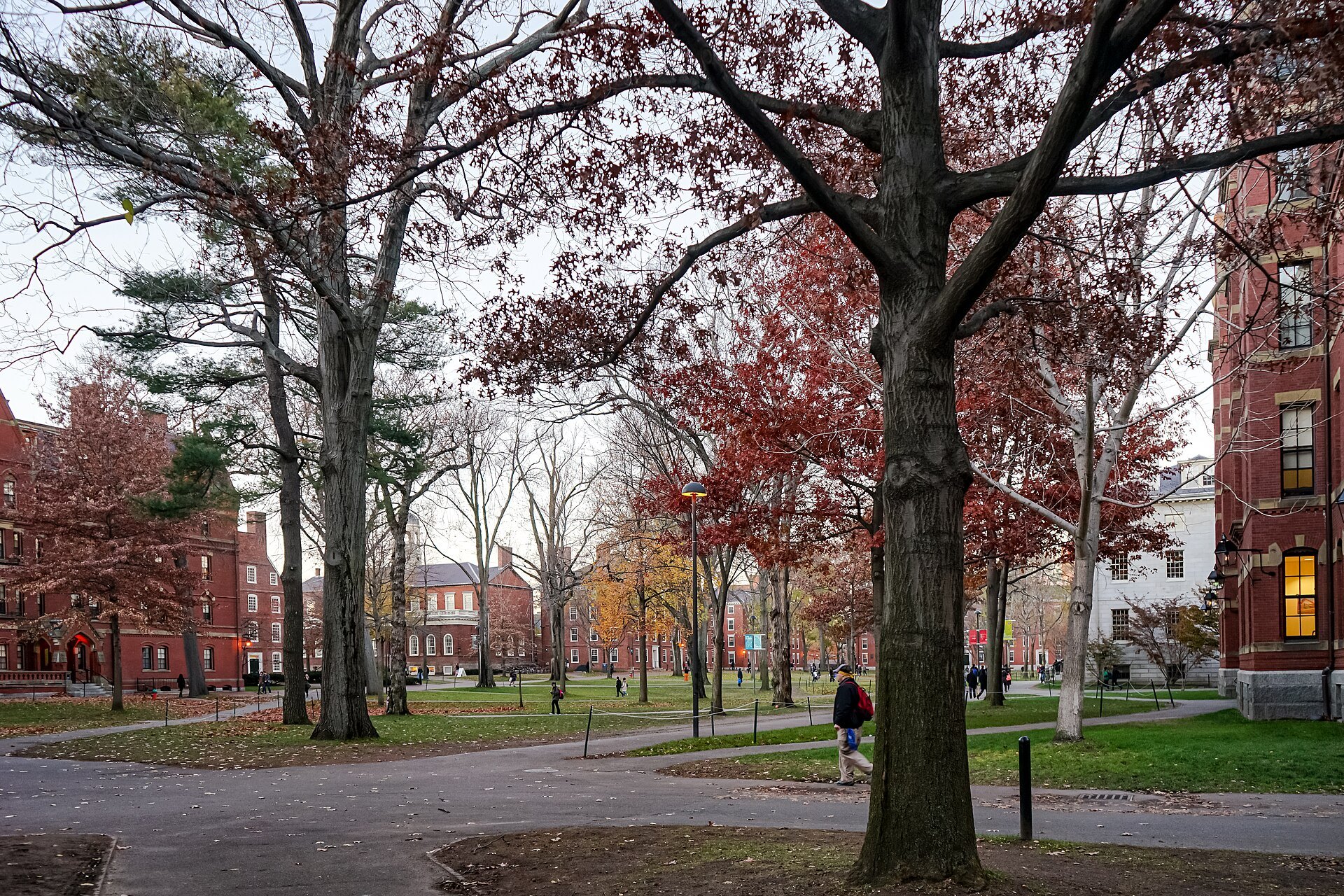
Harvard's campus centers on Harvard Yard in Cambridge, Massachusetts, with twelve undergraduate residential houses (Adams, Cabot, Currier, Dunster, Eliot, Kirkland, Leverett, Lowell, Mather, Pforzheimer, Quincy, Winthrop) housing approximately 350-450 students each. Harvard students live in their assigned house from sophomore year through graduation, with a strong house identity through dining halls, intramural sports, and house-specific traditions. Freshmen all live in Harvard Yard for the first year. MIT's residential system uses dormitories rather than residential houses, with eleven undergraduate dorms (Baker, Burton-Conner, East Campus, MacGregor, McCormick, New House, Next House, Random Hall, Senior House [closed], Simmons Hall, MIT Dormitories) plus fraternity and sorority houses. MIT residential culture is distinctive (each dorm has a unique sub-culture; the "hall" culture at East Campus, the architectural significance of Simmons Hall, the engineering-focused culture at Baker), but the residential structure is less central to undergraduate identity than at Harvard. Both campuses are walkable, integrated into Cambridge urban life, and 1.4 miles apart.
Where do Harvard and MIT graduates end up professionally?
Harvard graduates spread broadly across finance, consulting, technology, government, law, medicine, and academia. Approximately 25% of each Harvard graduating class enters finance and consulting (Goldman Sachs, JPMorgan, Morgan Stanley, McKinsey, Bain, BCG); approximately 15% enters technology (Google, Meta, Microsoft, startups); approximately 10% enrolls in graduate or professional school within one year (Harvard Law, Harvard Business, Harvard Medical, top peer programs); approximately 50% pursue various other career paths (industry data on MBA graduate career paths). MIT graduates concentrate more heavily in technology and engineering: approximately 30-35% enter technology (FAANG, quantitative firms, semiconductor companies); approximately 15-20% enter finance and consulting (concentrated in quantitative finance roles at Citadel, Jane Street, Two Sigma, D.E. Shaw); approximately 25-30% pursue graduate school in STEM (MIT, Stanford, Berkeley, Caltech PhD programs). For pure STEM career trajectories, MIT's placement is denser; for diverse career outcomes spanning finance, government, and professional graduate schools, Harvard's placement is broader.
What is the cross-admit pattern between Harvard and MIT?
Cross-admit decisions between Harvard and MIT split approximately 50-55% to MIT and 45-50% to Harvard among admitted students who choose between the two. The decision typically follows intended major: pure STEM applicants (computer science, engineering, physics, chemistry, mathematics, biology) lean MIT at approximately 65%; broader interest applicants (economics, government, social sciences with STEM exposure, pre-med, pre-law) lean Harvard at approximately 55-60%. Geographic and cultural factors are largely neutral since both schools are in Cambridge. The financial calculus is essentially identical: both schools meet 100% of demonstrated need, both have similar published cost-of-attendance, and both have comparable institutional aid generosity in the $200K-$400K HHI bracket. For applicants admitted to both, the decision is fundamentally about academic identity (STEM-first vs broader liberal arts) rather than cost, location, or selectivity.
What admission strategy works at each school?
For Harvard, effective applications demonstrate intellectual depth and curiosity across multiple dimensions, strong leadership impact in school or community, and clear personal voice in essays. Harvard does not consider demonstrated interest formally; the application content carries the entire weight. Harvard alumni interviews are widely available and recommended. For MIT, effective applications demonstrate technical preparation and engagement (math contest results like AMC/AIME/USAMO, programming projects, science fair achievements, research experience), plus collaborative problem-solving disposition, plus alignment with MIT's "mens et manus" (mind and hand) culture. The MIT supplemental essay set asks distinctive questions about which world the applicant wants to be a part of and what they do for fun – answers that demonstrate authentic engagement with MIT culture score better than generic enthusiasm. Both schools value athletic recruits modestly, value legacy slightly, and value international diversity meaningfully.
Frequently Asked Questions About Harvard vs MIT Admissions
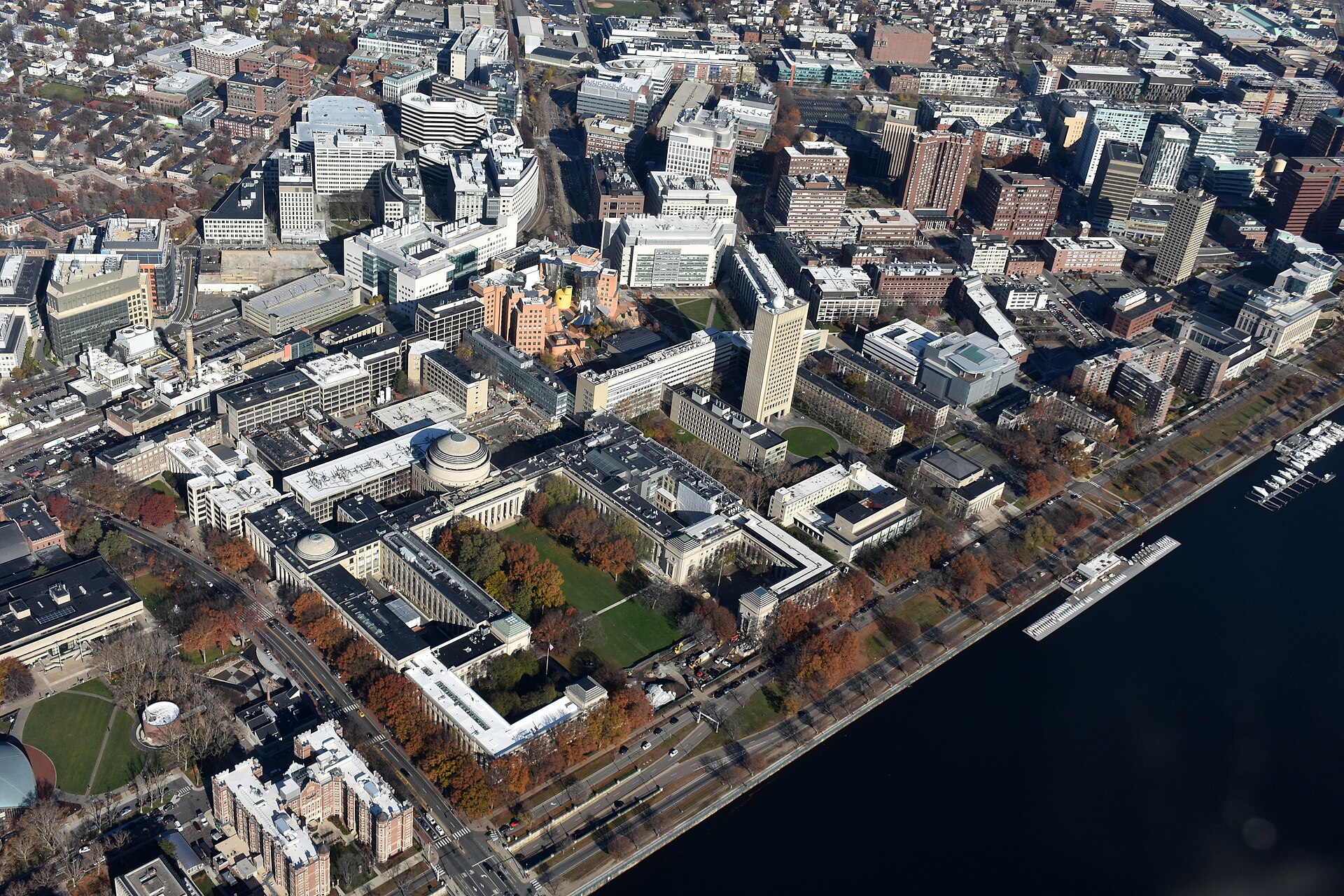
Both are in Cambridge, Massachusetts, just across the Charles River from Boston. Harvard is centered on Harvard Yard in Harvard Square, while MIT sits about two miles away along the river in Kendall Square, a major technology hub. The two campuses are close enough to walk or take a short transit ride between them, and both benefit from the dense academic, research, and professional environment of the Boston area.
No; MIT is not part of the Ivy League, which is a specific athletic conference of eight Northeastern universities. Harvard, by contrast, is a founding Ivy League member. MIT is a private research university widely regarded as comparably elite and is consistently ranked among the very best universities in the world, especially in science and engineering, but it holds no Ivy League membership despite its prestige.
The choice usually comes down to academic focus and culture rather than prestige. MIT centers on science, engineering, and a quantitative, hands-on problem-solving ethos, while Harvard offers broader strength across the liberal arts and many career-oriented paths within a more traditional university structure. Students drawn to deep STEM immersion often prefer MIT, while those wanting flexibility across many fields may favor Harvard. Fit with each environment matters most.
Yes; Harvard and MIT have a long-standing cross-registration arrangement that lets eligible students take certain courses at the other institution, subject to approval and scheduling. This gives undergraduates access to offerings and faculty across both universities, blending MIT’s technical depth with Harvard’s breadth. The proximity of the two campuses makes this practical, and it is one reason some students value being part of the wider Cambridge academic community.
The two have distinct personalities; MIT is known for an intense, collaborative, quantitative culture with a playful streak of engineering ‘hacks’ and a focus on building and problem-solving, while Harvard carries a more traditional, broad, and pre-professional atmosphere spanning many disciplines. Neither is monolithic, and both are rigorous, but applicants often sense a clear difference in feel, so visiting or researching student life helps clarify which environment suits them.
Yes; both Harvard and MIT are among the small number of US universities that are need-blind for international applicants and commit to meeting full demonstrated financial need, an unusually generous policy. Neither offers merit scholarships, since all aid is need-based. This means strong international applicants can apply without an aid request affecting their chances, and admitted students from abroad receive funding based on their family’s financial circumstances.
Both consistently rank at or near the very top of national and global university rankings, often trading the highest positions depending on the ranking and methodology. MIT frequently leads in science, engineering, and technology rankings, while Harvard often tops broader or reputation-based lists. The differences are small and shift yearly, so rankings should not drive the decision; academic fit, program strength, and culture are far more meaningful considerations.
Transferring is possible but extremely difficult; both Harvard and MIT admit only a small number of transfer students each year through highly competitive processes, and there is no special pathway between the two. A student wanting to move from one to the other would apply as a regular transfer applicant with no guarantee of admission. Because cross-registration already allows taking courses at both, transferring is rarely necessary for academic access.
Sources: Harvard College Admissions; MIT Office of Admissions; Common Data Set; NCES College Navigator; IPEDS; College Board BigFuture; NACAC.
About Oriel Admissions
Oriel Admissions is a Princeton-based college admissions consulting firm advising families nationwide on elite university admissions strategy. Our team brings deep expertise across every dimension of the application, and our distinctive 360 approach develops strategy, positioning, activities, essays, and interviews as one coherent whole. We offer a complimentary 30-minute discovery call to discuss your family’s situation, evaluate fit, and outline next steps. Schedule your discovery call →