How to Get Into The Hill School: Acceptance Rate, College Matriculation, and Admission Strategy
By Rona Aydin
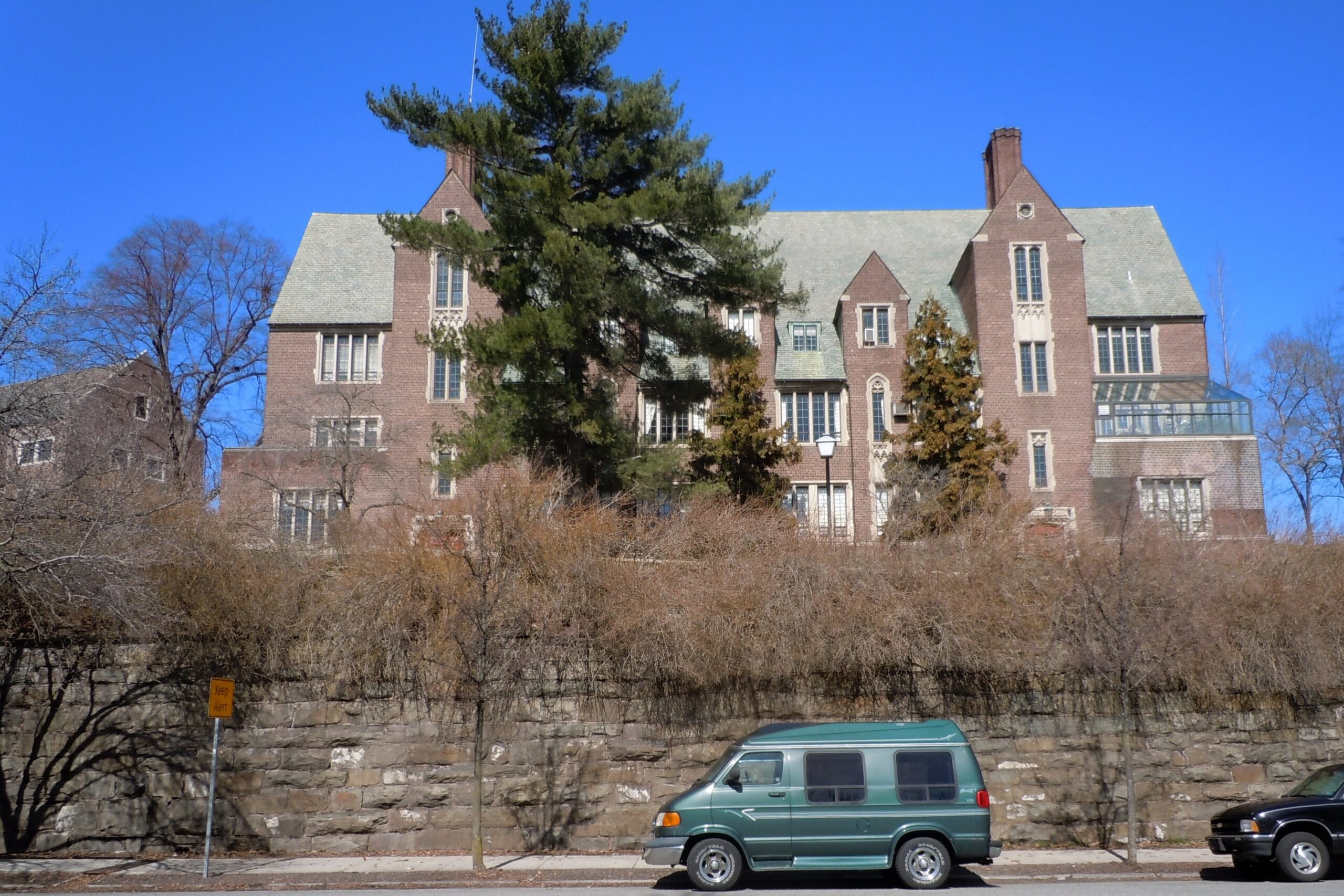
TL;DR: The Hill School’s acceptance rate is approximately 25-34% (Hill Office of Admission; institutional reporting 2024-25), making it more accessible than peer Ten Schools members while maintaining strong matriculation outcomes. Founded in 1851 in Pottstown, Pennsylvania (one hour from Philadelphia, two hours from NYC), The Hill is the original American “family boarding school.” The school enrolls approximately 527-539 students across grades 9-12 plus a postgraduate year. Boarding tuition for 2025-26 is $78,300. The Hill is historically known as a Princeton feeder, with deep alumni connections to Princeton dating to the 19th century. Notable alumni include Secretary of State James Baker III, Lamar Hunt (founder of the Kansas City Chiefs), and director Oliver Stone. For families navigating Hill admission strategy or planning college applications during the Hill years, schedule a consultation with Oriel Admissions.
What is The Hill School’s acceptance rate?
The Hill School’s acceptance rate is approximately 25-34% in recent cycles (Hill Office of Admission; institutional reporting via boarding school admissions aggregators 2024-25). Hill’s acceptance rate is notably higher than peer Ten Schools members (Phillips Exeter, Phillips Andover, Choate, Hotchkiss, Deerfield, St. Paul’s all sit in the 13-18% range), making The Hill a strategically interesting option for families seeking a Ten Schools education with somewhat more accessible selectivity.
Strong applicants present academic profiles in the top 10-15% of their middle school class, standardized test scores at or above the 80th-90th percentile on the SSAT or ISEE, two to three teacher recommendations, a student essay, parent statement, and admission interview. Hill applicants come from across the United States and internationally; 20% of current students are international. The school is a member of the Ten Schools Admission Organization. Average admitted-student SAT is 1327 (slightly below peer Ten Schools members), reflecting Hill’s broader applicant pool.
Where do Hill graduates matriculate to college?
The Hill School’s college matriculation outcomes are strong, though notably less concentrated in the most selective universities than peer Ten Schools members. Based on recent matriculation data, approximately 5.26% of Hill graduates matriculate to Harvard, Yale, Princeton, Stanford, or MIT combined, 11.84% to top-25 US universities, and 23.03% to top-50 US universities. The Hill’s historical strength is its Princeton connection: in the early 20th century, The Hill was a feeder school for Princeton, with The Hill School Club active at Princeton for the benefit of alumni and Princeton’s admissions standards relaxed for Hill students.
Today, Hill graduates still matriculate broadly across selective US universities, with particular strength in matriculation to Princeton, the University of Pennsylvania, and other regional peers. Notable Hill alumni include Secretary of State James Baker III ’48, Pulitzer Prize-winning journalist Clark Hoyt ’60, novelist Tobias Wolff ’64, director Oliver Stone ’64, and Kansas City Chiefs founder Lamar Hunt ’51. For broader context on elite US universities’ acceptance rates, see our Ivy League acceptance rates analysis.
| Matriculation Tier | Approx. Share of Class | Representative Schools |
|---|---|---|
| Harvard, Yale, Princeton, Stanford, MIT (HYPSM) | ~5.26% | Harvard, Yale, Princeton, Stanford, MIT |
| Top-25 US Universities | ~11.84% | Penn, Brown, Cornell, Dartmouth, Columbia, Duke, Northwestern, Johns Hopkins, Caltech |
| Top-50 US Universities | ~23.03% | Vanderbilt, Rice, Carnegie Mellon, WashU, Notre Dame, UVA, UCLA, UC Berkeley, Michigan, UNC |
| Elite Liberal Arts Colleges | Substantial | Williams, Amherst, Pomona, Swarthmore, Bowdoin, Middlebury, Wellesley |
Source: Hill College Counseling Office published matriculation data; institutional reporting via boarding school admissions aggregators 2024-25.
What does it cost to attend The Hill School?
The Hill School’s tuition for the 2025-26 academic year is $78,300 for boarding students and $53,380 for day students (The Hill School Office of Admission). Additional costs include textbooks, personal expenses, optional programs, athletic equipment, and senior-year college application costs. Total cost of attendance for boarding students approaches $81,000-$83,000 per year before financial aid. Hill’s tuition sits in the upper tier of Ten Schools peer pricing for 2025-26.
The Hill operates a need-based financial aid program and commits to meeting demonstrated financial need for admitted families. Approximately 34% of Hill students receive financial aid, with $8.6 million in grants awarded annually (The Hill School Office of Financial Aid). The Hill does not offer merit-based aid; all assistance is determined through Clarity Financial Aid application review. The school’s $225 million endowment supports the financial aid budget along with the school’s instructional and operational expenses. The financial aid application deadline is January 15.
What makes Hill distinctive among elite boarding schools?
Three institutional features distinguish The Hill School from peer boarding schools. First, the school’s historical position as the original American “family boarding school.” Founded in 1851 by Rev. Matthew Meigs as the Family Boarding School for Boys and Young Men, Hill was a new type of boarding school that housed students on campus rather than boarding them with families in town. Most of the 12-15 schools considered the “core” boarding school group were established in the late 19th century; Hill was the first to be founded as a family boarding school.
Second, the Hill-Lawrenceville rivalry, the fifth-oldest high school rivalry in the United States. All sports teams from The Hill School and The Lawrenceville School compete during the fall L’Ville Weekend each year. Third, The Hill’s humanities, classics, and liberal arts strengths: in 1946, Paul Chancellor introduced one of the first Humanities programs in secondary education at Hill. The school also operates the Shirley Quadrivium Center for STEMD programming, funded by Microsoft’s former president Jon Shirley ’56. Hill became coeducational in 1998. For families weighing the broader value of elite educational pathways, see our ROI analysis on elite education.
When and how should families apply to Hill?
The Hill application timeline runs on a defined annual cycle. The application deadline is typically January 31 for entry in September that year – slightly later than most peer Ten Schools members (January 15). The Hill accepts the Gateway to Prep School Application (recommended) or the Standard Application Online (SAO). Required materials include school transcripts from the current and prior two academic years, SSAT or ISEE standardized test scores, two to three teacher recommendations, a student essay, parent statement, and admission interview.
Interviews can be conducted on campus, virtually, or with Hill representatives in major metropolitan areas. On-campus interviews are strongly preferred and pair with a campus tour through Hill’s 200-acre Pottstown campus. Decisions are typically released on March 10. Most Hill applicants are also applying to Phillips Exeter, Phillips Andover, Choate, Deerfield, Lawrenceville, and Hotchkiss; The Hill’s more accessible acceptance rate makes it a strategic backup option for families targeting the most competitive Ten Schools members.
How does Hill compare to other Ten Schools peers?
The Hill (527-539 students) is among the smallest Ten Schools peer set members, comparable to St. Paul’s (542) and Taft (600) but materially smaller than Phillips Exeter, Phillips Andover, Lawrenceville, Choate, and Loomis Chaffee. The 25-34% acceptance rate is notably higher than peer Ten Schools members (most sit at 13-18%), reflecting either a smaller applicant pool or different applicant pool composition. Tuition at $78,300 boarding is among the highest in the peer set.
The Hill’s most distinctive comparative position among Ten Schools peers is its historical Princeton connection and its position as the only Pennsylvania Ten Schools member (versus Connecticut, Massachusetts, and New Hampshire concentrations for other peers). The 200-acre Pottstown campus offers a different residential experience than New England peers; the school is one hour from Philadelphia, two hours from New York City, and two hours from Baltimore, Maryland – making it geographically positioned for families based in the Mid-Atlantic region.
How does Hill prepare students for elite college admissions?
The Hill’s College Counseling Office maintains established relationships with admissions offices at virtually every selective US university. Each senior is assigned a college counselor in junior year who works closely with the family through the application process. Hill students benefit from intentional course rigor design: rigorous core academic disciplines, 23 AP courses available, the Shirley Quadrivium Center for STEMD work, the foundational Humanities program, and substantive arts and athletics options.
Selective university admissions officers read Hill applications in the context of historical Hill cohorts and current applicant pool strength. Students who pursue the most rigorous coursework, engage substantively with the Humanities or Shirley Quadrivium programs, and develop strong relationships with faculty for recommendation letters tend to compete strongly. The Hill’s historical Princeton connection means that Hill students have a particular institutional pathway to consider for Princeton applications, though general college counseling is broadly oriented. For families seeking additional strategic support that complements the school’s College Counseling Office, independent advising from Oriel Admissions can supplement what Hill provides. For school-list construction principles, see our reach, match, and safety school guide.
What does the day student experience at Hill look like?
The Hill enrolls a day-student population from the Pottstown, Phoenixville, Royersford, and broader Montgomery County region of Pennsylvania, with some commuting from Reading and the broader Philadelphia metropolitan area. Day students participate fully in academic and co-curricular life and have access to athletics, arts, clubs, and Hill’s programming. Day tuition is materially below boarding tuition; for families based within reasonable commuting distance, day enrollment can be a strategic choice that captures the academic and college-preparation benefits while reducing total cost.
The trade-off for day students is reduced immersion in the residential community that defines much of the Hill experience. Hill’s seated family-style lunch program, weekly Chapel meetings, dorm life, evening dining hall conversations, weekend campus activity, and L’Ville Weekend events are central to how Hill builds peer and faculty relationships. The strongest day-student outcomes typically involve active engagement with weekend programming, athletics, club leadership, and frequent campus presence outside required class time.
Frequently Asked Questions About The Hill School
The Hill School is in Pottstown, Pennsylvania, a small town about 40 miles northwest of Philadelphia in the southeastern part of the state. Founded in 1851, it sits on a large, traditional New England-style campus in a quiet suburban setting. The location offers a self-contained residential environment within reach of Philadelphia, typical of the historic Northeastern boarding schools with which Hill is often grouped.
Hill is a coeducational boarding and day school serving grades 9 through 12, plus a postgraduate (PG) year. It became fully coeducational in 1998 after a long history as a boys’ school. Students live on campus or attend as day students from the surrounding area. The grade structure mirrors a traditional secondary boarding school, with most students entering in 9th or 10th grade and continuing through graduation.
It is an informal admissions association of ten historic, highly regarded Northeastern boarding schools that collaborate on outreach, including Hill, Lawrenceville, Phillips Exeter, Phillips Andover, Choate, Deerfield, Hotchkiss, Loomis Chaffee, Taft, and St. Paul’s. Membership signals a school’s standing among the elite boarding institutions. Families often compare these peers when weighing options, since they share rigorous academics and strong college placement.
Boarding students live on campus full-time in dormitories and are immersed in the residential community around the clock, while day students attend classes and many activities but live at home in the surrounding area. Hill enrolls primarily boarders, with a smaller day-student population. The boarding experience is central to Hill’s identity, offering structured study time, advising, and community life, though day enrollment can suit local families seeking the academics without residence.
Yes; Hill provides need-based financial aid and is committed to access, awarding assistance to qualifying families based on demonstrated financial need through a separate aid application during admissions. Like most boarding schools, it does not generally offer merit scholarships; aid is determined by financial circumstances. Because tuition for boarding is substantial, families seeking support should apply for aid alongside the admission application rather than waiting until after a decision.
Hill, like most boarding schools, has typically used the SSAT (Secondary School Admission Test) as its standardized testing component, though some schools accept the ISEE or have adopted test-flexible policies in recent years. Applicants also complete interviews, essays, and recommendations. Because testing requirements can change between cycles, families should confirm the current policy on Hill’s admissions site and prepare for whichever assessment is required for their application year.
No; while Hill sends many graduates to selective colleges through rigorous academics and dedicated college counseling, attendance guarantees nothing, and admission to top universities has grown intensely competitive even for boarding-school students. Hill helps by preparing students academically and supporting their applications, but each student must still excel and present a compelling case. Treating any elite school as an automatic path to a top college is a costly misconception.
Residential life centers on dormitories where students live with housemates and faculty advisors nearby, structured around academics, supervised study hours, athletics, arts, and weekend activities. The all-in community fosters close friendships, independence, and mentorship from faculty who often live on campus. Days are full and scheduled, blending classes, sports, and dorm life, so students gain maturity and time-management skills while being supported within a close-knit boarding environment.
Sources: The Hill School Office of Admission; The Hill School College Matriculation; Wikipedia institutional history; Boarding School Review profile; National Center for Education Statistics; Gateway to Prep School Application.
About Oriel Admissions
Oriel Admissions is a Princeton-based college admissions consulting firm advising families nationwide on elite university admissions strategy. Our team brings deep expertise across every dimension of the application, and our distinctive 360 approach develops strategy, positioning, activities, essays, and interviews as one coherent whole. To discuss your family’s admissions strategy, schedule a consultation.