West Windsor NJ School System: The Complete Guide to One of America’s Top Public School Districts
By Rona Aydin
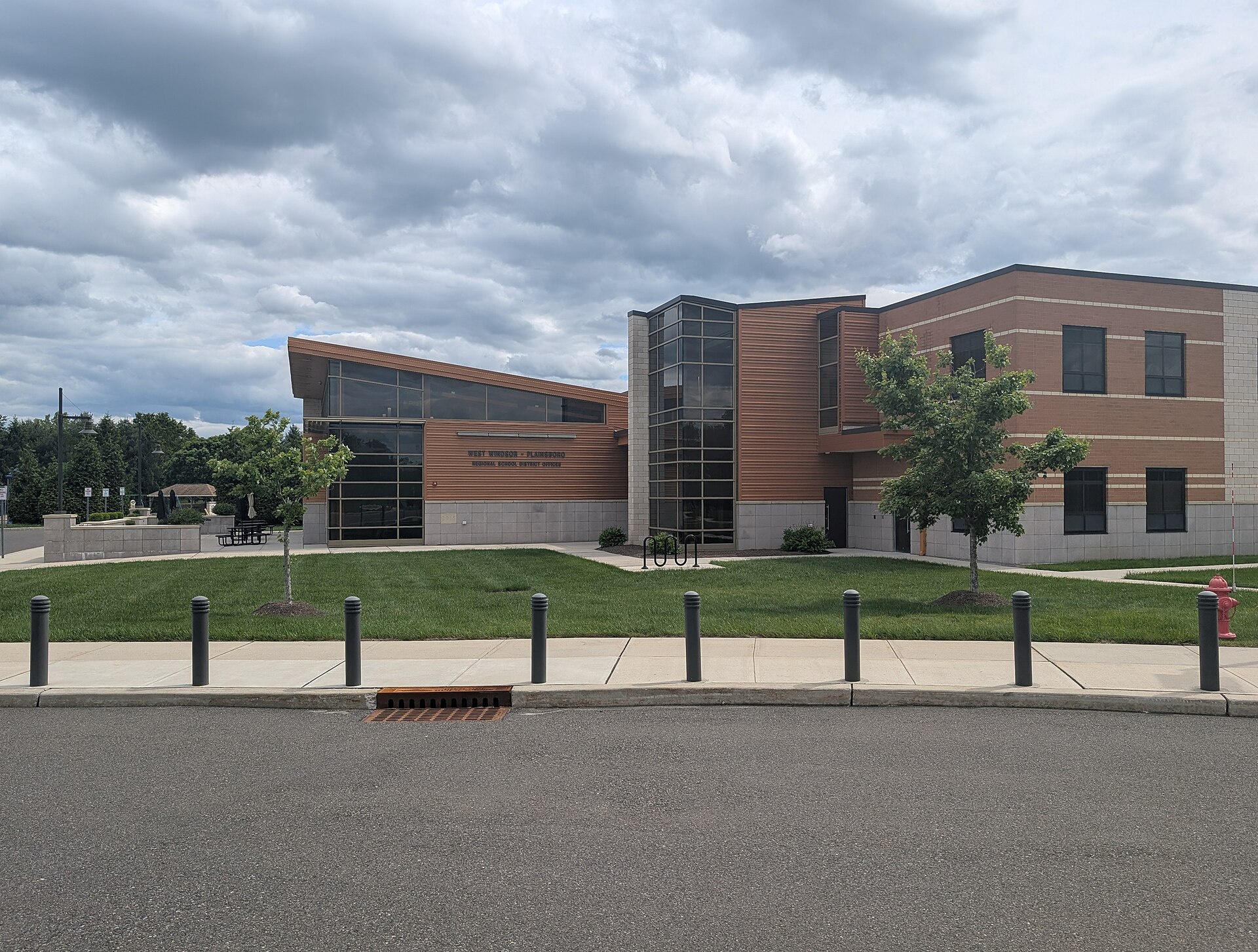
What does the West Windsor-Plainsboro Regional School District actually look like?
| WW-P District Feature | 2025-26 Data |
|---|---|
| Total Enrollment K-12 | ~9,500-10,000 students across 10 schools |
| School Buildings | 5 elementary, 3 middle, 2 high schools |
| Townships Served | West Windsor (Mercer County), Plainsboro (Middlesex County) |
| WW-P HS North Rank | US News 2025-26 #17 NJ, #347 nationally |
| WW-P HS South Rank | US News 2025-26 #21 NJ, #1 Mercer County |
| WW-P HS North Enrollment | ~1,499 students 9-12 |
| WW-P HS South Enrollment | ~1,300 students 9-12 |
| Student-Teacher Ratio (HS) | 13:1 at North; comparable at South |
| WW-P HS South Mid-50% SAT | ~1351 (vs NJ state average ~1080) |
| Math Proficiency (HS North) | ~59% (vs NJ state average 38%) |
| Reading Proficiency (HS North) | ~86% (vs NJ state average 49%) |
| Niche Grade | A+ at both high schools |
| Asian Student Population | ~50% district-wide (highest concentration in any large NJ district) |
| Class Rank Policy (HS South) | No class rank except top 5 in each graduating class |
The West Windsor-Plainsboro Regional School District is among the strongest large public school districts in New Jersey by virtually any measure. The two high schools (North in Plainsboro, South in West Windsor) operate as separate but coordinated institutions with shared district-level curriculum and administration. For broader Princeton corridor context including WW-P alongside Princeton HS, Montgomery HS, and Hopewell Valley Central HS, see our Princeton corridor guide.
How do WW-P North and South high schools compare to each other?
WW-P High School North in Plainsboro (US News 2025-26 rank #17 New Jersey, #347 nationally, ~1,499 students 9-12) and WW-P High School South in West Windsor (US News 2025-26 rank #21 New Jersey, #1 Mercer County, ~1,300 students) produce comparable Ivy+ matriculation outcomes for top-decile students. Both schools carry an A+ Niche grade, share district-level AP and Honors curriculum offerings, and operate similar college counseling structures. The schools differ in attendance zone (most families do not have a choice based on home location) and minor curricular emphasis, with North slightly more STEM-oriented and South slightly more humanities-oriented in elective offerings.
The strategic context: WW-P South’s mid-50% SAT range of approximately 1351 is among the highest in NJ public schools, more than 270 points above the New Jersey state average of 1080. The school’s no-class-rank policy (except for the top 5 in each graduating class) removes the typical class-rank disadvantage that strong applicants face at deep-cohort schools – admissions officers at top-30 universities recognize this policy and adjust their reading accordingly. WW-P North’s 59% math proficiency and 86% reading proficiency rates substantively exceed NJ state averages of 38% and 49% respectively, reflecting both demographic affluence and substantive curricular rigor.
What is the strategic significance of WW-P’s Asian student population?
The West Windsor-Plainsboro Regional School District has the highest Asian student concentration of any large NJ public school district at approximately 50% district-wide. The demographic profile reflects the substantial concentration of Asian-American families (predominantly Chinese, Indian, Korean, and Taiwanese) in the West Windsor and Plainsboro townships, drawn by the district’s strong academic reputation, proximity to Princeton University and Princeton-area research and pharmaceutical employers, and established Asian-American community institutions.
For college admissions, the demographic concentration produces both substantive advantages and structural challenges. Advantages: WW-P students benefit from sophisticated AP and Advanced Topics catalog, intense academic culture, strong peer environment for STEM and humanities competitions, and established institutional admissions-office relationships at top-30 universities. Challenges: Asian-American applicants face structural admissions challenges at some highly selective universities (subject of substantial public debate, including the Students for Fair Admissions v. Harvard case decided by the Supreme Court in June 2023). The strategic implication for WW-P families is that distinctive depth and authentic engagement matter substantively beyond raw academic credentials. For deeper analysis, see our why valedictorians get rejected from Ivies guide.
How do admissions officers actually read WW-P applications?
Princeton, Penn, Yale, Cornell, Columbia, MIT, Stanford, and other top-30 universities have Mid-Atlantic admissions officers who read WW-P applications with substantial implicit context. The Mid-Atlantic admissions officer who reads WW-P files knows the district intimately: the curriculum sophistication, the typical applicant profile, the no-class-rank policy at South, the AP catalog depth, the demographic concentration, and the matriculation patterns over decades. WW-P applicants are read against the WW-P competitive density rather than the New Jersey state average – a pattern of school-specific institutional recognition documented annually in the National Association for College Admission Counseling State of College Admission report.
The implication for WW-P families is that the standard markers (3.95+ unweighted GPA, 1500+ SAT, multiple APs with 5s, leadership positions in student government or major clubs) are baseline assumptions in the WW-P applicant pool, not differentiators. Strong WW-P applications combine these baseline credentials with distinctive depth – original research with measurable output, sustained creative work with documented external recognition, national or international competitive achievement, or substantive community impact projects with concrete results. Generic WW-P applications that rely on school name and standard achievement profiles underperform what the institutional context should support.
What is the WW-P Princeton paradox?
One of the most counterintuitive admissions dynamics for WW-P families is that geographic proximity to Princeton University does not improve Princeton admissions odds. Princeton admits approximately 4-5% of applicants annually, and the regional weight Princeton applies to the immediate WW-P/Princeton corridor is similar to the weight applied to other Mid-Atlantic regions (NJ broadly, eastern Pennsylvania, southern New York, northern Delaware). The local advantage is real but small, and the WW-P competitive density (the substantial annual cohort of academically strong WW-P applicants competing for limited Princeton slots) means that WW-P students compete primarily against each other rather than against the broader applicant pool.
What does help meaningfully: the institutional admissions-office relationships that WW-P has built through consistent placement of strong applicants over decades. Princeton, Penn, MIT, Cornell, Columbia, Yale, Harvard, and the broader top-30 university landscape recognize WW-P intimately and read applications with substantial implicit context. The relationship matters at the margin (converting borderline qualified applicants into likely admits) but does not lower the academic floor required for serious consideration. For deeper Princeton-specific guidance, see our Princeton HTGI guide.
What test scores should WW-P applicants target?
| School Tier Target | Competitive Floor | Strong Likely Admit |
|---|---|---|
| HYPSM (Princeton, Yale, Harvard, Stanford, MIT) | 1530 SAT / 34 ACT / 3.95 GPA | 1560+ / 35-36 / 4.00 + spike |
| Other Ivies + Top 15 (Penn, Cornell, Duke, JHU, Columbia) | 1500 SAT / 33 ACT / 3.90 GPA | 1530+ / 34-35 / 3.95+ |
| Top 16-30 (NYU, Vanderbilt, WashU, Emory, Michigan) | 1450 SAT / 32 ACT / 3.85 GPA | 1500+ / 33-34 / 3.90+ |
The WW-P HS South mid-50% SAT range of 1351 means that top-quartile WW-P students typically score 1500+ on the SAT – the right starting point for Princeton-competitive applications. For benchmarking, see our Ivy League Academic Index calculator.
What are the most common WW-P application mistakes?
Five mistakes recur. First, treating Princeton as an automatic safety because of geographic proximity – Princeton admits at low single-digit rates and the WW-P applicant pool intensifies competition for limited slots. Second, relying on raw academic credentials (GPA, SAT, AP scores) without distinctive personal achievement that admissions officers can recognize beyond the WW-P institutional context. Third, generic essays that recycle prose any WW-P student could have written. Fourth, score-chasing past the point of marginal return – retaking the SAT from 1540 to 1570 produces less value than spending those weekends on spike development. Fifth, deferring outside admissions consulting until junior year when meaningful spike development requires sophomore-year start.
For deeper analysis of why high-stat applicants get rejected, see why valedictorians get rejected from Ivies. For ED decision frameworks, see our Early Decision strategy guide. For year-by-year guidance, see our summer planning guide for rising juniors. For school-specific guidance, see our HTGI cluster: Princeton, MIT, Yale, Harvard, Cornell, Columbia, and Penn.
Frequently Asked Questions About the West Windsor-Plainsboro Regional School District
Through context, yes; selective colleges read each applicant against their school and community, so a student from a high-performing district like West Windsor-Plainsboro is assessed relative to the strong opportunities available there. A well-resourced district is understood differently from a less-resourced one. Colleges do not admit by town, but where a student lives shapes how their record is interpreted in a holistic review, rather than granting any automatic advantage.
It can do both. Colleges assess students within their school’s context, so excelling at a rigorous, high-achieving district signals you thrived in a demanding environment, but intense local competition can make strong students appear average among peers. Admissions officers review the school profile and course offerings. Performing near the top of a competitive district is impressive, though the district’s reputation alone does not carry an applicant.
When a high school does not rank students, as many competitive districts choose not to, colleges rely on the GPA, the rigor of courses taken, and the school profile’s grade distribution to gauge where an applicant stands. The absence of a rank can help students who might otherwise look average by number, but admissions officers still infer relative strength from the transcript and context, so strong grades in demanding courses remain essential.
Somewhat, at the most selective national colleges; New Jersey is a high-volume feeder state, and competitive districts in particular send many strong applicants, so students compete against well-prepared peers from the same region. Colleges seeking geographic breadth may admit a limited number from any one area. This is not a strict quota, but applicants benefit from genuinely distinctive profiles rather than relying on a well-known district’s name.
Strong in-state choices include Rutgers University across its campuses, the New Jersey Institute of Technology (NJIT), Stevens Institute of Technology in Hoboken, The College of New Jersey (TCNJ) nearby in Ewing, Rowan, and Montclair State. These offer excellent in-state value, with Stevens and NJIT especially strong in engineering. Building a balanced list that pairs reach schools with affordable in-state public options is a sound strategy for local families.
Yes; New Jersey offers state aid such as the Tuition Aid Grant (TAG) and the Garden State Guarantee for eligible residents attending in-state public institutions, plus NJ STARS for high-achieving community college students. Local foundations and community organizations also provide regional awards. Because eligibility and amounts vary, families should research state programs and local scholarships early, since these can meaningfully reduce costs alongside any college-specific financial aid.
Often yes, as part of a balanced list; applying out of state widens opportunity, and at the wealthiest private colleges generous need-based aid can offset higher sticker prices. Out-of-state public universities, however, frequently charge high non-resident tuition with limited aid, so weigh cost carefully. A sound strategy mixes affordable New Jersey options with selective out-of-state schools chosen for fit, program strength, and realistic financial outcomes rather than prestige alone.
Through deliberate engagement: attending virtual information sessions and local college fairs, connecting with regional admissions representatives who cover New Jersey, taking optional interviews, and writing genuinely specific ‘why us’ essays. Visiting in person helps where feasible but is not required, and colleges that track interest understand distance. Thoughtful, authentic engagement signals seriousness, which can matter at schools that consider demonstrated interest in their decisions.
About Oriel Admissions
Oriel Admissions is a Princeton-based college admissions consulting firm advising families nationwide on elite university admissions strategy. Our team includes former admissions officers from Harvard, Princeton, and Columbia. To discuss your family’s admissions strategy, schedule a consultation.