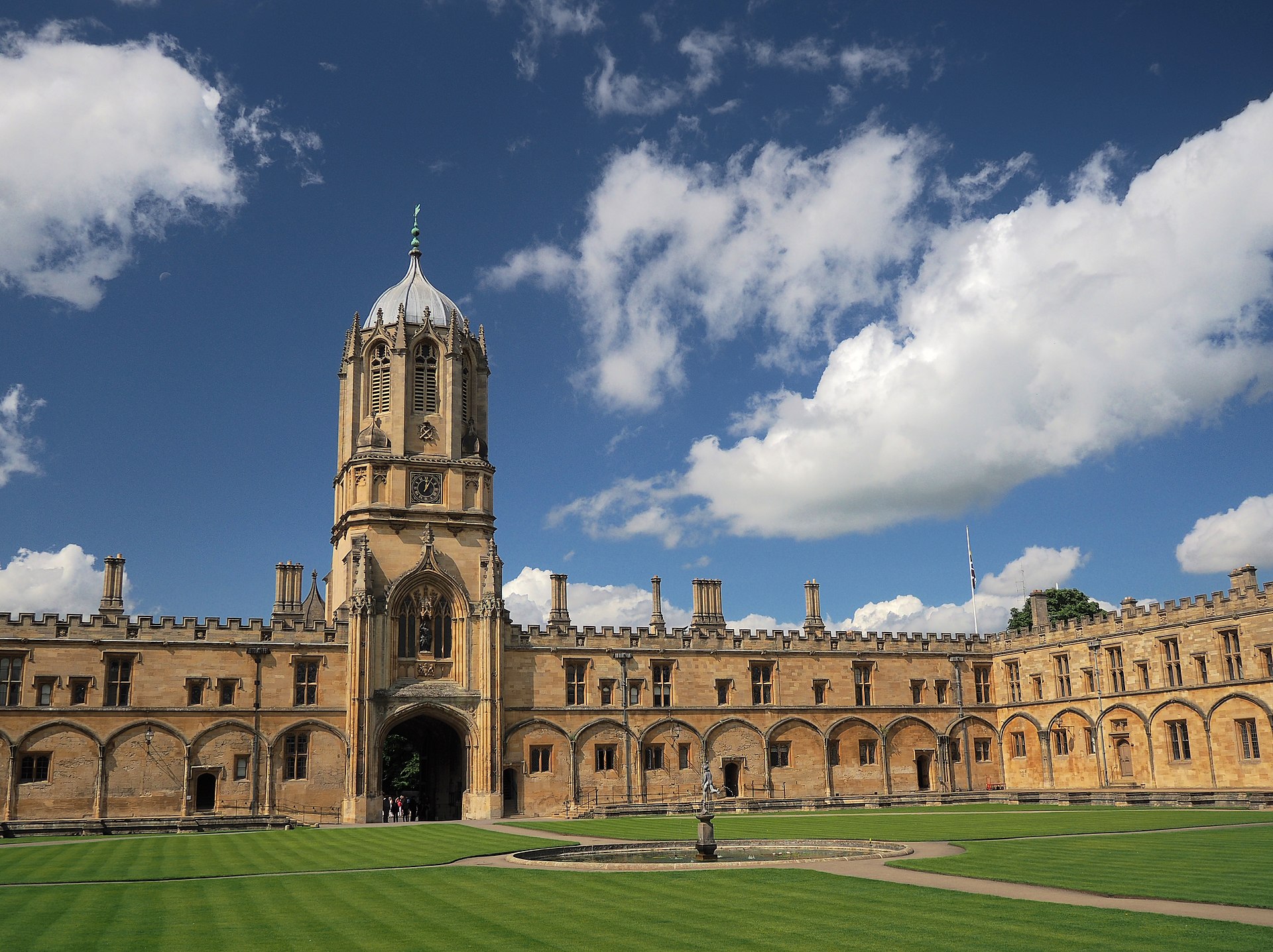
Oxford Admissions: The Quick Version
The University of Oxford accepts roughly 3,300 undergraduates per year from over 23,000 applicants, an overall offer rate of about 15%. American students apply through UCAS by October 15, face admissions tests and interviews, and are evaluated almost entirely on academic merit. Oxford uses a tutorial system with 39 colleges, charges overseas tuition of £37,380-£62,820 per year, and awards three-year BA degrees. This guide covers every stage of the process: entry requirements, admissions tests, the interview, college selection, personal statements, fees, graduate programmes, and how Oxford compares to Cambridge.
Why This Guide Is Different
Oxford key facts: Founded c. 1096. 39 colleges. ~23,000 undergraduate applicants per year. ~3,300 places. ~15% offer rate. Tutorial-based teaching (1-4 students). Three-year BA degrees. Overseas tuition £37,380-£62,820. UCAS deadline October 15. Admissions tests and interviews required. Almost entirely academic evaluation.
This guide is designed specifically to help American students navigate the Oxford application process, a system that is fundamentally different from the US college admissions model. While most online resources offer generic advice, this guide provides detailed, course-by-course analysis, strategic advice for US applicants using AP qualifications and the SAT/ACT, and insights drawn from years of experience guiding students through the UK admissions process. Whether you are a high school sophomore beginning to explore your options, a junior building your application strategy, or a parent researching the best path forward, this guide will give you a comprehensive understanding of what it takes to earn a place at Oxford.
Oxford at a Glance
| Metric | Detail |
|---|---|
| Founded | c. 1096 (teaching from at least this date) |
| Location | Oxford, England |
| Total Undergraduate Applications (2024) | ~23,000+ |
| Total Undergraduate Places | ~3,300 |
| Overall Offer Rate | ~15% |
| Number of Colleges | 39 (including Permanent Private Halls) |
| Teaching Method | Tutorials (1-4 students) |
| Degree Length | 3 years (BA) or 4 years (integrated masters) |
| International Undergraduates | ~20% |
| Students from 170+ Countries | One third of all students are international |
| Annual Tuition (Overseas, 2026-27) | £37,380-£62,820 |
| Annual Tuition (UK Home, 2026-27) | £9,790 |
| Graduate Applications (2023) | ~38,000 |
| Graduate Places | ~5,500 |
These figures reveal a university that is both intimate and truly world-class. The tutorial system, where students meet with leading academics in groups of one to four, is arguably the most intensive undergraduate teaching model in the world. Unlike the large lecture halls of many American universities, Oxford tutorials require students to present and defend their ideas every week, building intellectual confidence and deep subject mastery from the very first term.
Understanding the Oxford Application Process
Applying to Oxford is fundamentally different from applying to American universities. There is no Common Application, no holistic review in the American sense, and extracurricular activities are not a primary consideration. Oxford cares overwhelmingly about your academic ability and potential in your chosen subject.
Key Application Components
UCAS Application: All undergraduate applications go through UCAS (Universities and Colleges Admissions Service). The Oxford deadline is 15 October, significantly earlier than most UK and all US university deadlines. Students can apply to either Oxford or Cambridge in any given year, but not both. You can read more about the UCAS system in our complete guide to the UCAS application.
Personal Statement: The UCAS personal statement is a 4,000-character document that should be approximately 80% academic content. Unlike US college essays, which prize narrative storytelling and personal growth, the Oxford personal statement should demonstrate deep engagement with your chosen subject, the books, research, lectures, and problems that have shaped your intellectual curiosity.
Admissions Tests: Most courses require applicants to sit a pre-interview admissions test. From 2026, Oxford is transitioning to tests managed by UAT-UK, a collaboration between Imperial College London and the University of Cambridge. The three main test types are the ESAT (Engineering and Science Admissions Test), TARA (Test of Academic Reasoning for Admissions), and TMUA (Test of Mathematics for University Admission). Oxford also continues to use the UCAT for Medicine and the LNAT for Law.
School Reference and Predicted Grades: Your school will submit a reference and your predicted A-Level, IB, or AP grades. Oxford typically requires A*A*A or A*AA at A-Level, or the equivalent in international qualifications.
The Interview: The interview is the centrepiece of the Oxford admissions process. Most shortlisted applicants are interviewed in December. Oxford interviews are academic in nature, they simulate the tutorial experience by presenting you with unfamiliar problems, texts, or questions and assessing how you think through them in real time. International applicants may interview online.
Written Work: Some courses (particularly in the humanities) require applicants to submit examples of written work as evidence of current academic standard and analytical ability.
Application Timeline for Oxford
| Date | Milestone |
|---|---|
| Spring-Summer (Year Before Entry) | Research Oxford courses; start personal statement; register for admissions tests |
| June-September | Finalise personal statement; sit UCAT (Medicine applicants); begin test preparation |
| 1 September | UCAS application opens |
| Early October | Sit UAT-UK admissions tests (ESAT, TARA, or TMUA) |
| 15 October | UCAS deadline for Oxford (no exceptions) |
| Late October-November | Submit written work; complete My Oxford Application form |
| Late November | Interview invitations sent |
| First Two Weeks of December | Interviews held (in Oxford or online for international applicants) |
| Mid-January | Decisions released |
| August | A-Level / IB / AP results day, offers confirmed |
| October | Term begins (Michaelmas Term) |
Entry Requirements for American Students
Oxford explicitly welcomes applications from US students using Advanced Placement (AP) qualifications, and the university publishes clear equivalencies for American qualifications. The requirements differ depending on the A-Level equivalent for your course.
For Courses Requiring A*A*A at A-Level
American applicants must achieve either four AP exams at grade 5 (including any subjects required for the course), or three AP exams at grade 5 (including required subjects) plus an ACT score of 33+ or SAT score of 1480+ (out of 1600). Oxford does not require the optional essay for either test.
For Courses Requiring A*AA at A-Level
American applicants must achieve either four AP exams at grade 5 (including required subjects) or three AP exams at grade 5 (including required subjects) plus an ACT score of 32+ or SAT score of 1470+.
| Qualification | Requirement for A*A*A Courses | Requirement for A*AA Courses |
|---|---|---|
| AP Exams (standalone) | Four APs at grade 5 | Four APs at grade 5 |
| AP Exams + SAT | Three APs at 5 + SAT 1480+ | Three APs at 5 + SAT 1470+ |
| AP Exams + ACT | Three APs at 5 + ACT 33+ | Three APs at 5 + ACT 32+ |
| IB Diploma | 39 points, with 7,6,6 at HL | 38 points, with 6,6,6 at HL |
| A-Levels | A*A*A | A*AA |
Important nuances for American applicants: Calculus AB and Calculus BC cannot be counted as two separate subjects. If applying for a course requiring Mathematics, take Calculus BC. Physics C: Mechanics and Physics C: Electricity and Magnetism can count as two separate qualifications. AP Pre-Calculus may not fulfil the mathematics requirement for courses specifying maths in their offer. For students looking to strengthen their AP strategy, see our AP course strategy guide.
Oxford’s Admissions Tests: Complete Overview (2026 Entry)
From 2026, Oxford has transitioned to admissions tests managed by UAT-UK. These computer-based tests are delivered online via Pearson’s worldwide network of test centres. This means applicants to both Oxford and Cambridge can take the same test where applicable. For more background, see our guide to Oxford assessment preparation.
| Test | Oxford Courses Requiring This Test | Format | Key Preparation Tips |
|---|---|---|---|
| ESAT | Biomedical Sciences, Engineering Science, Physics, Physics and Philosophy | Multiple modules: Maths, Physics, Chemistry, Biology. Computer-based. | Apply core science concepts at speed; use past papers |
| TARA | Economics and Management, History and Economics, History and Politics, Human Sciences, PPE, Psychology, PPL | Tests academic reasoning and critical thinking. Computer-based. | Practise analytical reasoning and argument evaluation |
| TMUA | Computer Science, CS and Philosophy, Mathematics, Maths and Stats, Maths and CS, Maths and Philosophy | Two papers: mathematical thinking and reasoning. Computer-based. | Work through advanced proof and logic problems |
| UCAT | Medicine, Medicine (Graduate Entry) | Five subtests including verbal and quantitative reasoning | Start practice early; focus on timing |
| LNAT | Law (Jurisprudence) | Multiple-choice comprehension + essay. Computer-based. | Practise timed reading of complex passages |
No other Oxford undergraduate course will have an admissions test for 2026 entry. This means courses such as English, History, Classics, Fine Art, Modern Languages, and many others rely more heavily on the personal statement, written work, and interview.
Course-by-Course Admissions Breakdown
The following tables provide detailed analysis of Oxford’s undergraduate courses. Data is drawn from the most recently available Oxford admissions statistics.
Arts, Humanities, and Social Sciences
| Course | A-Level Requirement | Admissions Test (2026) | Written Work? |
|---|---|---|---|
| Archaeology and Anthropology | A*AA | None | Yes |
| Asian and Middle Eastern Studies | A*AA | None | Yes |
| Classical Archaeology and Ancient History | A*AA | None | Yes |
| Classics | A*AA | None | Yes |
| Classics and Asian/Middle Eastern Studies | A*AA | None | Yes |
| Classics and English | A*AA | None | Yes |
| Classics and Modern Languages | A*AA | None | Yes |
| Economics and Management | A*AA | TARA | No |
| English Language and Literature | A*AA | None | Yes |
| English and Modern Languages | A*AA | None | Yes |
| European and Middle Eastern Languages | A*AA | None | Yes |
| Fine Art | AAA | None | Portfolio |
| Geography | A*AA | None | Yes |
| History | A*AA | None | Yes |
| History (Ancient and Modern) | A*AA | None | Yes |
| History and Economics | A*AA | TARA | Yes |
| History and English | A*AA | None | Yes |
| History and Modern Languages | A*AA | None | Yes |
| History and Politics | A*AA | TARA | Yes |
| History of Art | A*AA | None | Yes |
| Human Sciences | A*AA | TARA | No |
| Law (Jurisprudence) | A*AA | LNAT | No |
| Modern Languages | A*AA | None | Yes |
| Modern Languages and Linguistics | A*AA | None | Yes |
| Music | A*AA | None | Performance/Portfolio |
| Philosophy and Modern Languages | A*AA | None | Yes |
| Philosophy and Theology | A*AA | None | Yes |
| PPE (Philosophy, Politics, and Economics) | A*AA | TARA | No |
| Psychology (Experimental) | A*AA | TARA | No |
| Psychology, Philosophy, and Linguistics | A*AA | TARA | No |
| Religion and Asian/Middle Eastern Studies | A*AA | None | Yes |
| Theology and Religion | A*AA | None | Yes |
Sciences, Technology, Engineering, and Mathematics
| Course | A-Level Requirement | Admissions Test (2026) | Key Subject Requirements |
|---|---|---|---|
| Biochemistry | A*AA | None | Chemistry + one of Maths, Physics, Biology |
| Biology | A*AA | None | Biology + one of Chemistry, Maths, Physics |
| Biomedical Sciences | A*AA | ESAT | Chemistry or Biology + one other science/maths |
| Chemistry | A*A*A | None | Chemistry and Maths required |
| Computer Science | A*AA | TMUA | Maths required |
| Computer Science and Philosophy | A*AA | TMUA | Maths required |
| Earth Sciences (Geology) | A*AA | None | Two from Maths, Physics, Chemistry, Biology, Geology |
| Engineering Science | A*A*A | ESAT | Maths and Physics required |
| Materials Science | A*AA | None | Maths + Chemistry or Physics |
| Mathematics | A*A*A | TMUA | Maths and Further Maths strongly recommended |
| Mathematics and Computer Science | A*AA | TMUA | Maths required |
| Mathematics and Philosophy | A*AA | TMUA | Maths required |
| Mathematics and Statistics | A*A*A | TMUA | Maths and Further Maths recommended |
| Medicine | A*AA | UCAT | Chemistry + one of Biology, Maths, Physics |
| Medicine (Graduate Entry) | 2:1 degree or higher | UCAT | Graduate-level qualification required |
| Physics | A*A*A | ESAT | Maths and Physics required |
| Physics and Philosophy | A*AA | ESAT | Maths and Physics required |
The Most Competitive Courses at Oxford
While every Oxford course is demanding, certain subjects attract disproportionately high numbers of applicants relative to available places. Understanding competitiveness allows families to make informed strategic decisions.
| Course | Approx. Applicants per Place | Key Challenge |
|---|---|---|
| Economics and Management | ~14:1 | TARA performance critical; strong maths background essential |
| Computer Science | ~10:1 | TMUA score critical; outstanding maths and logic required |
| Medicine | ~10:1 | UCAT, work experience, and ethical reasoning all assessed |
| PPE | ~8:1 | TARA performance; breadth across philosophy, politics, economics |
| Mathematics | ~7:1 | TMUA crucial; competition from olympiad participants |
| Law (Jurisprudence) | ~7:1 | LNAT analytical reasoning and essay |
| Biomedical Sciences | ~7:1 | ESAT performance; strong science foundation |
| History | ~6:1 | Written work quality and interview historical analysis |
| Engineering Science | ~5:1 | ESAT; strong maths and physics foundations |
| Physics | ~5:1 | ESAT; deep mathematical physics understanding |
Conversely, courses such as Theology and Religion, Classics and Modern Languages, Earth Sciences, and some modern language combinations have lower applicant-to-place ratios. These are not easy courses, they are academically rigorous, but well-prepared students face statistically better odds.
The Oxford Interview: What to Expect
The interview is the single most distinctive element of the Oxford admissions process. Oxford interviews are academic conversations, not behavioural interviews. You will be presented with subject-specific problems, questions, or materials and asked to think through them aloud. For guidance on preparing, see our comprehensive interview preparation guide.
Approximately 60% of all applicants are invited to interview. Most will have two or three interviews lasting 20-30 minutes each, conducted by Fellows and tutors of your chosen college. International applicants may interview online.
What Oxford Interviewers Are Looking For
Interviewers are assessing intellectual potential, your capacity to engage with unfamiliar material, reason logically, and develop your thinking in response to prompts. They value the ability to think critically with new information, willingness to tackle unfamiliar problems, clear articulation of reasoning, intellectual curiosity beyond the curriculum, resilience when facing difficult questions, and genuine enthusiasm for your subject.
Interview Examples by Subject Area
| Subject Area | Typical Format | Example Tasks |
|---|---|---|
| Mathematics | Problem-solving at the whiteboard | Prove a statement; work through unfamiliar combinatorics |
| Physics | Scientific problem-solving with equations | Derive a relationship; estimate a physical quantity |
| Engineering | Physics and maths problems | Estimate forces in a structure; model a mechanical system |
| English | Close reading of unseen text | Read and discuss imagery, form, and meaning |
| History | Primary source analysis | Examine a document; discuss what it reveals |
| Law | Hypothetical legal scenarios | Consider conflicting rights; argue both sides |
| PPE | Philosophical or economic reasoning | Discuss a moral dilemma; model an economic scenario |
| Medicine | Scientific reasoning and ethics | Interpret a graph; discuss resource allocation ethics |
| Computer Science | Logic puzzles and algorithms | Sort a list with constraints; analyse algorithm efficiency |
For American students, the Oxford interview is unlike any element of the US admissions process. Working with a counsellor experienced in UK university admissions, such as those at Oriel Admissions, can make a significant difference in readiness.
The College System: Choosing a College at Oxford
One of the most distinctive features of Oxford is its collegiate system. Oxford has 39 colleges and Permanent Private Halls, each functioning as a self-governing academic community with its own buildings, tutors, dining halls, libraries, and traditions. When you apply to Oxford, you either apply to a specific college or make an open application.
Your college is where you live, eat, socialise, and receive tutorials. Lectures, labs, and faculty resources come from the university department. This dual structure means you benefit from both a world-class research university and an intimate college community. For American students, this is often one of the most appealing aspects of Oxford. When choosing a college, consider size, location, subject strength, accommodation, financial support, and atmosphere. There is no objectively “best” college, the right one fits your personality and preferences.
The Personal Statement: Oxford Strategy
The UCAS personal statement is your opportunity to demonstrate deep subject engagement in 4,000 characters. For Oxford, it should be approximately 80% academic content. A strong Oxford personal statement demonstrates sustained reading beyond the curriculum, genuine intellectual curiosity evidenced by specific resources you have engaged with, the ability to analyse and critically evaluate material, relevant academic experiences such as research or competitions, and a clear sense of why Oxford’s specific course structure appeals to you. Extracurriculars, sports, and leadership positions should be minimised or excluded entirely.
Fees, Funding, and Financial Considerations for American Students
For US and other international students, understanding the financial landscape at Oxford is essential. The three-year degree structure means the total cost is often comparable to, or less than, four years at a top US private university.
| Cost Category | Approx. Annual Cost (Overseas, 2026-27) |
|---|---|
| Tuition Fees (Arts and Humanities) | £37,380 |
| Tuition Fees (Sciences, Engineering, Medicine) | Up to £62,820 |
| Living Costs (lower range, 9 months) | £12,645 |
| Living Costs (upper range, 9 months) | £18,945 |
| Total Annual Cost (Arts, lower estimate) | ~£50,000 |
| Total Annual Cost (Sciences, upper estimate) | ~£82,000 |
Oxford’s living costs for 2026-27 are estimated at £1,405-£2,105 per month. Key cost components include accommodation (£825-£990/month), food (£315-£545/month), personal items (£160-£310/month), social activities (£50-£130/month), and study costs (£35-£90/month).
For a three-year arts degree, the total cost would be approximately £150,000-£170,000, broadly comparable to four years at a top US private university like Penn, Columbia, or Yale, where tuition, room, and board can exceed $90,000 per year.
Scholarships and Financial Aid for International Students
Oxford offers some financial support for international students. Key sources include the Clarendon Fund (primarily for graduates), individual college scholarships, the Crankstart Scholarship programme, and the Marshall Scholarship and Fulbright Commission awards (primarily for graduate study). American students should also explore external scholarship programmes.
Graduate Programmes at Oxford: An Overview for American Students
Oxford’s graduate programmes are a major draw for American students who complete undergraduate degrees in the US. Oxford received approximately 38,000 graduate applications in 2023 for roughly 5,500 places.
| Programme Type | Duration | Description | Key Info for US Applicants |
|---|---|---|---|
| MSt / MSc (Taught Masters) | 9-12 months | Intensive taught programme with dissertation | One-year duration is highly efficient vs two-year US masters |
| MPhil | 1-2 years | Research-focused masters with independent study | Strong preparation for PhD; route into Oxford DPhil |
| MBA (Said Business School) | 1 year | Intensive one-year MBA | Highly ranked globally; see our Oxford Said vs Cambridge Judge comparison |
| DPhil (PhD equivalent) | 3-4 years | Oxford’s doctoral programme | Major funding through Clarendon, Rhodes, and Marshall |
| BCL / MJur (Law) | 1 year | Postgraduate law programmes | Strong pathway for US law graduates |
| BM BCh (Graduate Medicine) | 4 years | Graduate-entry medicine | Requires UCAT; any prior degree accepted |
For American students considering graduate study, the Rhodes Scholarship funds approximately 100 scholars per year, with substantial allocation for US applicants. The Marshall Scholarship funds approximately 50 American students per year at any UK university. The Fulbright UK programme also supports graduate students at Oxford.
Oxford vs. Cambridge: Key Differences for Applicants
Considering Cambridge instead? Read our complete Cambridge admissions guide for the same level of detail on Cambridge’s application process, entry requirements, and interview format.
Many families considering Oxford also look at Cambridge. You cannot apply to both in the same cycle, so this is a crucial strategic decision. For a detailed comparison, see our guide to choosing between Oxford and Cambridge.
| Factor | Oxford | Cambridge |
|---|---|---|
| Teaching Method | Tutorials (1-4 students) | Supervisions (1-3 students) |
| Sciences | Apply to specific subject from start (Chemistry, Physics, etc.) | Natural Sciences Tripos allows broad study before specialising |
| Humanities | Renowned for English, History, PPE, Classics | Equally excellent; strong English, History, Classics |
| Flagship Social Science | PPE | HSPS |
| Economics | Economics and Management (joint) | Standalone Economics degree |
| Computer Science Test | TMUA | TMUA |
| Maths | TMUA | TMUA + STEP (post-offer) |
| Engineering | Single Engineering Science course | General Engineering before specialisation |
| City | Larger, more urban | Smaller, more compact |
| Interview Timing | First two weeks of December | First three weeks of December |
| International UGs | ~20% | ~25% |
| Number of Colleges | 39 (incl. PPHs) | 31 |
For science applicants, the choice is particularly significant. Oxford requires commitment to a specific science from the outset, whereas Cambridge’s Natural Sciences Tripos allows study across multiple sciences before specialising. Students certain about their science preference may prefer Oxford; those with broader interests may find Cambridge’s flexibility appealing.
Strategic Advice for American Applicants
American students applying to Oxford face unique challenges. The UK admissions system is fundamentally different from the US system, and strategies that work for Ivy League applications do not translate directly.
Start early. The October 15 deadline means your application needs to be substantially complete by September. Starting preparation in Grade 10 or early Grade 11 is ideal. Our guide for sophomores and spring preparation guide for juniors provide helpful early planning strategies.
Choose your course carefully. You are applying to study one subject for three or four years. There is no “undeclared” option and no ability to switch majors. You need genuine passion for your chosen subject.
Prioritise academics above all else. Oxford does not care about student government, varsity athletics, or volunteer hours in the way American colleges do. Your grades, test scores, personal statement, and interview performance are what matter. This is a stark contrast to Princeton, Brown, or Duke, where extracurriculars play a significant role.
Prepare rigorously for admissions tests. These assessments are the primary screening mechanism for interview invitations. Begin preparation at least three to four months before the test date using official past papers and UAT-UK materials.
Practise for the interview relentlessly. The interview is unlike anything in the US admissions process. Practise thinking aloud, responding to challenging questions, and working through unfamiliar problems. Mock interviews with a subject specialist are invaluable.
Understand the personal statement format. The UCAS personal statement is short, academic, and subject-focused, not a US-style Common App essay. Every sentence should demonstrate intellectual engagement with your chosen subject.
Coordinate your Oxford and US applications. Many American students apply to Oxford alongside US universities. This requires careful planning, the Oxford deadline (October 15) falls before most US deadlines, and the UCAS personal statement and Common App essay require fundamentally different approaches.
Life at Oxford: What to Expect as an American Student
The academic year is divided into three eight-week terms, Michaelmas (autumn), Hilary (spring), and Trinity (summer). These short terms mean extremely heavy workloads during term time. Students attend lectures, participate in weekly tutorials, and engage in extensive independent study.
The tutorial system is the heart of the Oxford education. Once or twice weekly, you meet with a subject expert in a group of one to four students, presenting your work and receiving detailed feedback. For American students accustomed to larger classes, this individual attention is transformative.
Beyond academics, Oxford offers extraordinarily rich extracurricular life, the Oxford Union debating society, hundreds of clubs and societies, world-class sport, and a thriving arts scene. The city is beautiful, historic, and vibrant, with excellent connections to London. For American students, Oxford will feel fundamentally different from a US campus, but most describe it as the most challenging and rewarding experience of their lives.
Career Outcomes and Life After Oxford
An Oxford degree opens doors worldwide. Oxford has produced 73 Nobel laureates, 30 British Prime Ministers, and countless leaders across every field. For US students returning home after graduation, an Oxford degree is highly regarded by US graduate schools and leading employers in finance, consulting, technology, and academia. Many Oxford graduates from the US pursue further studies at Harvard, Stanford, MIT, and other top institutions, finding their Oxford training a significant advantage.
Frequently Asked Questions About Oxford Admissions
No. UCAS rules prohibit applying to both in the same cycle. You must choose one. For a detailed comparison, see our Oxford vs Cambridge guide.
Not in the way American universities do. Oxford’s process is almost entirely academic. Your personal statement should focus on intellectual engagement with your subject. This is a major strategic difference from applying to US institutions like Cornell or NYU.
Oxford does not have a minimum GPA requirement, focusing instead on AP scores and SAT/ACT scores. Competitive US applicants typically have a 3.9+ unweighted GPA, five or more AP scores of 5, and SAT scores above 1500 (or ACT 34+). However, academic references, admissions tests, and interviews carry more weight than any single metric.
Yes. Oxford typically requires either the SAT (1470+ recommended, 1500+ competitive) or the ACT (33+ recommended, 34+ competitive) from US applicants, alongside AP scores. Some courses may specify additional standardised test requirements.
Oxford does not accept transfer students. All undergraduate applicants start from year one, regardless of any university credits they may hold. This applies to all applicants, including those currently enrolled in US universities.
International students on a Student visa can work up to 20 hours per week during term time. However, the intensity of Oxford’s academic programme, particularly the weekly tutorial essay and reading requirements, means that most students find it difficult to combine significant employment with their studies.
Oxford requires a higher-level English language qualification. IELTS scores of 7.5 overall (with at least 7.0 in each component) are standard. US citizens educated in English-medium schools may be exempt, but should verify exemption eligibility with the admissions office for their specific course.
About Oriel Admissions
Oriel Admissions is a Princeton-based college admissions consulting firm advising families nationwide on elite university admissions strategy. Our team includes former admissions officers from Harvard, Princeton, and Columbia. To discuss your family’s admissions strategy, schedule a consultation.