Gloucester County College Admissions Guide: What Families at Washington Township, Clearview, Kingsway, and Delsea Need to Know
By Rona Aydin
TLDR: Gloucester County sits just southeast of Camden County in South Jersey, with four major public high schools that produce very different college admissions realities. Gloucester County Institute of Technology (GCIT) ranks #1 in the county with an A- Niche grade, a 1220 average SAT, and a vocational-technical model that gives students industry credentials alongside college prep. Clearview Regional in Mullica Hill has the strongest raw academic metrics: a 1250 SAT average, 63% math proficiency, and a 98% graduation rate. Kingsway Regional is the fastest-growing school in the county with 1,984 students, a 1230 SAT, and a rapidly developing community in Woolwich Township. Washington Township High School is the largest at 2,108 students with a 1180 average SAT and a B Niche grade. Delsea Regional in Franklinville rounds out the picture with an 1140 SAT, strong athletics, and a rural community profile that offers a genuine contextual advantage for ambitious students. SAT targets range from 1250+ at Delsea to 1400+ at Clearview for the most selective universities. Every Gloucester County family should be leveraging Philadelphia (25 to 40 minutes away), starting test prep by 10th grade, and building distinctive profiles rather than following the Rowan default. Contact Oriel Admissions to start the conversation.
Contents
- The Numbers, All in One Place
- Gloucester County Institute of Technology (GCIT)
- Clearview Regional High School
- Kingsway Regional High School
- Washington Township High School
- Delsea Regional High School
- Where Gloucester County Students Are Looking
- The Philadelphia Advantage
- What Every Gloucester County Family Should Do
- SAT Targets at a Glance
- Teacher Quality and Recommendation Letters
- Gloucester County’s Specific Pitfalls
- The Takeaway
- Frequently Asked Questions
Four high schools. One vocational-technical powerhouse. All within 20 miles of each other in Gloucester County, New Jersey.
Clearview Regional in Mullica Hill sends students to Delaware and Penn State with a 1250 average SAT and 63% math proficiency. Washington Township has 2,108 students and an 1180 average SAT. Kingsway Regional is the county’s fastest-growing school, fueled by the housing boom in Woolwich Township, with a 1230 SAT and 1,984 students. Delsea Regional sits in rural Franklin Township with 1,090 students and an 1140 average SAT. And then there is GCIT, the county’s vocational-technical magnet, ranked #1 in Gloucester County and #117 statewide, offering a fundamentally different model that combines career-technical training with rigorous academics.
These schools sit in the same county, serve families who drive the same stretch of Route 55 and shop at the same Deptford Mall, and yet the college admissions playbook for each one is entirely different. That is what this guide is about. Not generic advice. Not platitudes. This is a school-by-school breakdown of where each Gloucester County high school stands in the eyes of admissions officers, what data they will see when they pull your child’s school profile, and exactly what your family should be doing about it.
The Numbers, All in One Place
Before we get into strategy, look at this table. It tells you most of what admissions officers know about these five schools before they ever read a single essay.
| GCIT | Clearview Regional | Kingsway Regional | Washington Twp | Delsea Regional | |
|---|---|---|---|---|---|
| Niche Overall Grade | A- | B+ | B+ | B | B- |
| Gloucester County Rank | #1 | #3 | #2 | #8 | Not ranked top 10 |
| NJ Public HS Rank | #117 | #203 | #202 | #202 (college prep) | #254 (college prep) |
| Students | 1,639 | 1,412 | 1,984 | 2,108 | 1,090 |
| Average SAT | 1220 | 1250 | 1230 | 1180 | 1140 |
| Average ACT | 27 | 29 | 28 | 26 | 24 |
| AP Enrollment | N/A (CTE model) | 23% | 26% | 26% | 19% |
| Math Proficiency | 39% | 63% | 39% | 24% | 19% |
| Reading Proficiency | 74% | 72% | 60% | 58% | 40% |
| Graduation Rate | 98% | 98% | 95% | 93% | 91% |
| Student-Teacher Ratio | 15:1 | 15:1 | 14:1 | 13:1 | 14:1 |
| Expenses Per Student | N/A | $20,331 | $17,237 | $23,995 | $24,468 |
| New Teachers (1st/2nd Year) | 0% | 0.9% | 23.8% | 3.8% | 9.5% |
| Free/Reduced Lunch | 12% | 13% | 15% | 20% | 18% |
| Median Household Income | $105,115 (county) | $165,927 | $88,542 | $114,249 | $110,197 |
| Diversity Grade | B | B- | B+ | B+ | B+ |
| Sports Grade | B- | B | B+ | A | A |
| Clubs Grade | A- | B- | B | A | B+ |
| Admin Grade | B | C+ | B- | B | B+ |
| Feel Safe (Poll) | 93% | 81% | 83% | 88% | 86% |
| Happy (Poll) | 85% | 71% | 80% | 85% | 89% |
Source: Niche, New Jersey Department of Education School Performance Reports, U.S. Census Bureau. SAT/ACT averages self-reported by Niche users. Proficiency data from 2023-24 NJSLA and NJGPA assessments.
Stare at that table long enough and a story emerges. Clearview has the strongest traditional academic profile but sits in a wealthy, less diverse community. GCIT leads the county rankings with a fundamentally different educational model. Kingsway is growing fast but struggling with teacher turnover. Washington Township is the largest school with the best extracurricular infrastructure. Delsea has the lowest aggregate metrics but the highest student happiness score and a genuine rural character that creates narrative opportunities.
Each of these realities produces a different admissions strategy. Here is how to think about each one.
Gloucester County Institute of Technology (GCIT)
The County’s #1 School, and a Model Nobody Else Can Replicate
GCIT is the most strategically interesting school in Gloucester County, and one of the most interesting in all of South Jersey. Ranked #1 in the county and #117 statewide by Niche, it earns an A- overall with an A- for academics, an A- for teachers, and an A- for resources and facilities. It has 1,639 students, a 98% graduation rate, and 74% reading proficiency, which places it in the top tier of Gloucester County schools on that metric. The 39% math proficiency is identical to Kingsway’s and well above Washington Township’s 24%.
What makes GCIT different is its model. This is a vocational-technical high school that admits students from across Gloucester County through a competitive application process. Students choose a career-technical education (CTE) pathway in fields like engineering, health sciences, computer science, culinary arts, and more, while simultaneously completing a college-preparatory academic curriculum. The result is a student who graduates with both a high school diploma and industry certifications, clinical hours, or a professional portfolio, depending on their pathway.
The admissions implications of this are significant. Selective universities have become increasingly interested in students who can demonstrate applied learning and real-world competence alongside academic achievement. A GCIT student who graduates from the engineering pathway with industry certifications and a 1350+ SAT presents a fundamentally different profile from a traditional comprehensive high school student with the same test scores. The CTE credential tells admissions officers that this student did not merely study engineering in the abstract; they built things, solved real problems, and earned professional validation for their work.
The faculty stability is remarkable: 0% of teachers are in their first or second year, meaning every teacher at GCIT is experienced and established. This matters enormously for recommendation letters. The 93% safety poll and 85% happiness poll are among the highest in the county, reflecting a student body that chose to be there. College interest data shows a strong orientation toward Rowan (516), Rutgers (274), Stockton (267), Drexel (196), Temple (166), Penn State (162), and, notably, NYU (142), the only school in this guide where NYU appears on the interest list.
What admissions officers see: A selective vocational-technical school ranked #1 in the county with strong academics and a unique applied-learning model. A top student from GCIT with strong test scores and a compelling CTE portfolio is a distinctive applicant that traditional comprehensive high schools cannot produce.
The honest problem: GCIT’s CTE model means that traditional AP enrollment data is not available, which can confuse admissions offices unfamiliar with the school. Your application needs to clearly explain the GCIT model and how the CTE pathway provides rigor equivalent to or beyond AP coursework. Additionally, the Sports grade of B- and the relatively low athletic participation suggest that student-athletes may need to look beyond GCIT for their competitive sports experience. The 12% free or reduced lunch rate and B diversity grade indicate a less economically and racially mixed student body than some neighboring schools.
SAT targets: 1350+ for competitive schools, 1420+ for the most selective. At a school averaging 1220, a 1420 puts your child 200 points above, a powerful contextual signal. Pair that with CTE certifications and you have a genuinely compelling application. For frameworks on how to build on this type of profile, see our guide to building a college application spike.
Clearview Regional High School
The Academic Leader with a Harrison Township Address
Clearview Regional has the strongest traditional academic profile in Gloucester County. Its 1250 average SAT is the highest of any public high school in the county. Its 63% math proficiency is nearly three times Washington Township’s 24% and more than three times Delsea’s 19%. Reading proficiency at 72% is second only to GCIT’s 74%. The 98% graduation rate ties GCIT for the best in the county. With a B+ overall Niche grade and 1,412 students, Clearview is the school that admissions officers will view as Gloucester County’s most traditionally competitive.
The community context amplifies this. Harrison Township, where Clearview is located, has a median household income of $165,927, by far the highest of any community in this guide and double that of Swedesboro’s $88,542. Home values average $511,300, the kind of number that admissions officers associate with affluent suburban schools that produce well-prepared applicants. The 13% free or reduced lunch rate and B- diversity grade reflect a community that is wealthier and less diverse than Gloucester County as a whole.
The faculty is extraordinarily stable: only 0.9% of teachers are in their first or second year, meaning virtually every teacher is deeply experienced. Average teacher salaries of $80,466 are the highest in this guide, reflecting a district that invests in retaining its best educators. The 29 average ACT (the highest in the county) and 23% AP enrollment indicate a student body that is academically serious.
College interest data reveals a pattern similar to other Gloucester County schools but with slightly higher ambition: Rowan (343), Rutgers (245), Delaware (195), Stockton (168), Penn State (128), TCNJ (123), Drexel (102), Rowan College South Jersey (102), Temple (92), and Widener (85). The presence of Widener is unusual and suggests a segment of pre-law or pre-professional students attracted to Widener’s well-known law school.
What admissions officers see: A well-known, affluent suburban school with the strongest academic metrics in Gloucester County. Students from Clearview are expected to be strong. The school profile alone does not differentiate your child because everyone from Clearview looks solid on paper. You need a spike. This is a dynamic similar to what families in Haddonfield face in Camden County.
The honest problem: The Administration grade of C+ is Clearview’s most concerning metric, and student reviews consistently mention frustrations with administrative responsiveness. The Resources and Facilities grade of C- is alarming for a school in a $165,927-median-income community. The engaging lessons poll at 59% is the lowest in this guide, meaning nearly half of surveyed students do not find their classes engaging. Per-student spending at $20,331 is above the national average of $17,834 but is actually the second-lowest among schools in this guide (behind only Kingsway’s $17,237), a surprising figure given the community’s wealth. Clubs receive a B-, and only 41% of respondents say clubs get adequate funding, suggesting that extracurricular depth may need to come from outside the school.
SAT targets: 1380+ for competitive schools, 1450+ for the most selective. At a school averaging 1250, you need to be meaningfully above the norm. A 1450 puts your child 200 points above, a strong contextual signal. For Clearview families navigating the Main Line comparison, remember that admissions officers in the Philadelphia region know both Clearview and the Main Line schools.
Kingsway Regional High School
The Fastest-Growing School in a Rapidly Changing Community
Kingsway Regional is the most dynamic story in Gloucester County. Located in Woolwich Township, one of the fastest-growing municipalities in all of New Jersey, Kingsway has 1,984 students and is still growing. The school earns a B+ overall from Niche, with a 1230 average SAT, 60% reading proficiency, 39% math proficiency, a 95% graduation rate, and 26% AP enrollment. It is ranked #2 in Gloucester County and #202 statewide for college prep.
The growth story is critical context. Woolwich Township’s population has exploded as families from Camden County, Burlington County, and even Philadelphia have moved south seeking more affordable housing with access to good schools. The median household income in Swedesboro (the mailing address for Kingsway) is $88,542, significantly lower than Harrison Township’s $165,927, but the incoming families are often bringing higher expectations for educational quality than the existing infrastructure was built to support.
This tension shows up in the data. The 23.8% new-teacher rate is the second-highest in this guide and one of the highest we have seen at any NJ public school in our county-by-county research. Nearly one in four teachers at Kingsway is in their first or second year. Average teacher salaries at $64,236 are the lowest in this guide by a significant margin, explaining the difficulty in retaining experienced educators. Per-student spending at $17,237 is actually below the national average of $17,834, the only school in this guide where that is the case.
College interest data shows a pattern very similar to other Gloucester County schools: Rowan (427), Rutgers (337), Stockton (242), Delaware (207), Penn State (206), Temple (160), TCNJ (145), Rowan College South Jersey (142), Drexel (140), and Montclair State (128). The Penn State number (206) is notable, suggesting a segment of the student body attracted to large, flagship state university experiences outside New Jersey.
What admissions officers see: A large, growing school in a rapidly developing suburban community. A strong student from Kingsway is credible but not yet well-known at elite admissions offices the way schools from Bergen or Essex County are. This means your application needs to do more work explaining who you are and what your school is.
The honest problem: The 23.8% new-teacher rate is a structural challenge that directly affects the quality of instruction and recommendation letters. When nearly a quarter of the faculty is new, institutional knowledge is thin, and the experienced teachers who remain are spread thin across a growing student body. The $17,237 per-student spending is concerning for a school serving nearly 2,000 students. Club funding is also an issue: only 42% say clubs get adequate funding. Students targeting selective universities at Kingsway need to be proactive about finding experienced teachers for recommendation letters and may need to supplement their education with external coursework, research mentorship, or dual enrollment at Rowan College of South Jersey.
SAT targets: 1360+ for competitive schools, 1430+ for the most selective. At a school averaging 1230, a 1430 puts your child 200 points above, a compelling contextual signal. Students at Kingsway who combine strong test scores with distinctive extracurriculars and thoughtful essays have a genuine opportunity to break out of the regional default. For more on navigating fast-growing school environments, see our Ocean County college admissions guide, which covers similar dynamics.
Washington Township High School
2,108 Students, Great Clubs, and a Strategy Gap
Washington Township High School is the largest school in this guide and the one most Gloucester County families think of first. With 2,108 students, a B overall Niche grade, and an 1180 average SAT, it occupies a middle position in the county’s academic hierarchy. It is ranked #8 in the county and #202 statewide for college prep. The 58% reading proficiency and 24% math proficiency are the second-lowest in this guide (above Delsea on both measures). The 93% graduation rate is solid but trails Clearview and GCIT by five points.
Where Washington Township genuinely excels is in extracurricular life. The Sports grade of A and Clubs grade of A are both the highest or tied for highest in this guide. 91% of respondents say there are plenty of clubs, and 83% say lots of students participate. The 88% safety poll and 85% happiness poll reflect a student body that is generally positive about its school experience. Washington Township as a community earns an A- from Niche for overall livability, with a median household income of $114,249 and median home values of $337,600.
The 13:1 student-teacher ratio is the best in this guide, meaning teachers have more capacity for individualized attention. Teacher stability is good: only 3.8% of teachers are new. Average teacher salaries at $75,833 are mid-range for the county. Per-student spending at $23,995 is the second-highest in this guide, reflecting genuine district investment.
College interest data shows a strongly regional orientation: Rowan (580), Rutgers (362), Stockton (339), Rowan College South Jersey (214), Delaware (205), Penn State (188), Drexel (186), Temple (181), TCNJ (179), and Montclair State (152). Rowan leads by a wide margin, which is unsurprising given that Rowan University is located just 10 minutes away in Glassboro. Notice what is missing: no UPenn, no NYU, no Boston schools. The ambition ceiling is lower in the aggregate, which means families who aim higher face less internal competition for selective spots.
What admissions officers see: A large suburban school with modest academic metrics but strong extracurricular offerings. A student from Washington Township needs to demonstrate academic initiative beyond the school’s default track to be taken seriously at selective universities. The 24% math proficiency will be visible on the school profile, and your child’s transcript needs to tell a story that clearly separates them from that average.
The honest problem: Washington Township has the infrastructure and community support to be a much stronger college-preparatory school than its metrics suggest. The gap between the school’s A-grade extracurricular environment and its B- academic grade points to a culture that values engagement and participation over academic intensity. 26% AP enrollment is decent but not exceptional. The 20% free or reduced lunch rate is the highest in this guide, reflecting a more economically mixed student body that affects aggregate scores without necessarily reflecting the capabilities of top-performing students. Families targeting selective universities need to supplement with external rigor: dual enrollment, independent research, online AP courses in subjects not offered at the school, and early, structured test preparation. Our Passaic County guide discusses similar dynamics at large suburban schools where extracurricular culture outpaces academic positioning.
SAT targets: 1320+ for competitive schools, 1400+ for the most selective. At a school averaging 1180, a 1400 puts your child 220 points above the mean, one of the largest contextual gaps in this guide. This is a powerful signal. Pair it with Washington Township’s strong extracurricular infrastructure and you have the ingredients for a compelling application.
Delsea Regional High School
Small, Rural, Athletic, and Full of Untapped Potential
Delsea Regional is Gloucester County’s underdog, and in admissions strategy, underdogs often have the most interesting stories to tell. Located in Franklin Township, a rural community in southern Gloucester County, Delsea has 1,090 students, a B- Niche grade, and an 1140 average SAT. Math proficiency at 19% is the lowest in this guide. Reading proficiency at 40% is the lowest. The 91% graduation rate is the lowest. AP enrollment at 19% is the lowest. By most traditional metrics, Delsea is the least academically credentialed school in this guide.
And yet. Delsea has the highest student happiness score of any school in this guide: 89% of respondents say they like their school and feel happy there. The Administration grade of B+ is also the highest. The Sports grade of A places it among the top athletic programs in Gloucester County, ranked #86 in NJ for best high schools for athletes. 96% of respondents say students are competitive, and 92% say students are athletic. Teacher care at 83% and classroom control at 78% both reflect a faculty that is engaged and present. Per-student spending at $24,468 is the highest in this guide, meaning Delsea receives more financial resources per student than any other school covered here.
The community context matters. Franklin Township has a median household income of $110,197 and a B+ diversity grade. The area retains a genuinely rural character, surrounded by farmland and the edges of the Pine Barrens. This is not suburban South Jersey. This is a different world, and that difference is an asset in college admissions. A student from Delsea who has engaged meaningfully with their rural community, built something connected to agriculture, environmental science, or small-town civic life, and demonstrated academic ambition through strong test scores and supplemental coursework tells a story that no Cherry Hill or Princeton applicant can replicate.
College interest data is overwhelmingly regional: Rowan (246), Stockton (143), Rutgers (129), Rowan College South Jersey (112), Temple (59), Rider (57), Drexel (56), Delaware (55), Montclair State (54), TCNJ (53). The appearance of Rider University is unique to Delsea in this guide. The overall orientation is strongly in-state, meaning families who aim beyond the NJ default face almost zero local competition for selective university spots.
What admissions officers see: A small, rural school with modest metrics in a genuinely different community from the rest of Gloucester County. A top student from Delsea who has overcome the school’s academic limitations, earned strong test scores, and built a distinctive profile carries a narrative that is hard to replicate. Admissions officers at selective universities actively seek students who have made the most of limited resources. Delsea provides the clearest contextual advantage in this guide. For a similar dynamic in a different county, see our Ocean County guide.
The honest problem: The 19% math proficiency is a structural challenge. For STEM-oriented students, external math enrichment is not optional. The 9.5% new-teacher rate is moderate but still means roughly one in ten teachers is in their first or second year. The 18% free or reduced lunch rate indicates some economic diversity but not the kind of resource constraints that tell the most compelling admissions stories. Students targeting selective universities at Delsea must be the architects of their own academic experience to a degree that students at Clearview or GCIT simply do not face. Dual enrollment at Rowan College of South Jersey, online AP courses, and external research through programs like Oriel’s Research Mentorship Program are essential supplements.
SAT targets: 1250+ for competitive schools, 1350+ for the most selective. A 1350 from Delsea (average 1140) represents a 210-point gap, one of the largest contextual signals possible. Pair that with dual enrollment coursework that goes beyond the school’s 19% AP enrollment, and admissions officers will see a student who has created opportunities where none were handed to them.
Where Gloucester County Students Are Looking, and Where They Should Be Looking
| Rank | GCIT | Clearview | Kingsway | Washington Twp | Delsea |
|---|---|---|---|---|---|
| 1 | Rowan (516) | Rowan (343) | Rowan (427) | Rowan (580) | Rowan (246) |
| 2 | Rutgers (274) | Rutgers (245) | Rutgers (337) | Rutgers (362) | Stockton (143) |
| 3 | Stockton (267) | Delaware (195) | Stockton (242) | Stockton (339) | Rutgers (129) |
| 4 | Drexel (196) | Stockton (168) | Delaware (207) | RCSJ (214) | RCSJ (112) |
| 5 | Temple (166) | Penn State (128) | Penn State (206) | Delaware (205) | Temple (59) |
| 6 | Penn State (162) | TCNJ (123) | Temple (160) | Penn State (188) | Rider (57) |
| 7 | Delaware (156) | Drexel (102) | TCNJ (145) | Drexel (186) | Drexel (56) |
| 8 | Montclair St (144) | RCSJ (102) | RCSJ (142) | Temple (181) | Delaware (55) |
| 9 | NYU (142) | Temple (92) | Drexel (140) | TCNJ (179) | Montclair St (54) |
| 10 | RCSJ (134) | Widener (85) | Montclair St (128) | Montclair St (152) | TCNJ (53) |
The pattern is striking. Rowan University dominates every single school’s interest list, ranking #1 at all five. This is not destiny. It is the current default, driven by proximity (Rowan is in Glassboro, right in the middle of Gloucester County) and familiarity. The only school where a genuinely selective university appears on the top ten is GCIT, where NYU ranks #9 with 142 interested students. No other school in this guide has an Ivy League school, a top-20 university, or even a top-50 school on its interest list.
This is a massive opportunity gap. Gloucester County families who plan early and think beyond the Rowan-Rutgers-Stockton default can break out of these patterns entirely. Here are schools that every ambitious Gloucester County family should be investigating:
| School | Why Gloucester County Families Should Know It | Drive from Sewell |
|---|---|---|
| University of Pennsylvania | Ivy League. 30 minutes across the bridge. Demonstrated interest matters. No excuse not to visit. | ~30 min |
| Villanova | Top-50 national. Outstanding business school. Strong NJ/Philly alumni network. | ~35 min |
| Haverford College | Top-20 liberal arts. Quaker values. Distinctive intellectual culture. Tiny classes. | ~30 min |
| Swarthmore College | Top-5 liberal arts with an engineering program. Academically intense. | ~30 min |
| Bryn Mawr College | Elite women’s college. Tri-college consortium. Powerhouse graduate school placement. | ~30 min |
| Vanderbilt University | Top-20 national. Merit scholarships available. Growing NJ alumni presence. | ~14 hr (fly) |
| Drexel University | Co-op programme means students graduate with 18 months of work experience. Strong ROI. | ~25 min |
| Lehigh University | Top engineering and business. Patriot League athletics. Student-athletes take note. | ~90 min |
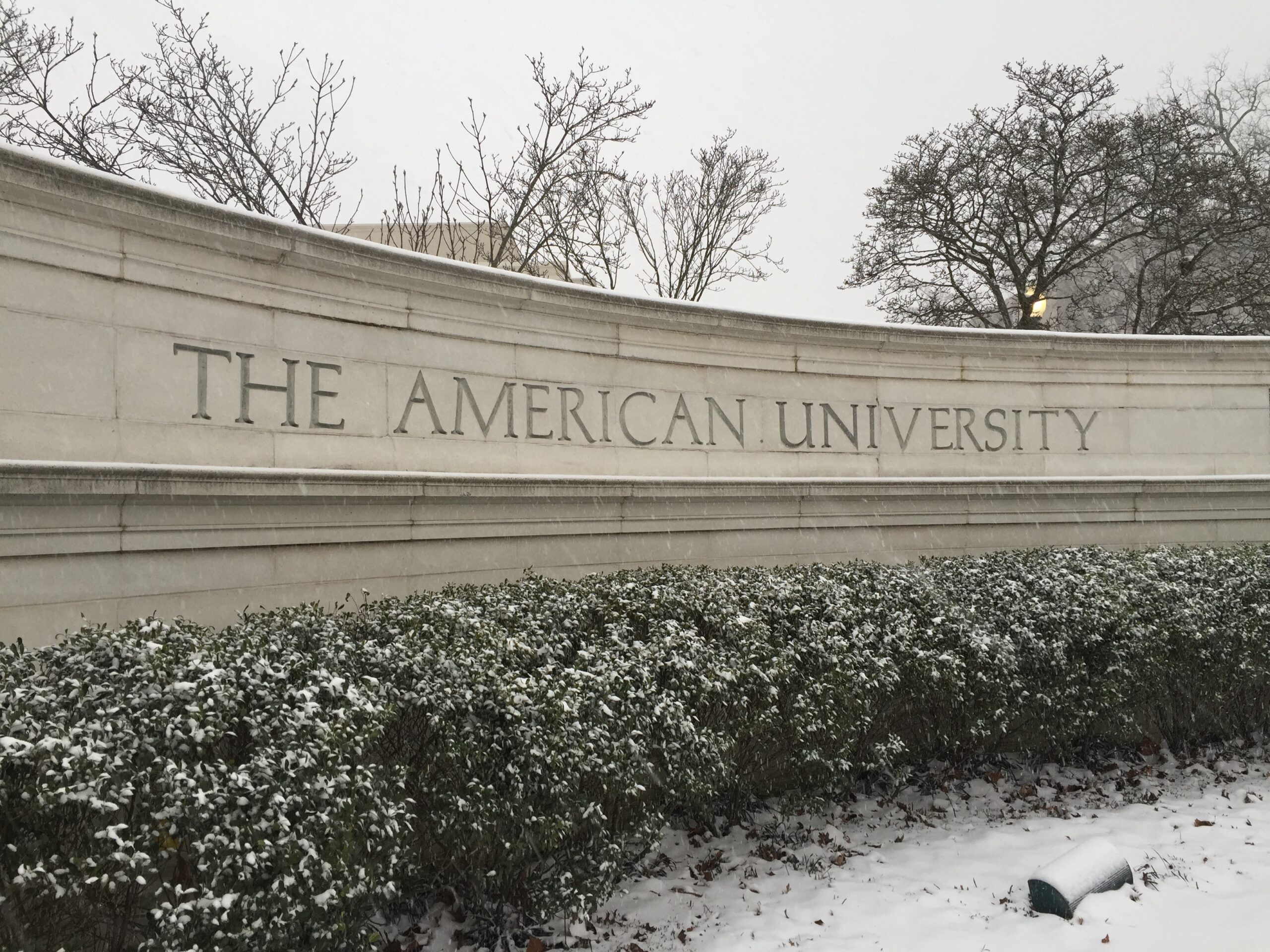
| American University | Washington DC. Exceptional for policy, international relations, journalism. | ~2.5 hrs |
| TCNJ Honors | Best public honors experience in the Northeast. 40 minutes. Outstanding value. | ~40 min |
| Rowan Honors/Engineering | Rapidly growing engineering, medical, and business programs. 10 minutes. NJ STARS pathway. | ~10 min |
The Philadelphia Advantage
Gloucester County sits directly across the Delaware River from Philadelphia via the Commodore Barry Bridge. The University of Pennsylvania, Drexel, Temple, Saint Joseph’s, Haverford, Swarthmore, and Bryn Mawr are all within a 25 to 40 minute drive. Philadelphia’s research hospitals (Penn Medicine, CHOP, Jefferson), cultural institutions (Philadelphia Museum of Art, Franklin Institute, Academy of Natural Sciences), and nonprofit sector provide extracurricular and internship opportunities that students in most NJ counties can only access through NYC, which is two hours away.
North Jersey families build their strategies around Manhattan. Gloucester County families should be building theirs around Philadelphia. Campus visits, pre-college summer programs, research internships, and community engagement in Philadelphia are all within easy reach. For families on the Pennsylvania side of the river, our Main Line college admissions guide covers Lower Merion, Conestoga, Radnor, and Harriton in the same detail. Our guide to UPenn admissions is particularly relevant for Gloucester County families given the school’s proximity.
Camden County families already know this advantage, as we discussed in our Camden County college admissions guide. Gloucester County families have an even greater version of the same opportunity because they face less competition from local classmates for Philadelphia-area resources and spots.
What Every Gloucester County Family Should Do (Regardless of School)
There are certain principles that apply across all five schools. These are the non-negotiables.
Use Philadelphia. Aggressively.
Every point made in the section above applies here. Campus visits, pre-college programs, research internships, cultural engagement. Philadelphia is your competitive advantage over every NJ county north of Mercer. Use it.
Start Test Prep in 10th Grade, Not 11th
At schools where average SATs range from 1140 to 1250, strong test scores carry outsized contextual weight. A 1400 from Washington Township tells admissions officers something qualitatively different from a 1400 from Princeton High School. This makes standardized testing one of the highest-ROI investments a Gloucester County family can make. Begin preparation in 10th grade with a diagnostic test to identify strengths and weaknesses, determine SAT vs. ACT preference, and establish a preparation timeline that allows for multiple sittings.
Supplement the School’s AP Infrastructure
AP enrollment across these schools ranges from 19% (Delsea) to 26% (Kingsway and Washington Township). Even at the top of that range, the AP course selection may not cover every subject area an ambitious student wants to explore. At Delsea, the gaps are pronounced. Dual enrollment at Rowan College of South Jersey, or accredited online providers for AP subjects not offered at your school, is essential for students targeting selective universities. These courses appear on transcripts as genuine college credit and demonstrate initiative beyond the school’s default offerings.
Build a Distinctive Extracurricular Profile by End of 10th Grade
Generic club participation does not move the needle at selective schools. What matters is depth, specificity, and a narrative that connects your activities to who you are. Gloucester County offers specific opportunities: proximity to Philadelphia, access to South Jersey’s environmental resources (the Pine Barrens, the Delaware River watershed, the agricultural communities of southern Gloucester County), and the unique identity of communities like Woolwich Township’s rapid growth or Franklin Township’s rural character. A Delsea student who builds an environmental science project connected to the Pine Barrens tells a story that no Bergen County applicant can replicate. A GCIT student who extends their CTE pathway into a genuine entrepreneurial venture is more compelling than a traditional AP student with the same grades. For the strategic framework, see our guide to building a college application spike.
SAT Targets at a Glance
| School | Avg SAT | Target: Competitive Schools | Target: Most Selective | Gap at Top Target |
|---|---|---|---|---|
| GCIT | 1220 | 1350+ | 1420+ | +200 |
| Clearview Regional | 1250 | 1380+ | 1450+ | +200 |
| Kingsway Regional | 1230 | 1360+ | 1430+ | +200 |
| Washington Township | 1180 | 1320+ | 1400+ | +220 |
| Delsea Regional | 1140 | 1250+ | 1350+ | +210 |
The “Gap at Top Target” column is the one that matters most for admissions context. At Washington Township and Delsea, hitting the top target puts your child 210 to 220 points above the school average. These are the kinds of gaps that make admissions officers pay attention. At Clearview, the gap is still 200 points, but because the school’s baseline is higher, the absolute score of 1450 is also more directly competitive at selective universities.
Teacher Quality and Recommendation Letters: A Hidden Variable
One number in the master table deserves special attention: the percentage of teachers in their first or second year.
| School | New Teachers (1st/2nd Year) | Teachers Care (Poll) | Engaging Lessons (Poll) | Avg Teacher Salary |
|---|---|---|---|---|
| GCIT | 0% | 81% | 78% | N/A |
| Clearview Regional | 0.9% | 80% | 59% | $80,466 |
| Kingsway Regional | 23.8% | 85% | 74% | $64,236 |
| Washington Township | 3.8% | 82% | 84% | $75,833 |
| Delsea Regional | 9.5% | 83% | 75% | $76,798 |
GCIT and Clearview have the most stable faculties: 0% and 0.9% new teachers, respectively. Kingsway’s 23.8% is a serious concern. Washington Township has the best combination of faculty stability (3.8% new) and engaging lessons (84%), making it the best school in this guide for finding teachers who will write strong recommendation letters. Delsea’s 9.5% new-teacher rate and 83% teacher-care score reflect a generally stable and caring faculty, though the engaging-lessons score of 75% suggests some unevenness.
At every school, identify two teachers by the end of 10th grade who are experienced, who know your child as a person and not just a grade, and who will still be at the school when junior-year recommendation letters are due. At Kingsway, this is particularly urgent given the turnover rate. At GCIT, leverage the CTE pathway instructors who know your child’s applied work intimately; these letters can be extraordinarily powerful because they speak to competence and initiative in ways that traditional classroom teachers often cannot.
Gloucester County’s Specific Pitfalls
The Rowan Default
Rowan University ranks #1 on the interest list at every single school in this guide. At Washington Township, 580 students expressed interest, nearly 28% of the entire student body. Rowan is a solid, rapidly improving university with genuine strengths in engineering and medical education. But the gravitational pull toward Rowan as the “obvious” choice means many strong students never seriously investigate alternatives. Rowan’s Honors programme and engineering school are genuinely worth considering, but as a deliberate choice, not a default. Schools like TCNJ, Delaware, Villanova, Lehigh, and Drexel offer outcomes that Rowan’s standard programme does not match, and all are within 90 minutes of Gloucester County.
The Philly Blind Spot
Despite being 25 to 40 minutes from Center City, Gloucester County families systematically underutilize Philadelphia-area resources. Pre-college programs at Penn, research positions at Drexel, internships at Philadelphia nonprofits: these opportunities are structurally easier for Gloucester County families to access than they are for families in any NJ county except Camden and possibly Burlington. The families who exploit this advantage consistently outperform those who do not.
The “GCIT Is Vocational” Misconception
Some Gloucester County families still think of GCIT as a “trade school” rather than a competitive academic institution. The data tells a different story: GCIT is ranked #1 in the county, has the most stable faculty, and produces students with a unique combination of academic and applied credentials. The CTE model is an asset, not a limitation, in today’s admissions landscape. Families who dismiss GCIT based on outdated perceptions are missing one of the county’s strongest college-preparatory options.
Late Starts
The most consequential difference between Gloucester County families and their counterparts in Bergen or Essex County is timing. In competitive North Jersey counties, strategic college planning commonly begins in 8th or 9th grade. In Gloucester County, it more often begins in 11th grade. By then, the highest-leverage decisions, course sequencing, extracurricular depth, test prep initiation, summer program applications, have already been made passively. If you are reading this and your child is in 9th or 10th grade, you have a genuine window of opportunity. If your child is already in 11th grade, the window is not closed, but the strategies shift from shaping a trajectory to optimizing the existing one. Either way, start now.
Ignoring Burlington County Resources
Gloucester County borders Burlington County to the north and east. Families in northern Gloucester County communities like Woolwich Township and Harrison Township are often closer to Burlington County resources (Rowan College at Burlington County, the Lenape Regional district’s programs) than they are to southern Gloucester County institutions. Our Burlington County college admissions guide covers these dynamics and may be relevant for families near the county line.
The Takeaway
Gloucester County is not one thing. It is GCIT’s vocational-technical innovation and Clearview’s suburban academic strength. It is Kingsway’s rapid growth and Washington Township’s extracurricular richness. It is Delsea’s rural character and athletic intensity. It is Rowan University 10 minutes in one direction and the Pine Barrens 20 minutes in the other, with Philadelphia 30 minutes across the bridge.
The families here have access to resources and opportunities that most of New Jersey does not, and most of them are leaving those opportunities on the table.
The students who end up at the schools they actually want, rather than the schools they settle for, are almost always the ones whose families:
- Understood their specific school’s strengths and limitations clearly
- Invested in test preparation early
- Built distinctive profiles rather than generic resumes
- Used Philadelphia
- Started the strategic conversation before junior year
That conversation starts here. And it starts now.
Gloucester County is one of the regions we cover in our New Jersey College Admissions Guide by Region, which connects families across all 21 NJ counties to school-by-school strategies, SAT data, and year-by-year planning timelines. If you want to see how Gloucester County compares to other competitive areas in the state, start there.
Oriel Admissions works with Gloucester County families at GCIT, Clearview, Kingsway, Washington Township, Delsea, and schools throughout South Jersey. Based in Princeton, NJ and New York City, we pair students with dedicated college counselors, writing coaches, career coaches, and project mentors beginning as early as 8th grade. 93% of our students are admitted to one of their top 3 choices. Contact us to start the conversation.
Frequently Asked Questions
It is realistic for a student who earns a 1300+ SAT (1350+ preferred), completes the most demanding course load available supplemented by dual enrollment or external coursework, builds a distinctive extracurricular profile that leverages Delsea’s rural community and athletic culture, and can tell an authentic story about who they are and what they have built. The school’s academic limitations are real, but admissions officers actively seek students who have overcome environmental constraints. A top student from Delsea is a more interesting candidate to many admissions committees than a median student from Clearview. Our <a href=’https://orieladmissions.com/ocean-county-college-admissions-guide/’>Ocean County guide</a> covers similar dynamics in a different county.
Camden County has a higher ceiling (Haddonfield at #1 in Camden County has a 1320 SAT versus Clearview’s 1250 at the top of Gloucester County) and stronger name recognition at elite admissions offices. However, Gloucester County has GCIT, which offers a vocational-technical credential that no Camden County school can match. Both counties benefit from Philadelphia proximity. The key difference is that Camden County families face more internal competition at the top (Cherry Hill East alone has 2,093 students with strong ambitions), while Gloucester County families face less. For the Camden County perspective, see our <a href=’https://orieladmissions.com/camden-county-college-admissions-guide/’>Camden County guide</a>.
For families at any of these five schools targeting outcomes beyond the NJ state school default, the return on private counseling in Gloucester County is high. The gap between what school counselors can provide and what competitive admissions requires is significant at all five schools. At large schools like Washington Township (2,108 students) and Kingsway (1,984 students), the student-to-counselor ratio limits individualized strategic planning. A multi-year relationship with an expert consultant who can provide course-selection advice, essay coaching, school-list development, and early-decision strategy produces consistently better outcomes than relying on school guidance alone. <a href=’https://orieladmissions.com/contact/’>Contact Oriel Admissions</a> to discuss your family’s situation.
Gloucester County Institute of Technology is a four-year vocational-technical high school that admits students from across Gloucester County through a competitive application process. Students choose a career-technical education (CTE) pathway while completing a college-preparatory academic curriculum. GCIT is ranked #1 in Gloucester County and #117 statewide by Niche. For students with a specific technical interest (engineering, health sciences, computer science, culinary arts, and others), GCIT offers a unique credential that traditional comprehensive high schools cannot provide. The CTE pathway gives applicants an applied-learning narrative that selective universities increasingly value. If your child has a clear technical passion, GCIT should be at the top of your consideration list.
SAT scores carry outsized importance for Gloucester County students because of contextual evaluation. Admissions officers compare your child’s scores against their school’s average, and the gap between a student’s score and the school mean tells a powerful story. A 1400 from Washington Township (average 1180) represents a 220-point contextual gap that signals exceptional ability and initiative. A 1350 from Delsea (average 1140) tells a similar story. Because Gloucester County schools average between 1140 and 1250, strong test scores are one of the highest-ROI investments a family can make. Begin test preparation in 10th grade with a diagnostic to identify SAT versus ACT preference, and plan for multiple sittings.
Gloucester County sits 25 to 40 minutes from Center City Philadelphia via the Commodore Barry Bridge. The University of Pennsylvania, Drexel, Temple, Saint Joseph’s, Haverford, Swarthmore, and Bryn Mawr are all within driving distance. Philadelphia’s research hospitals (Penn Medicine, CHOP, Jefferson), cultural institutions (Philadelphia Museum of Art, Franklin Institute, Academy of Natural Sciences), and nonprofit sector provide extracurricular and internship opportunities that students in most NJ counties can only access through NYC. Pre-college summer programs at Penn, research positions at Drexel, and campus visits to Villanova and Haverford should be part of every ambitious Gloucester County family’s plan.
Clearview wins on raw academic metrics: a 1250 average SAT versus Kingsway’s 1230, 63% math proficiency versus 39%, 72% reading proficiency versus 60%, and a 98% versus 95% graduation rate. Clearview also has the most stable faculty in this guide (0.9% new teachers versus Kingsway’s 23.8%). However, Kingsway has a better diversity grade (B+ versus B-), higher AP enrollment (26% versus 23%), and a lower student-teacher ratio (14:1 versus 15:1). The contextual SAT advantage is slightly greater at Kingsway, where a 1430 represents a 200-point gap above the mean versus 200 points at Clearview (but from a lower absolute score). The right school depends on your child’s learning style, the community you live in, and whether Clearview’s stronger baseline or Kingsway’s larger contextual opportunity matters more for your specific admissions strategy.
Rowan University is a solid, rapidly improving institution with genuine strengths in engineering, health sciences, and business. Its Honors programme and engineering school are worth serious consideration. The issue is not that Rowan is a bad choice but that it should be a deliberate choice, not a default. When Rowan ranks #1 on the interest list at every school in this guide, that suggests many students are choosing it because it is nearby and familiar rather than because they have carefully evaluated alternatives. Schools like TCNJ, University of Delaware, Villanova, Drexel, and Lehigh offer different opportunities and outcomes. Every Gloucester County family should investigate at least three to five schools beyond Rowan before settling on a final list.