What Makes a College One of the Best Colleges for Astronomy?
Astronomy is a small field built on physics. The American Astronomical Society says “a physics or astronomy major is the typical undergraduate stepping stone to a PhD program and eventual astronomer’s position” (AAS). The best colleges for astronomy and astrophysics give students that physics foundation and then put them on telescopes and research projects long before graduate school. Five things separate them.
- Telescope access. Berkeley, UT Austin, Maryland, Boston University, and the Five College consortium give undergraduates time on professional observatories, not only campus telescopes.
- Required research. Princeton, Yale, Haverford, Wesleyan, and UC Santa Cruz require a senior thesis or research capstone, and Chicago aims to place students in research by the summer after second year.
- Physics depth. An astrophysics degree usually requires the same core physics and mathematics as a physics major, which keeps the PhD path open.
- A major or a track. Some universities offer a separate astronomy or astrophysics major; Stanford, MIT, Johns Hopkins, and Northwestern teach astronomy inside physics.
- Funded summer research. Caltech paid summer research fellows $8,110 for ten weeks in 2026, and Northwestern’s CIERA program pays $6,300 for nine weeks plus housing.
Which Colleges Are Best for Astronomy?
The table below lists the best colleges for astronomy with the degree each one offers, named the way the university names it, and one concrete feature taken from its own pages. Schools are grouped by type and selectivity, and each linked school name leads to our analysis of its acceptance rate or admissions.
| University | Undergraduate degree | What stands out for undergraduates | Selectivity |
|---|---|---|---|
| Caltech | Astrophysics Option | Senior thesis research is encouraged but not required; SURF fellows received $8,110 for ten weeks in 2026 | Most selective |
| Harvard University | Astrophysics concentration; secondary field in Astrophysics | The Harvard Observing Project puts undergraduates on the 16-inch Clay telescope atop the Science Center, with no experience needed | Most selective |
| Princeton University | Astrophysical Sciences, AB | At least one junior paper and a year-long senior thesis with an oral defense | Most selective |
| Yale University | Astronomy, BA; Astrophysics, BS | The BS requires a two-term independent research project; the BA a one-term senior essay or project | Most selective |
| Columbia University | Astronomy; Astrophysics (majors) | Rooftop telescopes on Pupin Labs, and a Bell-Burnell Fellowship for research the summer before senior year | Most selective |
| University of Chicago | Astrophysics major (BA or BS) | Launched in 2018-19, the major aims to match students with a research placement by the summer after second year | Most selective |
| Stanford University | Physics, BS, with an Astrophysics Pathway | No separate astronomy major; the Student Observatory has a 24-inch main telescope and a 16-inch telescope | Most selective |
| MIT | Physics, SB (Course 8); Minor in Astronomy | No separate astronomy major; Wallace Astrophysical Observatory runs six robotic telescopes for MIT classes | Most selective |
| Johns Hopkins University | Physics, BA or BS | No separate astronomy major; the 20-inch Offit Telescope sits in a rooftop dome, and nearly all physics majors do research | Most selective |
| Northwestern University | Physics major with an Astronomy concentration | The CIERA summer REU pays $6,300 for nine weeks plus housing and recruits nationally | Most selective |
| Rice University | Astrophysics, BS; Astronomy, BA | The BS requires at least 70 credit hours, including research courses and two research seminars | Most selective |
| Boston University | Astronomy, BA; Astronomy and Physics, BA | Students use the rooftop Coit Observatory and travel to Flagstaff to use the 1.8-meter Perkins and 4.3-meter Lowell Discovery telescopes | Highly selective |
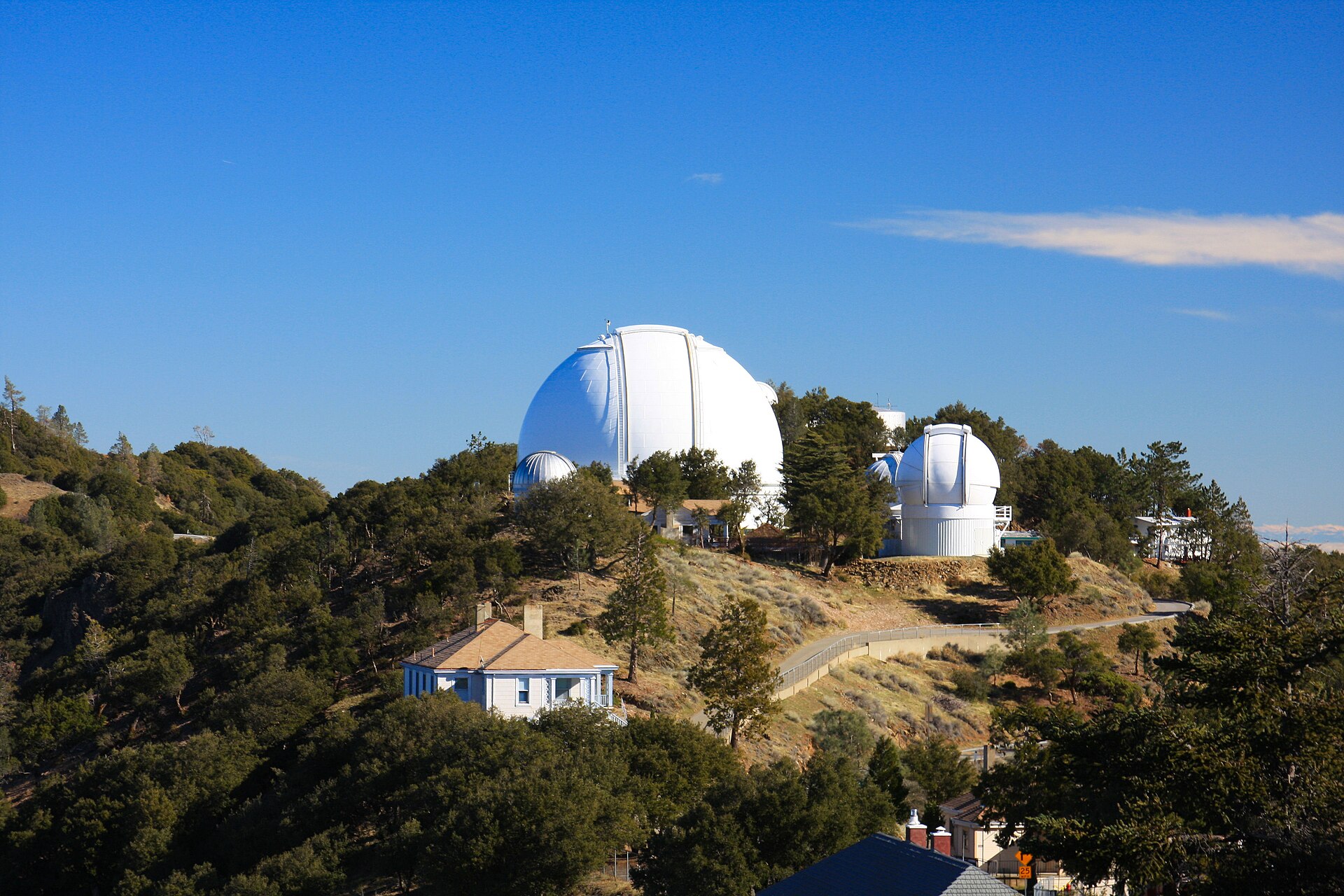
| UC Berkeley | Astrophysics, BA | The observational lab course uses professional telescopes at Leuschner and Lick observatories; an honors program is available | Highly selective |
| University of Arizona | Astronomy, BS | Its May 2026 class of 38 astronomy BS graduates was the largest in its history; a research project or honors thesis is required | Less selective |
| UT Austin | Astronomy, BA; Astronomy, BSA; Astronomy, BS (including an honors option) | Students use the university’s McDonald Observatory in West Texas | Highly selective |
| University of Michigan | Astronomy and Astrophysics; Interdisciplinary Astronomy (majors) | The Angell Hall student observatory has a 0.4-meter reflector with a spectrograph and camera | Highly selective |
| University of Wisconsin-Madison | Astronomy-Physics, BS or BA | Honors requires a two-semester senior thesis, a 3.3 overall GPA, and a 3.5 in upper-level courses | Selective |
| University of Colorado Boulder | Astrophysical and Planetary Sciences, BA or BS | The department reports 340 majors, 80 minors, and 30 faculty | Less selective |
| University of Hawaii at Manoa | Astrophysics, BS; Astronomy, BA | Students learn from nearly 50 astronomy faculty at the Institute for Astronomy | Less selective |
| UC Santa Cruz | Physics (Astrophysics), BS | Astrophysics is offered as a physics degree, and a senior thesis is required for graduation | Selective |
| University of Washington | Astronomy, BS | Most astronomy majors also major in physics, and students observe at Manastash Ridge Observatory | Selective |
| University of Maryland | Astronomy, BS (Astrophysics; Data Science; or Physical Science specialization) | The department is a full partner in the 4.3-meter Lowell Discovery Telescope; the Astrophysics specialization requires 3 credits of research | Selective |
| Wellesley College | Astrophysics; Astronomy (majors) | Whitin Observatory’s telescopes include a 0.7-meter reflector and 12-inch and 6-inch refractors | Highly selective |
| Williams College | Astrophysics; Astronomy (majors) | Honors in Astrophysics is awarded for a senior thesis and an oral presentation | Most selective |
| Swarthmore College | Astronomy; Astrophysics (course and honors majors) | A 24-inch telescope on the Science Center roof is used from introductory labs through research | Most selective |
| Haverford College | Astronomy; Astrophysics (majors) | Both majors require a senior thesis and a talk; the observing course uses a 16-inch telescope | Highly selective |
| Vassar College | Astronomy major | The observatory has 20-inch and 32-inch reflectors; Vassar calls the 32-inch one of the two largest research telescopes in New York State | Highly selective |
| Wesleyan University | Astronomy, BA | Every major completes a senior research capstone, and the 24-inch Perkin reflector supports senior theses | Highly selective |
| UMass Amherst | Astrophysics, BS; Space Science, BS; Astronomy, BA | Part of the Five College Astronomy Department, whose main shared project is the 1.8-meter Perkins telescope in Arizona | Selective |
| Penn State | Astronomy and Astrophysics, BS | A 24-inch telescope was added to the Davey Lab rooftop observatory in 2014 | Selective |
| University of Iowa | Astronomy, BS or BA | A 17-inch reflector on the roof of Van Allen Hall is used for undergraduate labs | Less selective |
What Is the Difference Between an Astronomy and an Astrophysics Major?
At many colleges the two names describe the same field, but where both are offered, astrophysics usually means more physics and mathematics. Yale’s Astrophysics BS requires a two-term independent research project, while its Astronomy BA requires a one-term senior essay or project (Yale College Programs of Study). Rice offers an Astrophysics BS of at least 70 credit hours and a separate Astronomy BA, and Columbia, Wellesley, Williams, Swarthmore, and Haverford also offer both majors. The BA leaves more room for a second field; the BS is the stronger preparation for a PhD, which is why the best colleges for astrophysics build the major on the full physics core. Because the major rests on physics and mathematics, our guides to the best colleges for physics and the best colleges for math are useful companions.
Some of the strongest universities do not offer a separate major at all. Stanford students take a Physics BS with an Astrophysics Pathway (Stanford Bulletin), MIT students major in physics and can add a minor in astronomy, Northwestern offers an astronomy concentration inside physics, and UC Santa Cruz awards a Physics (Astrophysics) BS. The numbers reflect this: the American Institute of Physics roster for 2023-24 lists 93 degree-granting astronomy departments, and only 37 of them are stand-alone; the other 56 are combined physics and astronomy departments (AIP).
Which Colleges Give Undergraduates Access to Professional Telescopes?
Maryland’s astronomy department is a full partner in the 4.3-meter Lowell Discovery Telescope, and its Astrophysics specialization requires 3 credits of experiential learning, meaning research for credit (University of Maryland). UT Austin students use the university’s McDonald Observatory in West Texas (UT Austin), and Berkeley’s observational lab course uses telescopes at Leuschner and Lick observatories. Boston University students travel to Flagstaff, Arizona, to use the 1.8-meter Perkins and 4.3-meter Lowell Discovery telescopes (Boston University), and UMass Amherst shares the 1.8-meter Perkins telescope through the Five College Astronomy Department. Washington students observe at Manastash Ridge Observatory.
Campus observatories matter too, because they are where students first learn to observe. MIT’s Wallace Astrophysical Observatory runs six robotic telescopes, Stanford’s Student Observatory has a 24-inch telescope, and Swarthmore uses a 24-inch telescope from introductory labs through research. Vassar has 20-inch and 32-inch reflectors, Wellesley a 0.7-meter reflector, and Wesleyan a 24-inch reflector that supports senior theses.
Which Highly Selective Universities Have the Strongest Astronomy Programs?
Princeton’s Astrophysical Sciences majors write at least one junior paper and a year-long senior thesis that ends in an oral defense (Princeton University). Chicago launched its astrophysics major in 2018-19 and aims to match students with a research placement by the summer after their second year (University of Chicago). Columbia funds research the summer before senior year through its Bell-Burnell Fellowship, and Harvard’s Observing Project puts undergraduates with no experience on the 16-inch Clay telescope.
Caltech’s Astrophysics Option encourages but does not require a senior thesis, and its Summer Undergraduate Research Fellowships paid $8,110 for ten weeks in 2026. Northwestern’s CIERA summer research program pays $6,300 for nine weeks plus housing and recruits students from other colleges as well (Northwestern CIERA). Our comparison of MIT and Caltech for STEM covers how two of these universities differ for science students.
Which Public Universities Are Best for Astronomy?
Public universities run some of the largest astronomy programs in the country. Arizona’s May 2026 class of 38 astronomy BS graduates was the largest in the department’s history, and the degree requires a research project or honors thesis (University of Arizona). Colorado Boulder reports 340 majors and 30 faculty in Astrophysical and Planetary Sciences, and Hawaii students learn from nearly 50 astronomy faculty at the Institute for Astronomy. Several of these universities admit most applicants: Arizona admitted 86 percent of first-year applicants in fall 2023, Hawaii at Manoa 70 percent in fall 2023, and Iowa 84 percent in fall 2024, according to NCES College Navigator.
Wisconsin’s honors program requires a two-semester senior thesis, a 3.3 overall GPA, and a 3.5 in upper-level courses, and UC Santa Cruz requires a senior thesis of every Physics (Astrophysics) graduate. At Washington, most astronomy majors also major in physics, “especially since the additional requirements are modest” (University of Washington).
Which Liberal Arts Colleges Are Best for Astronomy?
Several of the best astronomy colleges are liberal arts colleges with small classes and their own observatories. Williams awards honors in astrophysics for a senior thesis and an oral presentation, Haverford requires a senior thesis and a talk in both of its majors, and every Wesleyan astronomy major completes a senior research capstone. Swarthmore, Vassar, and Wellesley all run campus observatories with research-grade telescopes. Our guide to liberal arts colleges versus research universities covers the trade-offs between the two settings.
Do You Need a PhD to Become an Astronomer?
For research, yes. The Bureau of Labor Statistics says “physicists and astronomers typically need a Ph.D. for jobs in research and academia.” Astronomers earned a median of $128,820 in May 2025, held about 2,400 jobs, and are projected to grow 8 percent from 2025 to 2035 (BLS). Because the field is small, most astronomy and astrophysics graduates use their physics, programming, and data skills in other careers, including data science, engineering, aerospace, and teaching.
Students who want to test their interest early can look at research internships; our guide to NASA internships for high school students covers the most competitive options.
How Do You Judge an Astronomy Program Beyond the Rankings?
- Find the telescopes. Ask which telescopes undergraduates use, how often, and whether the university has time on a professional observatory.
- Check the physics. Compare the astrophysics requirements with the physics major; the closer they are, the better the PhD preparation.
- Read the thesis rules. A required senior thesis or capstone guarantees a real research project before graduation.
- Ask about summer research. Funded programs on campus and access to national programs show how early students start.
- Look at the department. A stand-alone astronomy department and a physics track offer different experiences, and both can lead to a PhD.
What Do Admissions Officers Look for in an Astronomy Applicant?
Astronomy applicants are read as physics applicants at most universities. What stands out is strong mathematics and physics, programming skill, and evidence that a student has worked with real data.
- Coursework. AP Physics C, AP Calculus BC, and a programming course. Astronomy research today runs on code as much as on telescopes.
- Competitions. Strong AMC 10 or AMC 12 scores and the U.S. Physics Olympiad show the quantitative ability these programs expect.
- Research. A summer program such as RSI or a project that analyzes public telescope data shows what a student can do with real observations.
- Independent work. Our guide to research opportunities for high school students explains how to find a mentor.
Oriel Admissions builds this record with students who start in 9th or 10th grade: a math and physics sequence that reaches calculus-based physics, one research project with real data, and a competition result that confirms the coursework. Our high school research mentorship and our guide to intended major strategy explain how that record fits a declared science major.
Frequently Asked Questions About the Best Colleges for Astronomy
There is no single answer, because the best colleges for astronomy depend on whether a student wants a research university, a public flagship, or a liberal arts college. Among the most selective universities, Caltech, Harvard, Princeton, Yale, Columbia, and Chicago combine research with strong physics. Among public universities, Berkeley, Arizona, UT Austin, Michigan, and Maryland give students access to professional telescopes. Among liberal arts colleges, Wellesley, Williams, Swarthmore, and Haverford run their own observatories and require senior research.
U.S. colleges awarded a record 1,065 bachelor degrees in astronomy in 2024-25, according to the American Institute of Physics, compared with 8,108 in physics. Many astrophysics degrees awarded by physics departments are counted with physics.
Where a college offers both, astrophysics usually requires more physics and mathematics. At Yale the Astrophysics BS requires a two-term research project and the Astronomy BA a one-term senior essay or project, and Rice offers an Astrophysics BS and an Astronomy BA.
Yes, through physics. MIT students major in physics and can add a minor in astronomy, and Stanford students take a Physics BS with an Astrophysics Pathway. Neither offers a separate astronomy major.
Maryland is a full partner in the 4.3-meter Lowell Discovery Telescope, UT Austin students use McDonald Observatory, Berkeley students use Leuschner and Lick observatories, and Boston University students travel to Flagstaff to use the Perkins and Lowell Discovery telescopes.
For research and academic jobs, yes. The Bureau of Labor Statistics says physicists and astronomers typically need a PhD for those jobs. Astronomers earned a median of 128,820 dollars in May 2025, and employment is projected to grow 8 percent from 2025 to 2035.
Yes. The American Astronomical Society describes a physics or astronomy major as the typical path to a PhD, and at the University of Washington most astronomy majors also major in physics because the added requirements are modest.
Take AP Physics C, AP Calculus BC, and a programming course, compete in math or physics competitions, and complete one research project that uses real telescope data. Oriel Admissions plans this sequence with students starting in 9th or 10th grade.
Sources: AIP: Roster of Astronomy Departments, 2025, AIP: Roster of Physics Departments, 2025, AIP: Roster of Astronomy Departments, 2024, BLS Occupational Outlook Handbook: Physicists and Astronomers, American Astronomical Society: Careers in Astronomy, Princeton University: Astrophysical Sciences, Yale College Programs of Study: Astronomy, University of Chicago Astrophysics, Stanford Bulletin: Physics, BS, University of Maryland Astronomy Major, UT Austin: Astronomy Major, Boston University Astronomy, Northwestern CIERA REU, University of Arizona Astronomy, University of Washington Astronomy, NCES College Navigator
About Oriel Admissions
Oriel Admissions is a Princeton-based college admissions consulting firm advising families nationwide on elite university admissions strategy. Our team brings deep expertise across every dimension of the application, and our distinctive 360 approach develops strategy, positioning, activities, essays, and interviews as one coherent whole. To discuss your family’s admissions strategy, schedule a consultation.