Beyond the numbers, our companion guide covers what Amherst College is known for – academics, culture, and outcomes.
What Is Amherst’s Acceptance Rate for the Class of 2030?
Amherst College’s Class of 2030 acceptance rate was 6.78%, a record-low rate on a record-high applicant pool (Amherst College Office of Admission; The Amherst Student, March 20, 2026). The college admitted 1,206 pre-waitlist students from 17,784 applications, an increase of 1,966 applications from the prior cycle’s 15,818. Per Amherst tradition, admissions decisions were released at 6:21 p.m. on March 20, a reference to Amherst’s founding in 1821.
The 6.78% rate places Amherst as the most selective US liberal arts college for the Class of 2030, narrowly more competitive than Williams (7.4%), Swarthmore (7.44%), and Pomona (approximately 7%). Amherst’s institutional target first-year class size is approximately 480 enrolled students. The yield rate has historically run at approximately 40% at Amherst, with the college expecting approximately 480 of the 1,206 admitted students to enroll. The full Common Data Set publication, including detailed Early Decision and Regular Decision breakdowns, is expected in fall 2026.
What Were Amherst’s Class of 2029 Admissions Numbers?
Amherst admitted 1,238 students from 15,819 applicants for the Class of 2029, producing a 7.72% acceptance rate (Amherst College Common Data Set 2024-2025). This was down from 9.01% for the Class of 2028, reflecting a 15% surge in applicant volume from 13,743 to 15,819 while admit count stayed nearly flat at 1,238 versus 1,222.
The Class of 2029 admitted student profile included a middle 50% SAT range of 1450 to 1560 and a middle 50% ACT range of 33 to 35. Amherst’s first-year class is approximately 480 enrolled students, drawn from a national applicant pool with strong representation from the Northeast, Mid-Atlantic, and international students (typically 12 to 14% of admitted students). The Class of 2029 included a record-high 21% first-generation students and 7% QuestBridge match scholars.
How Has Amherst’s Acceptance Rate Changed Over Time?
Amherst’s acceptance rate has tightened substantially over the past decade. The Class of 2021 admitted 12.90% of applicants from a pool of 9,285. The Class of 2025 produced Amherst’s lowest pre-2030 historical rate at approximately 8.65%, an outlier driven by pandemic-era application surges. Since the Class of 2026, the rate has hovered in the 7% to 9% range, with the Class of 2030 setting a new record low at 6.78%.
The trajectory reflects rising applicant volume (from 9,285 to 17,784 over the past decade) combined with a stable admit count of approximately 1,200 to 1,250 per cycle. Amherst’s institutional capacity for first-year enrollment has not changed materially, meaning increased applicant volume rather than reduced admit capacity has driven the tightening. The 1,966-applicant increase from Class of 2029 to Class of 2030 was the largest single-year applicant pool growth in Amherst’s history.
How Does Amherst Early Decision Compare to Regular Decision?
Amherst admitted 43% of the Class of 2030 through Early Decision (Amherst College Office of Admission, 2026). For the Class of 2029, the ED admit rate was 22.25%, with 216 ED admits from 971 ED applicants. The Regular Decision rate for the Class of 2029 was 6.78% (1,022 admits from 14,848 RD applicants), making the ED rate more than 3 times the RD rate. Class of 2028 ED produced a 29.38% admit rate (216 admits from 735 ED applicants per Amherst Common Data Set), and Class of 2025 ED produced the highest recent rate.
Three Amherst-specific ED features matter strategically. First, Amherst offers ED I only – no ED II. This distinguishes Amherst from Williams, Swarthmore, Pomona, and most peer LACs, which all offer two ED rounds. Amherst’s ED I deadline is November 1, with decisions in mid-December. Applicants who miss ED I cannot apply ED II to Amherst; they must apply through Regular Decision (January 1 deadline). For applicants whose first choice clarifies in November or December rather than October, this single-round structure forecloses an early-commitment option that peer LACs offer. Second, Amherst Dean of Admission Matthew McGann has been explicit that Amherst aims to keep ED admits below 50% of the class: “I think we have been very intentional about trying to keep our early decision numbers relatively low” (The Amherst Student, October 22, 2025). At 43% ED for Class of 2030, Amherst remains within this strategic target, though the share has trended upward.
Third, the open curriculum changes ED commitment calculus. Amherst is one of three highly selective US institutions with a genuinely open curriculum (no general education requirements, no distribution requirements). Brown and Hamilton are the others. This curricular freedom is a real differentiator that ED applicants should engage with: an applicant unsure whether they want curricular structure or freedom should not commit ED. An applicant who deliberately wants open-curriculum freedom and has thought through what they will study should consider ED I to signal that commitment. Approximately 21% of the Class of 2029 are first-generation college students – a record high – and 7% entered via QuestBridge Match (The Amherst Student, October 2025). For broader context on ED versus RD strategy, see our Early Decision vs Regular Decision analysis.
Is Amherst Test-Optional for the Class of 2030?
Amherst is test-optional through the Class of 2030 cycle. The institutional rationale, articulated by the Amherst Office of Admission, is that holistic application review can effectively evaluate applicants without requiring standardized test scores. Amherst has not announced plans to reinstate testing requirements (Amherst College Office of Admission).
Despite the test-optional policy, approximately 60% of admitted Amherst students submit standardized test scores. The middle 50% range for submitted SAT scores is 1450 to 1560, with the 75th percentile at 1560. For applicants whose scores fall within or above the middle 50% range, submitting scores typically strengthens the application. For institutional score data, the NCES College Navigator publishes published score ranges.
How Does Amherst’s Financial Aid Compare to Peers?
Amherst’s financial aid policies are the most distinctive among elite US LACs in four ways. Need-blind for ALL applicants – including international: Amherst is one of the very few US colleges, and the only LAC at this selectivity tier, to practice need-blind admission for international applicants on the same basis as domestic students. The college admits international students without regard to financial need and meets 100% of demonstrated need (Amherst College International Applicants Page, 2026). This contrasts with Williams, Pomona, Swarthmore, and Bowdoin, all of which use need-aware policies for international applicants. Average international aid award $82,000+ for 2024-2025: the average international financial aid award at Amherst in 2024-2025 exceeded $82,000, reflecting both Amherst’s high cost of attendance and the depth of aid for admitted international students (Amherst College International Page, 2026).
No-loan policy: Amherst was one of the first US colleges to adopt a no-loan policy. Initial financial aid offers include grants, scholarships, and a student employment expectation, but no loans. More than 80% of Class of 2024 graduates left Amherst with no student loan debt (Amherst College Financial Aid Office, 2025-2026). For the Class of 2029, 61% of matriculating students received scholarship and grant aid totaling $21.7 million for the entering class. 25% Pell Grant recipients in the Class of 2029: Amherst’s Pell Grant share is one of the highest among elite LACs and among all selective US institutions, materially higher than Williams (19% Class of 2028) and reflecting Amherst’s investment in access (The Amherst Student, October 2025).
Cost of attendance and net pricing: Amherst’s 2026-2027 published direct charges are tuition $75,330, housing $10,980, meals $9,340, and fees $710, totaling approximately $96,360 before books, transportation, and personal expenses (Amherst College Tuition Page, 2026-2027). For families with annual incomes below approximately $100,000, Amherst’s net cost is typically zero or near-zero. Families with incomes between $100,000 and $200,000 typically receive aid bringing net cost to a fraction of the published cost. The Amherst College Textbook Solution (ACTS) provides all enrolled students with required course materials each semester, reducing hidden educational expenses. For broader context on need-blind versus need-aware policies, see our need-blind vs need-aware admissions guide.
How Does Amherst’s Acceptance Rate Compare to Peer Schools?
At 6.78% for the Class of 2030, Amherst is the most selective US liberal arts college this admissions cycle, narrowly more competitive than Williams (7.4%), Swarthmore (7.44%), and Pomona (approximately 7%). The 1,966-applicant surge from Class of 2029 to Class of 2030 was the largest single-year applicant pool growth in Amherst’s history. But selectivity alone misses what differentiates Amherst within this tight peer cluster.
Open curriculum: Amherst has no general education or distribution requirements. Students declare a major (or a double major) and otherwise have complete freedom across Amherst’s 42+ majors and the broader Five-College Consortium (Amherst, Smith, Mount Holyoke, Hampshire, UMass Amherst, with cross-registration access). This is unusual among elite LACs – Williams uses a divisional distribution system, Swarthmore has distribution requirements, Pomona has Critical Inquiry and breadth requirements. The open curriculum draws applicants who value intellectual freedom and self-direction, and rewards those who can structure their own academic paths. Need-blind for international applicants: as noted above, this is genuinely rare among LACs and even among research universities. Amherst is one of perhaps 6-8 US institutions offering this combination of access. For internationally-mobile applicants with financial need, Amherst is structurally one of the most accessible options. Diversity profile: 21% first-generation, 7% QuestBridge match, 25% Pell recipients in the Class of 2029. This profile reflects Amherst’s deliberate investment in access, distinguishing it from peer LACs that historically enroll fewer first-gen and Pell students.
Geographic and size profile: Amherst enrolls approximately 480 first-year students per class, intentionally smaller than peer LACs (Williams enrolls ~550, Swarthmore ~400, Pomona ~415). Amherst’s rural Western Massachusetts location and Five-College Consortium access produce a distinctive geographic and social experience. The 7:1 student-faculty ratio reflects Amherst’s commitment to small-group teaching – a structural commitment that drives institutional cost per student materially higher than peer LACs.
What These Numbers Mean for Your Family’s Amherst Application
A 6.78% admit rate produces three strategic implications specific to Amherst. Implication 1: ED I is the only early option – decide by November 1 or apply RD. Unlike Williams, Swarthmore, and Pomona, Amherst offers only ED I (November 1 deadline). This structure suits applicants who have clarified Amherst as their first choice by October and can commit binding before December. Applicants whose first choice clarifies later have no Amherst ED II fallback – they must apply Regular Decision with January 1 deadline. For applicants weighing Amherst against peer LACs, the asymmetric ED structure matters: applying ED I to Amherst forecloses ED II options at Swarthmore, Williams, or Pomona, but applying ED II elsewhere does not foreclose Amherst RD.
Implication 2: International applicants with financial need have a structural advantage at Amherst they lack elsewhere. Amherst’s need-blind international policy means international applicants applying for aid face the same admissions standard as full-pay international applicants. This is materially different from Williams, Swarthmore, Pomona, and other peer LACs where need-aware policies for international students can affect admissions decisions. International families with substantial demonstrated need should evaluate whether Amherst’s structural admission advantage outweighs peer-LAC factors. Average international aid awards run $82,000+, with no loans included.
Implication 3: Open curriculum fit matters. Amherst’s open curriculum is a feature for some applicants and a structural mismatch for others. Applicants who value curricular guidance, distribution requirements, or a structured liberal arts core should consider whether Amherst’s open structure suits their learning style; Williams, Swarthmore, and Pomona offer different curricular models. Applicants who specifically want curricular freedom should be able to articulate in their essays what they will do with that freedom – admissions readers evaluate whether the open-curriculum fit is real or aspirational. For applicants with strong first-gen or Pell-eligible backgrounds, Amherst’s 21% first-gen and 25% Pell-recipient class profile signals genuine institutional commitment beyond marketing claims. For broader context on LAC selection, see our liberal arts colleges vs research universities comparison.
Frequently Asked Questions About Amherst Admissions
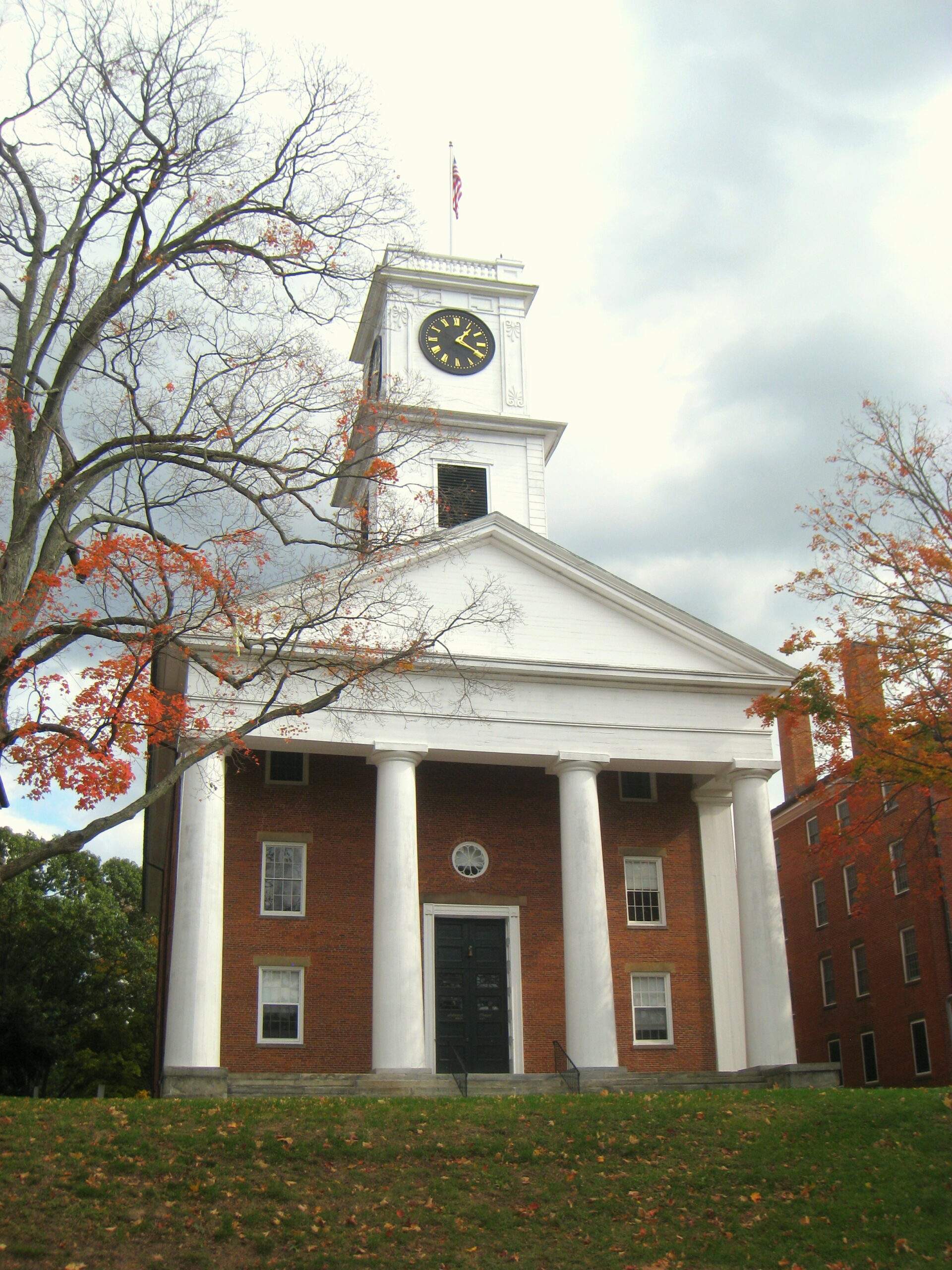
Amherst is in the town of Amherst, Massachusetts, in the Pioneer Valley of the western part of the state. Its scenic campus sits in a classic New England college town surrounded by farmland and hills, within a lively academic area that includes several neighboring institutions. The setting offers a tight-knit residential community in a college-town environment, with the cultural resources of nearby campuses and easy access to the broader valley region.
Yes; Amherst is among the most prestigious liberal arts colleges in the country, commonly counted as a ‘Little Ivy’ and a member of the New England Small College Athletic Conference. It is not an Ivy League school, since that conference comprises universities, but its selectivity and reputation place it at the very top of liberal arts college rankings, alongside longtime peers and rivals in the same conference.
Amherst has generally considered an applicant’s best section scores across test dates when reviewing submitted results, a superscoring-style approach, though it has also offered test-optional admission in recent cycles. Because testing policies have shifted across selective colleges, applicants should confirm Amherst’s current policy on its admissions site. Where scores are submitted, presenting the strongest combination of sections is generally to an applicant’s advantage.
No; like most elite liberal arts colleges, Amherst awards financial aid solely on the basis of demonstrated need and does not offer merit, athletic, or academic scholarships. It is known for a generous, often loan-reduced need-based program that meets full demonstrated need. A high-achieving applicant cannot earn a tuition discount for grades, but families with financial need frequently find Amherst far more affordable than the published sticker price.
Amherst is small, enrolling roughly 1,800 to 1,900 undergraduates, typical of an elite liberal arts college and far smaller than a research university. The intimate scale supports small classes, close faculty relationships, and a strong residential community. Students who want personal attention, discussion-based learning, and direct access to professors, rather than the scale of a large university, often find Amherst’s size particularly appealing.
Amherst is known for an open curriculum with no general-education distribution requirements, so students design their own course of study with faculty guidance while completing a major. This flexibility lets students explore widely or focus deeply without mandated core courses. The open curriculum is a defining feature of an Amherst education, drawing applicants who prize academic independence and the chance to shape their studies around genuine interests.
They are separate institutions in the same town, often confused. Amherst College is a small, highly selective private liberal arts college enrolling under 2,000 students, while the University of Massachusetts Amherst is a large public research university with tens of thousands of students. They differ in size, type, and selectivity but share a town and participate in a local consortium. Applicants should be careful not to conflate the two.
Amherst has offered test-optional admission in recent cycles, allowing applicants to choose whether to submit SAT or ACT scores, though policies can change year to year. Where strong scores are submitted, they can help, and Amherst generally considers an applicant’s best sections. Because test policies have been in flux across selective colleges, applicants should confirm Amherst’s current requirement on its admissions site and decide whether submitting scores strengthens their application.
Sources: Amherst College Office of Admission; The Amherst Student; Common Data Set; NCES College Navigator; IPEDS; NACAC.
About Oriel Admissions
Oriel Admissions is a Princeton-based college admissions consulting firm advising families nationwide on elite university admissions strategy. Our team brings deep expertise across every dimension of the application, and our distinctive 360 approach develops strategy, positioning, activities, essays, and interviews as one coherent whole. We offer a complimentary 30-minute discovery call to discuss your family’s situation, evaluate fit, and outline next steps. Schedule your discovery call →