College AI Policies in 2026: 19 of 50 Highly Selective Colleges Publish No AI Rule for Applicants
By Rona Aydin

What Do College AI Policies Say to Applicants in 2026?
College AI policies say less than families assume. With early deadlines on November 1, every applicant to a selective college is writing essays in a year when a chatbot can produce a plausible draft in seconds. Oriel Admissions set out to answer one question for 50 highly selective colleges: does the college tell applicants, anywhere on its own admissions pages, what use of generative AI it permits?
The answer for 19 of the 50 is no. They publish an authenticity or honesty statement, or nothing at all, and leave the question to the Common Application fraud policy, which every member college adopts and which defines passing off “the substantive content or output of an artificial intelligence platform” as fraud. The other 31 have written something, and what they wrote converges: 26 of them draw the same line, with help allowed at the start and the end of the process and AI-written text barred in the middle.
| Position | Colleges | Share of 50 |
|---|---|---|
| No published rule for applicants | 19 | 38% |
| Discourages AI without setting a rule | 2 | 4% |
| Permits limited use, bars AI-written text | 26 | 52% |
| Prohibits AI in application content | 3 | 6% |
| States whether humans read the application | 6 | 12% |
| Names an AI detection tool | 0 | 0% |
Which Colleges Publish No AI Rule for Applicants?
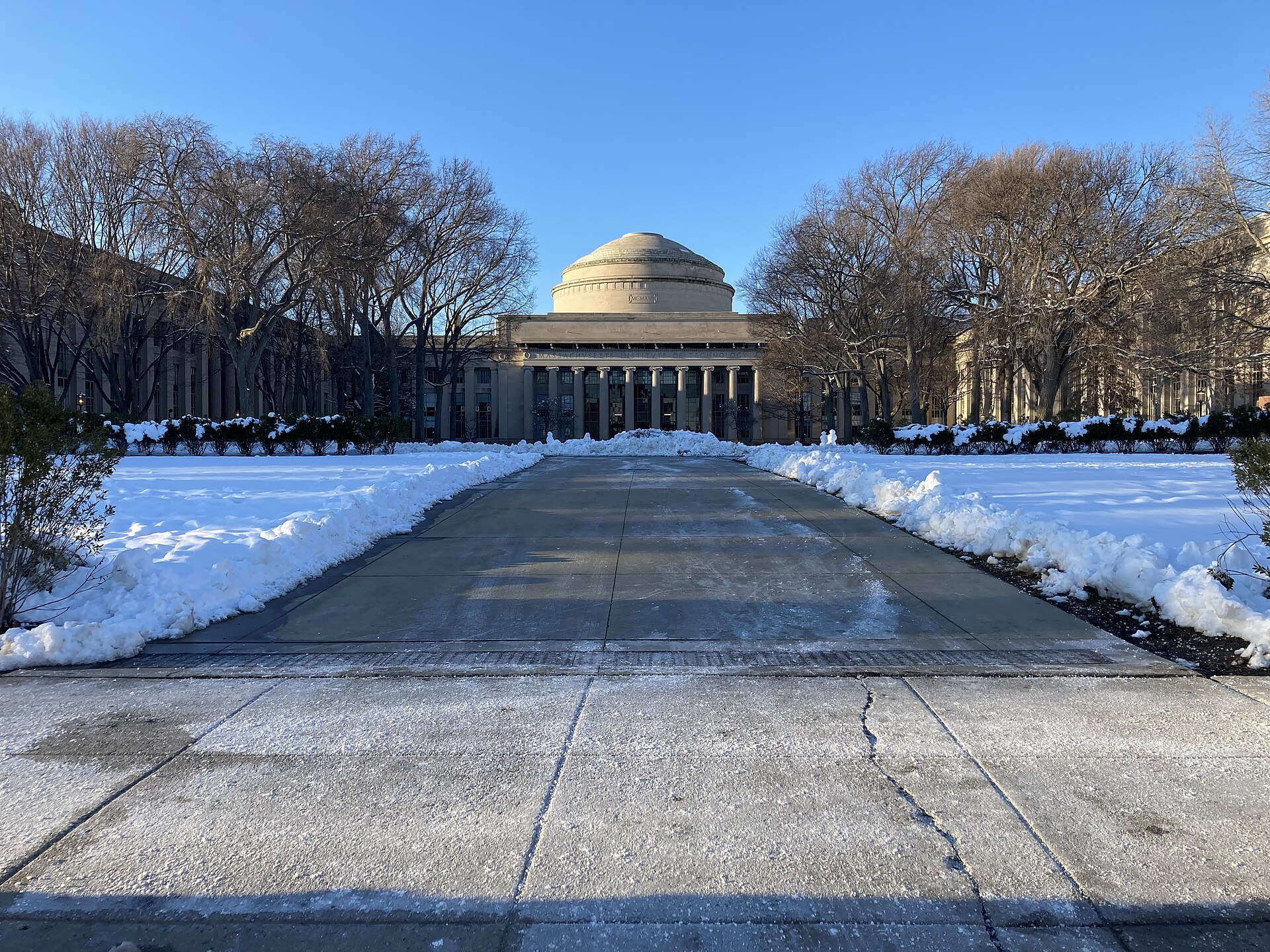
Nineteen colleges publish no statement on applicant use of AI. The list includes Stanford, MIT and Duke, one Ivy League college (Dartmouth), UChicago, and most of the leading liberal arts colleges, among them Amherst, Williams, Pomona, Harvey Mudd, Middlebury, Colby, Davidson and Hamilton. For these schools the only written rule is the Common Application fraud definition, and MIT does not use the Common Application at all.
Several of them say something adjacent. Hamilton tells applicants that an essay “needs to be written by you.” Dartmouth’s dean and his guests talk about AI on the Admissions Beat podcast, but the admissions site publishes no instruction. UNC Chapel Hill answers the opposite question, stating that it does not use AI to evaluate applications, and says nothing about whether applicants may. Two more colleges stop short of a rule and are counted separately: Tufts “strongly discourages” generative AI for essays, and Princeton’s dean of admission wrote on September 1, 2026 that applicants should “shy away from” AI tools when preparing their essays. Oriel Admissions counts a school as having a rule only when its own pages address the applicant’s use of AI.
Which Colleges Permit Limited AI Use?
Twenty-six colleges publish guidance that permits some use. The pattern is consistent enough to state as a rule of thumb: brainstorming a topic and checking grammar on a finished draft are allowed; asking AI to outline, draft, translate or rewrite is not. Yale, Johns Hopkins and Notre Dame cite the Common Application fraud clause and then say which uses fall outside it. Caltech, Bowdoin, Swarthmore, Cornell, Northwestern and Penn publish dedicated pages with lists of acceptable and unacceptable uses. Three statements are easy to miss: Columbia’s sits in its admissions FAQ, NYU’s in a short section of its How to Apply page, and Wesleyan’s on its international applicants page.
The lines differ at the edges. WashU bars using AI “to brainstorm essay topics,” which most of its peers allow. Cornell lists only one acceptable AI use, researching colleges, and names outlining, drafting, writing and translating as unacceptable. Claremont McKenna limits AI to “basic proofreading.” USC says it does not “penalize” thoughtful use and tolerates brainstorming and sentence-level help. The University of California permits AI “to assist with readability.” Swarthmore adds a disclosure requirement: any AI-generated content submitted must be cited. UVA asks applicants to sign an honor statement that their materials are “not primarily a product of AI.” Penn adds a test families can use at home: if the student could not explain in an interview how they arrived at what they wrote, it is not ready to submit.
Which Colleges Prohibit AI Outright?
Three. Brown states that AI “is not permitted under any circumstances in conjunction with application content,” with a carve-out for spelling and grammar review. Georgetown’s first-year application affirmation states that “the use of artificial intelligence (AI) tools to complete any portion of the application, including essays, is prohibited”; the rule appears nowhere on Georgetown’s public admissions site, only in the form the applicant signs. Harvard’s admissions FAQ names AI output as a form of fraud under the Common Application standards and its Honor Code, and publishes no carve-out for brainstorming or grammar, so Oriel Admissions classes it as a prohibition.
What Changed for the 2026-2027 Cycle?
Penn published a page titled “Integrity and AI Use in the Admissions Process” in August 2026. It is the most detailed statement of how a college uses AI on its own side: for administrative checks such as application completeness, with a staff member confirming each outcome. Duke moved the other way. Its optional 2025-2026 prompt asking when an applicant “would or would not choose to use AI” is gone from the 2026-2027 questions, and Duke publishes no applicant AI rule. Princeton’s dean published a second blog post on AI on September 1, 2026, advising applicants to stay away from it without setting a rule. UVA added its honor statement when it dropped its supplemental essay for 2025-2026. Four colleges in the index (Georgia Tech, Tulane, UNC Chapel Hill and UVA) require no supplemental essay this cycle; only Tulane’s dean, in comments reported by Inside Higher Ed in July 2026, linked the decision to AI.
Do Colleges Say Whether Humans Read Applications?
Six of the 50 do. Bowdoin reads applications “entirely by humans.” Swarthmore’s committee “does not use AI tools when making admissions decisions.” UNC Chapel Hill “does not use AI in any facet of the application evaluation process.” USC’s admission blog calls its review “entirely human.” Penn says AI “does not do that for us” when it comes to evaluative decisions. Emory says materials are “carefully read by a member of our admission committee.” Georgia Tech, in a September 29, 2026 news item, says AI helps extract transcript data but “is not making admission or financial aid decisions.” No college in the index states that it runs AI detection software on essays. NYU states the opposite, that it “does not use AI detection technology as part of the review process,” and the University of California says it “conducts regular screenings” without naming a tool.
What Are the College AI Policies at All 50 Colleges?
The table lists 50 highly selective US colleges and universities, chosen as described in the methodology below. Each classification rests on the page linked in the last column, read on October 6, 2026. “No published rule” means Oriel Admissions found no statement addressing applicant use of AI on the college’s admissions pages; the generic language found, if any, is noted.
| College | Position | What the college says | Source |
|---|---|---|---|
| Amherst | No published rule | Writing supplement asks for “original, personal responses”; no AI mention | Amherst |
| Barnard | No published rule | No AI or authenticity language found on admissions pages | Barnard |
| Boston College | Limited use | AI “may also serve as a resource, but must only be used as a guide; content must never be directly copied from AI” | Boston College |
| Boston University | Limited use | Tools “should only be used to support your original ideas rather than to write your essays in their entirety” | Boston University |
| Bowdoin | Limited use | May brainstorm and review grammar after drafting; may not draft, rewrite, change tone or translate; applications read “entirely by humans” | Bowdoin |
| Brown | Prohibits | AI “is not permitted under any circumstances in conjunction with application content”; spelling and grammar review excepted | Brown |
| Caltech | Limited use | Grammar review and brainstorming prompts allowed; copying, outlining, drafting and translating barred; violations may lead to rescission | Caltech |
| Carnegie Mellon | Limited use | AI “should only serve as a supplementary tool to enhance your writing (i.e., grammar and spelling checks, suggested structural or vocabulary improvements)” | Carnegie Mellon |
| Claremont McKenna | Limited use | “If you choose to use AI, it should be limited to basic proofreading” | Claremont McKenna |
| Colby | No published rule | No AI or authenticity language found in the admissions FAQ | Colby |
| Colgate | No published rule | No AI language on admissions pages | Colgate |
| Columbia | Limited use | Admissions FAQ: students “may utilize a wide range of resources, tools and support”; all materials must be “your own original work and reflect your authentic voice” | Columbia |
| Cornell | Limited use | Using AI “to research specific colleges or help you build your college list” is acceptable; having AI “outline, draft, or write your application responses” or translate them is not | Cornell |
| Dartmouth | No published rule | No AI instruction on admissions pages; the dean discusses AI on the Admissions Beat podcast | Dartmouth |
| Davidson | No published rule | No AI language on admissions pages or FAQ | Davidson |
| Duke | No published rule | The optional 2025-2026 prompt on AI use is absent from the 2026-2027 questions; no applicant AI rule published | Duke |
| Emory | Limited use | “AI as a Writing Coach, Not a Creator”; may polish or refine, “should not replace or generate your personal input”; materials “carefully read by a member of our admission committee” | Emory |
| Georgetown | Prohibits | Application affirmation: “the use of artificial intelligence (AI) tools to complete any portion of the application, including essays, is prohibited” | Georgetown |
| Georgia Tech | Limited use | “Use it to brainstorm, edit, and refine your ideas”; do not “copy and paste content you did not create” | Georgia Tech |
| Hamilton | No published rule | “Your essay needs to be written by you”; no AI mention | Hamilton |
| Harvard | Prohibits | FAQ names “the substantive content or output of an artificial intelligence platform” as fraud under Common Application standards and the Honor Code; no carve-out published | Harvard |
| Harvey Mudd | No published rule | FAQ asks for “authenticity”; no AI mention | Harvey Mudd |
| Johns Hopkins | Limited use | May use AI “for brainstorming or refining ideas before the writing process begins and for basic proofreading”; submitting AI output is application fraud | Johns Hopkins |
| MIT | No published rule | Essay page: “Be honest, be open, be authentic”; no AI mention; MIT uses its own application | MIT |
| Middlebury | No published rule | No AI language on admissions pages | Middlebury |
| New York University | Limited use | Applicants “may utilize AI as a tool” but the “final application submission should be their authentic creation”; NYU “does not use AI detection technology” | NYU |
| Northeastern | No published rule | Application must be “in its entirety completed by the applicant”; no AI mention; no supplemental essay | Northeastern |
| Northwestern | Limited use | Dedicated page lists acceptable uses (brainstorming, grammar review) and unacceptable ones (writing, translating, reworking an essay); updated September 2025 | Northwestern |
| Notre Dame | Limited use | AI may assist “with spelling and grammar review, or brainstorming support before writing”; AI-written content may lead to revocation | Notre Dame |
| Penn | Limited use | Using “an AI tool, to organize your thoughts or check your grammar” is fine; AI-generated responses are not; new page, August 2026 | Penn |
| Pomona | No published rule | Essays are where applicants “speak directly to us in your own voice”; no AI mention | Pomona |
| Princeton | Discourages, no rule | Dean’s blog, September 1, 2026: applicants should “shy away from” AI tools when preparing essays; no rule published | Princeton |
| Rice | Limited use | AI “can be a helpful tool for brainstorming or organizing your ideas” but “should not create content for you” | Rice |
| Stanford | No published rule | No AI language on admissions pages; Honor Code quoted applies to enrolled students | Stanford |
| Swarthmore | Limited use | Help only “at the beginning or end of the process”; any AI-generated content submitted “must include proper acknowledgement or citation”; committee does not use AI in decisions | Swarthmore |
| Tufts | Discourages, no rule | “Strongly discourages the use of generative artificial intelligence (AI) for writing college admissions essays and short answer responses” | Tufts |
| Tulane | No published rule | No AI language on admissions pages; dropped its supplemental essay for 2026-2027 | Tulane |
| UC Berkeley | Limited use | UC system: “the use of generative artificial intelligence software to assist with readability” permitted; “content and final written text must be their own” | University of California |
| UCLA | Limited use | Same UC system statement as Berkeley | University of California |
| UChicago | No published rule | No AI language found in the admissions FAQ or essay pages | UChicago |
| UNC Chapel Hill | No published rule | States that UNC “does not use AI in any facet of the application evaluation process”; says nothing about applicant use | UNC |
| University of Michigan | Limited use | AI “can be helpful” for “brainstorming, outlining, proofreading, or organizing information”; “do not copy and paste AI-generated text” | Michigan |
| University of Virginia | Limited use | AI may help “brainstorm essay topics or check for grammar mistakes”; applicants sign an honor statement that materials are “not primarily a product of AI” | UVA |
| USC | Limited use | Brainstorming and improving a sentence are fine; AI “drafting your essay, rewriting your paragraphs, or generating the ideas” crosses a line | USC |
| Vanderbilt | Limited use | Grammar tools and feedback on structure allowed; AI “should never be used to replace independent thinking” | Vanderbilt |
| WashU | Limited use | Grammar review of a completed essay “sometimes”; using AI “to brainstorm essay topics or draft or write your essays” is “never” acceptable | WashU |
| Wellesley | No published rule | Essay advice asks “Does this sound like me?”; no AI mention | Wellesley |
| Wesleyan | Limited use | Candidates “may not submit as their own, any content either copied and pasted from an AI resource or authored by another individual”; statement sits on the international applicants page | Wesleyan |
| Williams | No published rule | No AI or authenticity language on application pages | Williams |
| Yale | Limited use | Submitting AI output “constitutes application fraud”; grammar review and “general advice or topic suggestions at the start” do not | Yale |
How Was the College AI Policies Index Compiled?
Sample: 50 highly selective US colleges and universities with first-year acceptance rates of roughly 20% or lower in recent cycles, as reported in their Common Data Sets and official releases and tracked on the Oriel Admissions acceptance rate pages. The set is the national universities and liberal arts colleges that appear most often on the lists of the families Oriel Admissions works with; service academies and conservatories are excluded, and the set will be held fixed so that each year’s edition can be compared with the last. UCLA and UC Berkeley share one application and one policy and are counted separately because they are separate colleges.
Method: for each college, Oriel Admissions read the undergraduate admissions site on October 4 and again on October 6, 2026, including the application instructions, the admissions FAQ, essay pages, any integrity or authenticity statement, and dean’s blogs where they exist. Third-party summaries were used only to locate pages, never as evidence. A college is classified from its own words. “Prohibits” means the college bars AI in application content, with at most a spelling and grammar exception. “Limited use” means the college permits some use and bars AI-written text. “Discourages” means the college advises against AI without stating a rule. “No published rule” means no statement addressing applicant use of AI was found; the Common Application fraud policy still applies to the 49 members. Rules that apply only to enrolled students, such as honor codes and course policies, were not counted.
Limits: a statement inside a login-protected application form may have been missed; Georgetown’s was found because its form is public. Statements can sit on unexpected pages, as Wesleyan’s does, and a page may have been missed. Pages change during the cycle. Corrections from any admissions office are welcome at the address on our contact page, and the index is dated so that each year’s edition can be compared with the last.
What Should Applicants Do With This?
Read college AI policies as a set and follow the strictest rule on the student’s list. A student applying to Brown or Georgetown and to five schools with no published rule should write every essay to Brown’s standard, because the essays travel together on the Common Application. In practice that means: brainstorm with whatever help is useful, write every sentence yourself, and use AI, if at all, the way Caltech and Yale describe, on grammar after the draft exists.
Keep the drafts. Harvard and Columbia say they may ask applicants for more information when authenticity is in question, and Brown verifies a random sample of admitted students’ credentials each year. Penn’s test is the right one to apply at home: the student should be able to explain, in conversation, how they arrived at every paragraph. Our guides to the limits of AI detection and to how colleges use AI on their side cover the rest, and the sixteen school-by-school pages linked from this index give the full text of each rule.
Frequently Asked Questions
31 of 50 publish a statement on applicant use of generative AI: 26 permit limited use, 3 prohibit it, and Tufts and Princeton discourage it without a rule. 19 publish no rule, including Stanford, MIT, Dartmouth, Duke and UChicago, as read by Oriel Admissions on October 6, 2026.
Brown, Georgetown and Harvard. Brown allows spelling and grammar review only. Georgetown states its prohibition in the application affirmation. Harvard names AI output as application fraud and publishes no exception.
At most colleges with a published rule, yes. Yale, Northwestern, Johns Hopkins, Caltech, Bowdoin and Georgia Tech all permit brainstorming. WashU bars AI brainstorming of essay topics, Cornell lists only college research as an acceptable AI use, and Claremont McKenna limits AI to proofreading.
Nearly every college with a published rule allows grammar and spelling review of a draft the student wrote, including Brown and Yale. Claremont McKenna limits AI to that use alone. Georgetown is the exception and prohibits AI tools for any portion of the application.
None of the 50 says it does. NYU states that it does not use AI detection technology. The University of California says it screens responses without naming a tool. Six colleges state that humans read every application.
No. Stanford publishes no statement on applicant use of AI on its admissions pages. The Honor Code quoted on its policies page applies to enrolled students.
The Common Application fraud policy defines intentionally misrepresenting as your own work the substantive content or output of an artificial intelligence platform as fraud. Every member college adopts it. MIT does not use the Common Application.
Only Dartmouth publishes nothing. Princeton discourages AI in a blog post by its dean of admission without setting a rule. Harvard and Brown prohibit AI in application content. Yale, Penn, Columbia and Cornell permit limited use.
Sources: Common Application: Fraud Policy (last update August 2023), Penn Admissions: Integrity and AI Use in the Admissions Process, Yale Undergraduate Admissions: AI Policy, Brown Undergraduate Admission: Integrity in the Application Process, Harvard College: What help can students receive in writing their essays?, Caltech: Ethical Use of AI Guidelines for Fall Applicants, Georgia Tech Enrollment Management News: How AI Supports Undergraduate Admission (September 29, 2026), Inside Higher Ed: Some Colleges Drop Supplemental Essays for 2026-27 (July 8, 2026)
About Oriel Admissions
Oriel Admissions is a Princeton-based college admissions consulting firm advising families nationwide on elite university admissions strategy. Our team brings deep expertise across every dimension of the application, and our distinctive 360 approach develops strategy, positioning, activities, essays, and interviews as one coherent whole. To discuss your family’s admissions strategy, schedule a consultation.