How to Get Into Collegiate School NYC: Admissions Strategy for America’s Oldest School
By Rona Aydin
What is Collegiate School and why is it historically significant?
Collegiate School is an all-boys K-12 independent day school on Manhattan’s Upper West Side. The school was founded in 1628 as part of the Collegiate Church, making Collegiate the oldest continuously operating school in the United States. Collegiate enrolls approximately 670 boys across grades K-12 with a 8:1 student-teacher ratio. The school is a member of both the New York Interschool and the Ivy Preparatory School League.
| Collegiate School at a Glance | Detail |
|---|---|
| Type | All-boys K-12 independent day school |
| Founded | 1628 (oldest continuously operating school in the United States) |
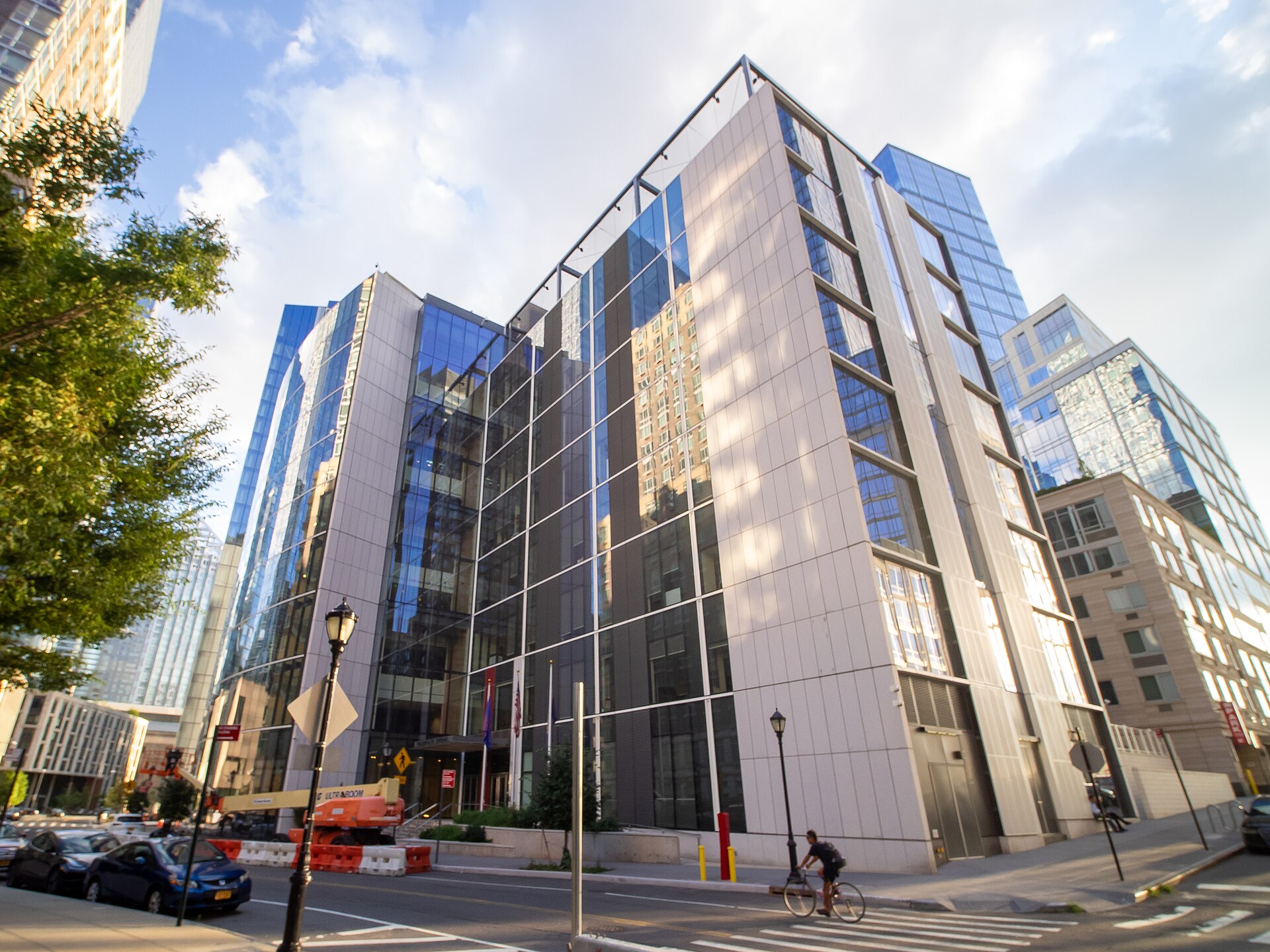
| Location | Manhattan, Upper West Side (301 Freedom Place South) |
| Enrollment | ~670 boys across K-12 |
| Student-faculty ratio | 8:1 |
| Acceptance rate (estimate) | ~10% at Kindergarten and Grade 9 entry points |
| Primary entry points | Kindergarten and Grade 9 |
| Application deadline | November 14 |
| Tuition (2024-2025) | $65,900 (fully inclusive) |
| Financial aid | Nearly 17% of students receive aid (avg grant ~$49,000) |
| Affiliations | NY Interschool, Ivy Preparatory School League |
| History note | Coeducational charity school 1628-1887; coeducational kindergarten 1935-1961; moved to current campus 2018 |
Collegiate operated as a coeducational tuition-free “charity school” from 1628 until 1887. Under headmaster LeMuel C. Mygatt (1887-1910), Collegiate transitioned to the present-day all-boys college-preparatory format and began charging tuition. The school generally stopped admitting girls in 1892, though it operated a coeducational kindergarten from 1935 to 1961. In January 2018, Collegiate moved into its current facility at 301 Freedom Place South after more than a century at the West End Collegiate Church on 77th Street.
What is Collegiate’s acceptance rate?
Collegiate does not publish an official acceptance rate. Independent admissions analyst estimates place Collegiate’s acceptance rate near 10% at the Kindergarten and Grade 9 entry points (EduAvenues estimate, 2025). The relatively low estimate reflects Collegiate’s small total enrollment (approximately 670 students) and concentrated demand from families seeking elite all-boys education in NYC.
Annual admission is offered into Kindergarten and Grade 9. For admission into other grades, families may submit applications, optional photo, applicant’s work sample, and parent copies of the two previous years’ school reports. Collegiate explicitly notes that “non-entry grades represent unique entry points and limited openings are available through attrition. Potential openings may rarely occur after re-enrollment and new enrollment processes are completed in January, February, and early spring.”
How does Collegiate’s admissions process work?
Collegiate’s application opens September 2 for the upcoming school year. The family portion of the application for Kindergarten and Grade 9 must be completed by November 14, 2025 to be considered for admission. School reports and test results for a complete application file were due by January 5, 2026 in the most recent cycle, and the same early January window is expected this year. The application fee is $85.00 (waived for financial aid applicants and current employees).
Collegiate requires both a parent interview and a child visit, with both appointments scheduled by the end of November. School reports are due by December 1, 2025. The school has intentionally designed the admissions process to provide personal touchpoints and deeper insights into all aspects of Collegiate. All admissions events begin in early October and are reserved for applicant families only. For applicant families, Collegiate offers an interactive “Lunch and Learn” and “Admissions Chat” Zoom series, in addition to in-person Open House events. Decisions are announced in early and mid February 2026.
What does Collegiate cost and what financial aid is available?
Collegiate School’s tuition for the 2024-2025 school year was $65,900 (Collegiate School Office of Admission). 2025-2026 tuition figures are expected to be modestly higher; Collegiate has not yet published the new figure publicly. The school has one all-inclusive tuition charge that covers books, supplies, class trips, lunch, musical instrument rental, student-accident insurance, and tuition-refund insurance. Lower and Middle School students are provided with the use of necessary technology; Upper School students bring their own device, and financial support is available for students on financial aid.
Nearly 17% of Collegiate students received financial aid in 2024, with the average grant approximately $49,000 based on the school’s $5.6 million financial aid budget. Collegiate is fully committed to equity and belonging through a generously-funded financial aid program. Aid is determined through the Clarity Application, which considers assets, income, expenses, and debts. The deadline for completing the financial aid application including relevant supplemental documents was November 14, 2025 in the most recent cycle, with the same mid November window expected this year.
What ISEE or SSAT scores does Collegiate expect?
Collegiate accepts both the ISEE and SSAT for Grade 5-12 applicants. The school does not publish a required cutoff score; admissions officers review scores in context with the broader application. Competitive Collegiate applicants typically present ISEE stanines in the 7-9 range across all four sections (Verbal, Quantitative, Reading, Math).
Collegiate’s admissions process is genuinely holistic. The school explicitly emphasizes “personal touchpoints” through the parent interview, child visit, and the optional Lunch and Learn events. Strong scores cannot rescue an application that lacks family fit; weak scores rarely sink an application backed by exceptional teacher recommendations and a strong parent interview. Sibling and legacy families benefit from early notification at the Kindergarten level.
How does Collegiate compare to peer NYC schools?
Collegiate is the all-boys counterpart to the New York Interschool’s all-girls schools Brearley, Chapin, and Spence. The four schools share consortium relationships including after-school program coordination and parallel academic cultures. Collegiate is comparable to Brearley and Spence in selectivity and college matriculation, though slightly smaller in total enrollment.
For families considering all-boys versus coed environments, the alternative top coed schools include Trinity, Dalton, Horace Mann, and Riverdale Country School. Collegiate’s small all-boys environment supports tight-knit community and individualized attention; some boys thrive in this focused setting while others prefer the larger coed dynamics of Trinity (1,001 students) or Horace Mann (1,800 students). Visit each school during Open House events before committing to single-sex versus coed.
What college outcomes do Collegiate graduates achieve?
Collegiate produces among the strongest college matriculation outcomes of any K-12 day school in the United States. Based on the most recent published matriculation data, approximately 12.41% of Collegiate graduates go to top-50 US universities, 28.62% go to top-25, and approximately 24.48% go to Harvard, Yale, Princeton, Stanford, and MIT combined. Collegiate graduates regularly matriculate to other Ivy League institutions, Stanford, MIT, Williams, Amherst, and other elite liberal arts colleges.
Collegiate’s endowment was $75 million as of 2024, with total assets of $350.8 million in 2022-23 IRS filings. This endowment supports robust college counseling resources with experienced counselors and established relationships at top admissions offices. Top-25 college acceptance rates have continued to decline, and Collegiate families should plan strategically rather than rely on the school’s name carrying the application.
How should families maximize their Collegiate chances?
For Kindergarten applicants, the strongest determinants of admission are the parent interview, child visit, nursery-school recommendation, and sibling/legacy status. Collegiate’s explicit acknowledgment of sibling and legacy preference at Kindergarten makes feeder relationships and family connections meaningful. The school strongly encourages early application to secure access to virtual and in-person events.
For Grade 9 applicants, the parent interview and child visit remain central. Schedule both by the end of November to allow time for school report submission by December 1 and complete application file by January 5. Apply to peer schools (Trinity, Dalton, Horace Mann) as a parallel strategy; Collegiate’s February decision date will resolve outcomes before some peer schools.
Frequently Asked Questions About Collegiate School Admissions
Collegiate School is located on the Upper West Side of Manhattan. In 2018 it moved into a modern building at 301 Freedom Place South, near Riverside Boulevard and the Hudson River, after more than a century at its former West 77th Street home. The riverside location gives the school purpose-built facilities while remaining in the Upper West Side neighborhood long associated with the city’s established independent schools.
Yes; Collegiate is an all-boys independent school, enrolling boys only from Kindergarten through 12th grade. It is one of the historic New York City boys’ schools, comparable to Trinity and Buckley in the single-sex tradition, though Trinity is now coed. The all-boys environment is central to Collegiate’s identity and mission, and it does not admit girls at any grade level.
Collegiate enrolls boys from Kindergarten through 12th grade in a single continuous program. The principal entry point is Kindergarten, where most of each class is admitted, with a limited number of additional spots opening at later transition grades. Because the majority of students enter at Kindergarten and continue through graduation, admission to upper grades is scarce and highly competitive given how few seats turn over.
Collegiate traces its founding to 1628, which it cites as making it the oldest independent school in the United States. The claim rests on continuous operation from its Dutch colonial origins in New Amsterdam. A few other institutions make competing historical claims, but Collegiate’s 1628 founding date is widely recognized, and its long history is a defining part of the school’s identity and prestige.
Yes, extremely; Collegiate is among the most selective boys’ schools in New York City, with most seats filled at Kindergarten and very few openings afterward. The applicant pool is deep with high-achieving families, so beyond assessments the school weighs fit, family engagement, and a boy’s developmental readiness. Mid-grade admission is especially difficult, since spots rarely become available once a class is established.
Collegiate is known for academic excellence, its claim as the nation’s oldest independent school, exceptional college placement, and a long roster of distinguished alumni including John F. Kennedy Jr. Its small, all-boys program emphasizes close mentorship, strong academics, and tradition. Among NYC independent schools it is regarded as one of the most prestigious and historically significant boys’ schools in the city.
Yes; like its peer NYC independent schools, Collegiate’s process includes a child visit or assessment, a parent interview or tour, age-appropriate testing (such as the ISEE for older applicants or play-based observation for young children), and school reports or recommendations. The specific components vary by entry grade. Families should confirm the current cycle’s exact requirements and timeline on Collegiate’s admissions site, since assessments must be completed before decisions.
Yes; Collegiate provides need-based financial aid and is committed to socioeconomic access, awarding aid to qualifying families based on demonstrated need. The school does not offer merit scholarships; assistance is determined entirely by financial circumstances through a separate aid application submitted during the admissions cycle. Aid decisions accompany admission, so families seeking support should apply for it at the same time as the admission application rather than afterward.
Sources: Collegiate School official site, New York State Association of Independent Schools (NYSAIS), National Association of Independent Schools (NAIS), NCES Private School Universe Survey, Parents League of New York, ERB (Educational Records Bureau), and independent NYC private school admissions analyses.
About Oriel Admissions
Oriel Admissions is a Princeton-based college admissions consulting firm advising families nationwide on elite university admissions strategy. Our team brings deep expertise across every dimension of the application, and our distinctive 360 approach develops strategy, positioning, activities, essays, and interviews as one coherent whole. To discuss your family’s admissions strategy including NYC private school admissions, schedule a consultation.