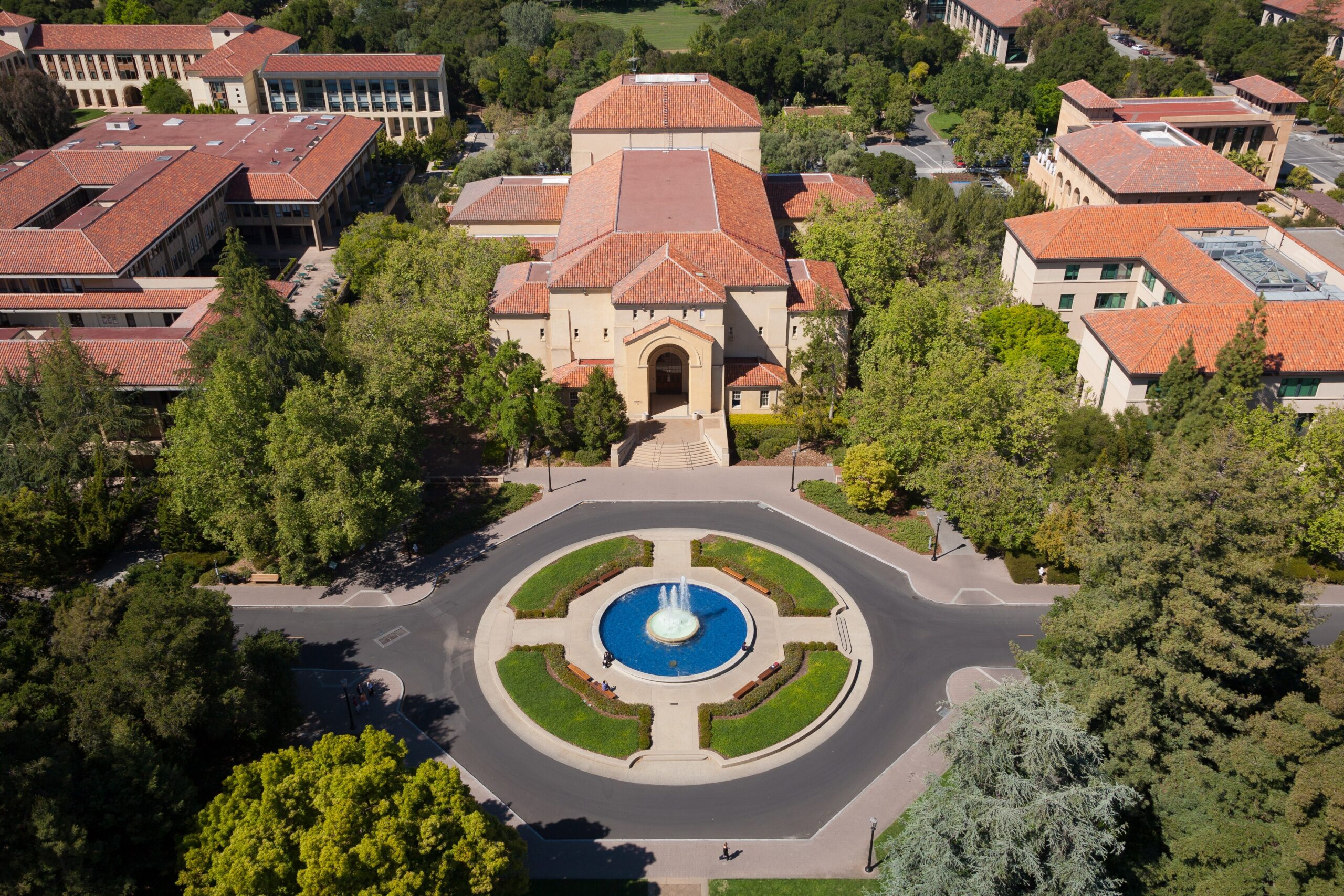
What Is SUMaC and Why Is It a Pinnacle Mathematics Program?
The Stanford University Mathematics Camp (SUMaC) is an advanced summer program for high school students who have completed 10th or 11th grade and demonstrate exceptional interest in mathematics. Founded in 1994 by Professors Rafe Mazzeo and Ralph Cohen of Stanford’s Mathematics Department, SUMaC explores topics that go well beyond AP Calculus: abstract algebra, number theory, algebraic topology, and the mathematical foundations of advanced research.
| The Stanford University Mathematics Camp (SUMaC) at a Glance | Detail |
|---|---|
| Host institution | Stanford University, Stanford, CA (Pre-Collegiate Studies) |
| Founded | 1994 by Professors Rafe Mazzeo and Ralph Cohen |
| Acceptance rate | Approximately 5-7% |
| Eligibility | 10th and 11th graders (residential); 18 or younger for online |
| Citizenship | US and international students welcome |
| Residential session | 40 students, June 21 – July 17, 2026 (4 weeks) |
| Online sessions | 64 students per session, 3 weeks each |
| Two courses | Program I (new students) and Program II (returning students) |
| Tuition | Approximately $8,250 residential; $4,000 online (financial aid available) |
| Application deadline | March 13, 2026; financial aid by February 9, 2026 |
| Decision notification | On a rolling basis after application closes |
| Required preparation | High school geometry, algebra; familiarity with number theory and proofs |
SUMaC sits alongside PROMYS at Boston University and Ross Mathematics Program at Ohio State as one of the three apex mathematics summer programs in the United States. All three offer comparable rigor and admissions weight; the differences are pedagogical and structural. SUMaC offers two distinct courses: Program I (new students) covers abstract algebra and number theory; Program II (returning students) covers algebraic topology. The two-course structure allows students to deepen study over multiple summers.
How Selective Is SUMaC?
SUMaC’s estimated acceptance rate is 5-7%. Stanford Pre-Collegiate Studies does not publish official statistics, but the program serves 40 students residentially and 64 students per online session, with applicant counts substantially exceeding these capacities. The residential program is more competitive due to lower capacity, while online sessions are marginally more attainable.
SUMaC’s selectivity is comparable to PROMYS and somewhat less competitive than RSI. The applicant pool self-selects: students who are not already deeply engaged in mathematics typically do not attempt the application, given the challenging admissions exam and the program’s explicit prerequisite of comfort with mathematical proof-writing.
What the Stanford University Mathematics Camp Application Requires
The SUMaC application has several components. The most distinctive is the admissions exam: a set of challenging mathematical problems that test problem-solving skill, mathematical reasoning, and proof-writing ability. The problems require sustained engagement and are not designed for quick solutions. Stanford Pre-Collegiate Studies expects applicants to work through problems methodically over multiple sessions.
The application also includes: academic records from each school attended Fall 2023 through Fall 2025 (unofficial transcripts acceptable); a teacher recommendation from a mathematics teacher; biographical information; an optional video essay; and a financial aid application if requested. Parents and legal guardians are required to co-submit the application with the student. The 2026 application deadline was March 13, 2026.
According to Stanford Pre-Collegiate Studies, the admissions team reviews each application holistically. Selection emphasizes demonstrated mathematical preparation, intellectual engagement with mathematical ideas, and clarity of problem-solving thinking. Strong applicants typically have completed AP Calculus or equivalent advanced coursework and have additional experience with proof-based mathematics through competition mathematics, math circles, or independent study.
What Is the SUMaC Experience?
SUMaC days are intensely structured around mathematical exploration. Morning lectures introduce new concepts and pose new problems. Afternoons are dedicated to problem-solving sessions, often in small groups with instructional assistants providing feedback. Evenings include additional problem sets, peer collaboration, and program-wide discussions.
The residential program (4 weeks) emphasizes immersion: students live in supervised Stanford residences, eat in Stanford dining halls, and gain access to Stanford’s libraries and laboratories. Field trips to San Francisco Bay Area attractions and Bay Area mathematical institutions (the Mathematical Sciences Research Institute, for example) provide context. The online program (3 weeks) features live classroom discussions with instructors, daily problem sets, virtual social opportunities, and guest speakers.
Both residential and online programs feature the same academic rigor and content. The residential program adds field trips and in-person community. The online program is selected by many international students for logistical reasons.
How Strong Is the SUMaC Admissions Signal?
SUMaC admission is one of the strongest possible signals in mathematics contexts. The combination of selectivity (5-7%), pedagogical rigor (covering material that goes well beyond AP Calculus), and Stanford’s institutional prestige produces a signal that admissions officers at elite mathematics-strong universities recognize on sight. SUMaC alumni matriculate at high rates at MIT, Harvard, Princeton, Caltech, Stanford, and the University of Chicago.
SUMaC admission does not guarantee admission to Stanford or any other specific university. However, the verification of advanced mathematical capacity that SUMaC provides positions admitted students strongly in mathematics-focused undergraduate admissions. SUMaC alumni include leading mathematicians, computer scientists, and quantitative researchers across academia and industry.
How to Prepare for a Stanford University Mathematics Camp Application
Begin developing mathematical depth in 9th and 10th grade. Strong SUMaC applicants typically have: completed AP Calculus AB or BC; engaged with competition mathematics through AMC 10/12 and AIME (USAMO qualification is helpful but not required); participated in math circles or independent study covering proof-based mathematics; explored number theory or abstract algebra through self-study or online courses.
The SUMaC admissions exam is the largest single differentiator. Applicants should begin working through the exam problems immediately when the application portal opens (typically January). Strong applicants invest 40-80 hours across multiple weeks, often working through multiple drafts. The strongest solutions are not just mathematically correct but elegantly expressed, showing clear reasoning at each step.
Cultivate a strong relationship with a mathematics teacher who can write a substantive recommendation. The strongest SUMaC recommendations come from teachers who have observed independent mathematical exploration: involvement in math competitions, completion of advanced courses (often beyond standard high school offerings), and demonstrated capacity for proof-based mathematical reasoning.
Frequently Asked Questions About The Stanford University Mathematics Camp (SUMaC)
Yes; SUMaC stands for the mathematics camp hosted and operated through Stanford, which gives it genuine institutional backing rather than being an unaffiliated program that merely rents campus space. This official connection is part of what makes it credible. Families should still focus on the quality of the mathematics and the experience itself rather than the name alone, since the real value lies in the rigorous instruction and peer community the program provides.
SUMaC is an enrichment program focused on deep mathematical exploration rather than formal grading, so it does not function like a graded school course producing a GPA. The emphasis is on genuine learning and challenge, not marks. Families should view it as intellectual development rather than a transcript line, since its worth comes from the rigor of the material and what a student gains, not from a grade or score earned at the end.
SUMaC admits a small, select group of students each session, keeping the cohort intentionally limited to support close collaboration, discussion, and access to instructors. The intimate size is part of the appeal for serious young mathematicians. Families should confirm current cohort numbers on the official program page, since the small scale both reinforces selectivity and shapes the close-knit, discussion-driven community that distinguishes the experience from larger summer offerings.
No; while SUMaC attracts mathematically talented students and the material is demanding, success depends on genuine curiosity, strong fundamentals, and willingness to grapple with hard problems rather than being a prodigy. Effort and engagement matter greatly. Families should encourage a student who loves mathematics and is ready to work hard, since the program rewards persistence and deep thinking far more than innate genius or prior competition stardom alone.
SUMaC admission typically involves an application that includes a set of challenging mathematics problems designed to gauge a student’s reasoning and problem-solving rather than rote knowledge, alongside other application components. The problems matter more than speed. Families should confirm the current requirements on the official site and ensure a student approaches the problem set thoughtfully, since how an applicant reasons through difficult mathematics is central to the evaluation.
For the residential program, students generally follow a structured schedule with supervision, and opportunities to leave campus are limited and governed by program rules rather than open free movement. Policies prioritize safety and the immersive experience. Families should review the current residential guidelines for visiting and time away, since the program is designed as a focused, community-based experience with defined expectations about students remaining on campus during the session.
SUMaC’s instructors and structure are geared toward supporting capable students through genuinely hard mathematics, so encountering difficulty is expected and part of the learning rather than a sign of failure. Help and collaboration are built into the experience. Families should reassure a student that struggling with advanced material is normal and that the program is designed to stretch participants, with support available, since productive challenge is the point of an enrichment program at this level.
SUMaC has historically offered some need-based assistance to help make the program accessible, though availability, amounts, and application steps vary and can change each year. It is not a fully free program by default. Families concerned about cost should check the current financial aid or scholarship details on the official SUMaC page and apply early where relevant, since dedicated assistance, when offered, typically has its own deadlines and documentation requirements.
Sources: Stanford University Mathematics Camp official site, Stanford Department of Mathematics, NCES College Navigator (Stanford), National Science Foundation, NACAC 2024 State of College Admission, College Board BigFuture, and independent analysis of elite mathematics summer program admissions impact.
About Oriel Admissions
Oriel Admissions is a Princeton-based college admissions consulting firm advising families nationwide on elite university admissions strategy. Our team brings deep expertise across every dimension of the application, and our distinctive 360 approach develops strategy, positioning, activities, essays, and interviews as one coherent whole. To discuss your family’s admissions strategy, schedule a consultation.