What is Swarthmore College’s overall acceptance rate, and how selective is it?
Swarthmore admitted 965 applicants out of 12,995 for the Class of 2029, producing an overall acceptance rate of 7.43% (Swarthmore College news, March 26, 2025). This places Swarthmore in the same selectivity tier as Amherst (7.4%) and Pomona (7.2%), and meaningfully more selective than Williams (8.5%). Among the top liberal arts colleges, Swarthmore has historically maintained the lowest student-to-faculty ratio (8:1) and the most academically demanding course load.
Swarthmore’s selectivity reflects three structural factors. First, the academic culture self-selects: applicants who do not want graduate-school-level work in their undergraduate years often choose other LACs. Second, Swarthmore’s location (suburban Philadelphia) provides metropolitan access without the urban intensity of Columbia or NYU, attracting students who want both depth and access. Third, Swarthmore’s no-loan financial aid policy and need-blind admissions for U.S. applicants attract strong applicants who would also be competitive at Ivy League institutions but prefer the LAC model.
For comparison with peer top LACs, see our Williams vs. Amherst vs. Swarthmore comparison, our Williams admissions guide, our Amherst admissions guide, and our Pomona admissions guide.
What is Swarthmore’s Early Decision acceptance rate, and how does the class composition break down?
Swarthmore offers binding Early Decision (both ED I and ED II) and admits at meaningfully higher rates through ED than RD. For the Class of 2029, Swarthmore admitted 228 students through Early Decision out of 1,281 ED applicants, producing an ED acceptance rate of 17.8% (Swarthmore Phoenix, February 26, 2026). For the Class of 2030, the most recent cycle, Swarthmore admitted 231 ED applicants. The ED acceptance rate is roughly 2.4 times the overall rate, making Swarthmore one of the more strategically valuable ED options at the top-LAC tier.
Swarthmore offers both ED I (November deadline) and ED II (January deadline), unlike Pomona which offers ED I only. The ED II option is strategically valuable for students who applied ED I to a different school and were deferred or denied. The strategic implication: Swarthmore ED works because applicants demonstrate authentic commitment to Swarthmore’s distinctive intensity, not generic LAC interest. Strategic ED applications without engagement with the honors program, the engineering option, or the Tri-College Consortium are detected and frequently deferred or denied.
For broader analysis of ED strategy, see our ED vs. RD Advantage Calculator and our ED II strategy guide.
What does the Class of 2029 student profile look like?
| Metric | Swarthmore Class of 2029 |
|---|---|
| Total applications | 12,995 |
| Total admits | 965 |
| Overall acceptance rate | 7.43% |
| ED applications received | 1,281 |
| ED admits | 228 |
| ED acceptance rate | 17.8% |
| Defining academic feature | Honors Program with external examinations |
| Engineering program | ABET-accredited (rare among LACs) |
| Consortium | Tri-College (Bryn Mawr, Haverford); Quaker Consortium with UPenn |
| Religious heritage | Quaker (Friends Society) |
What is Swarthmore’s Honors Program, and how does it shape the academic experience?
The Swarthmore Honors Program is the college’s defining academic feature and has no exact parallel at most American liberal arts colleges. Junior and senior honors students complete their major in small-group seminars (typically 5-8 students per seminar) led by faculty, and the academic year culminates in external examinations administered by faculty from other institutions. The format models British university tutorial systems and is designed to produce intellectual rigor at a level comparable to early graduate study.
Approximately one-third of Swarthmore students participate in the honors program. Selection is competitive but driven by the student rather than the college: students apply to honors in their sophomore or junior year, and admission depends on faculty recommendation and demonstrated readiness. The program is the principal reason Swarthmore graduates have historically placed at unusually high rates into PhD programs in the humanities, social sciences, and laboratory sciences. Students drawn to graduate-school-level intensity find the honors program transformative; students who want a more relaxed undergraduate experience often find Swarthmore’s general culture too academically pressurized even outside the honors program.
What is Swarthmore’s engineering program, and why does it matter?
Swarthmore is one of only a small number of American liberal arts colleges to offer ABET-accredited engineering, and the engineering program is structurally unusual. Students earn a Bachelor of Science in Engineering with a generalist curriculum that covers mechanical, electrical, civil, computer, and systems engineering rather than specializing in a single discipline. The curriculum is paired with the standard liberal arts requirements, producing engineers with substantially more humanities and social science exposure than typical engineering school graduates.
For applicants, the engineering option matters in two ways. First, it expands the school’s appeal beyond traditional LAC applicants to include students seriously considering technical paths. Second, Swarthmore engineering graduates pursue distinctive trajectories: many enter PhD programs in engineering or applied sciences, others pivot into management consulting or technology product roles where the combination of engineering rigor and liberal arts breadth is valued. Applicants applying as engineering candidates should engage with the unusual generalist structure in their supplemental essays; generic engineering applications written as if Swarthmore were a research-university engineering school fail to connect.
What is the Tri-College Consortium, and how does it expand the Swarthmore experience?
The Tri-College Consortium connects Swarthmore with Bryn Mawr College and Haverford College, two other elite liberal arts colleges located on Philadelphia’s Main Line. Students at all three colleges can cross-register for courses, share library access, and participate in joint academic and social programming. The consortium is more loosely integrated than the Claremont Consortium (the three campuses are not contiguous; cross-college travel requires the Tri-Co shuttle or SEPTA regional rail), but it expands curricular options and produces a meaningfully larger social community than Swarthmore’s 1,650 undergraduates alone.
The Quaker Consortium adds the University of Pennsylvania to the Tri-College, allowing Swarthmore students to cross-register at Penn for courses not available at the three smaller colleges. This is functionally important for students seeking professional-school preparation (Penn’s Wharton, Engineering, and Nursing schools all offer cross-registration access to Swarthmore students). The consortium structure means Swarthmore students have access to course offerings, library resources, and research opportunities at three of the most academically serious institutions in the Mid-Atlantic.
What is Swarthmore, Pennsylvania like as a setting?
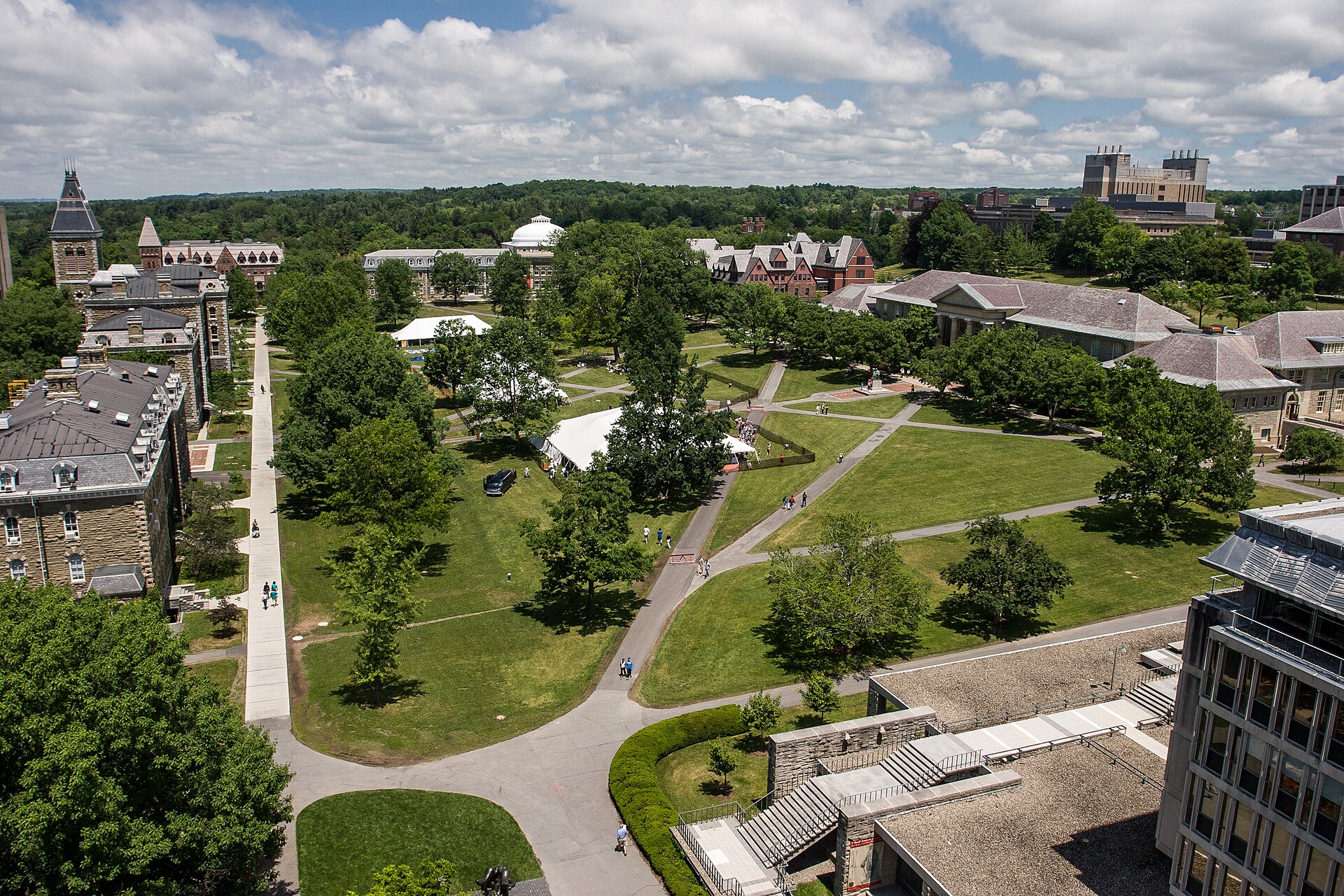
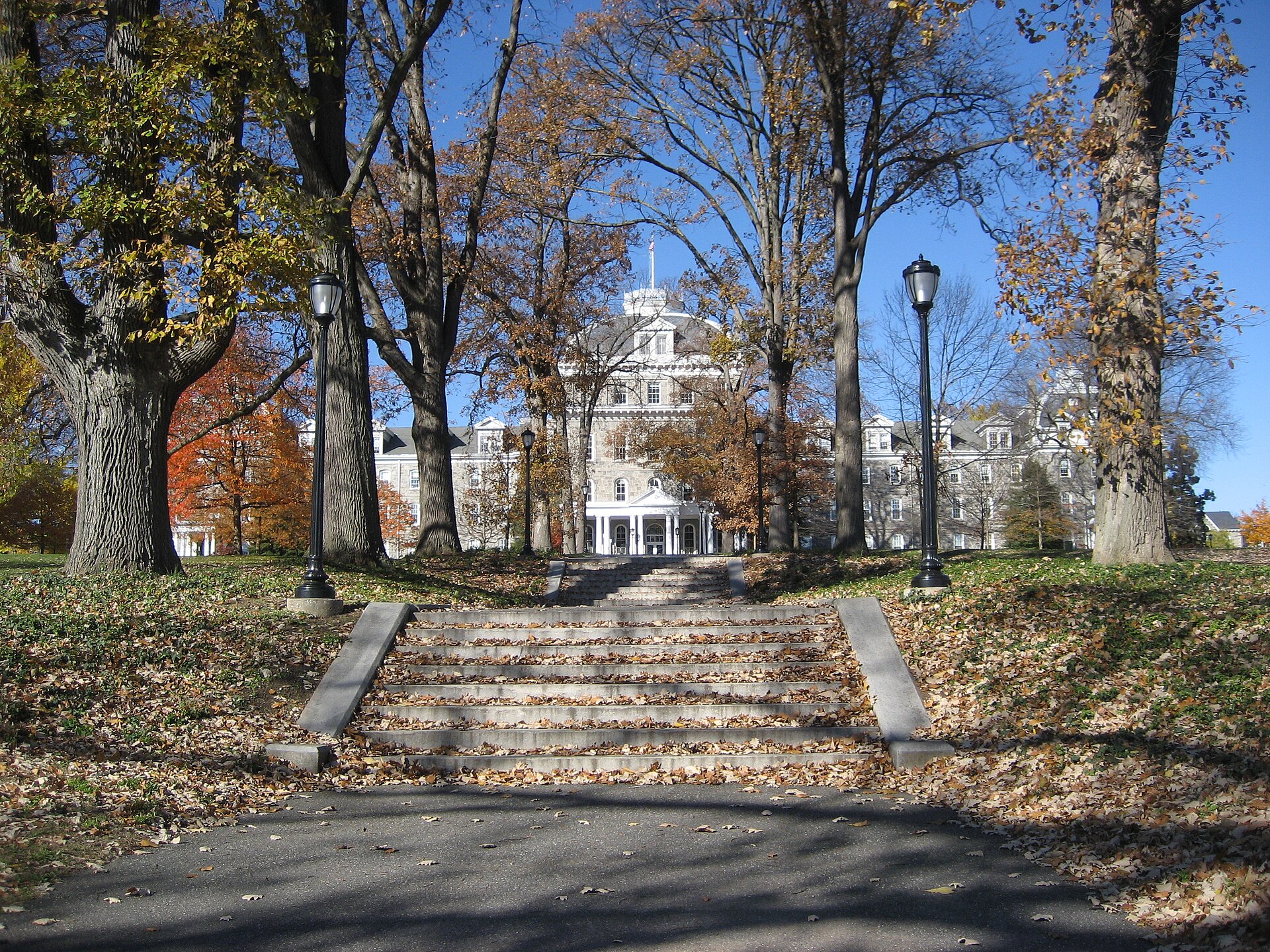
Swarthmore is a small suburb on Philadelphia’s Main Line, about 11 miles southwest of Center City Philadelphia. The college occupies a 425-acre arboretum campus (the Scott Arboretum is integrated into the college landscape) with traditional stone architecture, mature trees, and a contained residential character. Public transportation to Philadelphia is genuine and frequent: the SEPTA Media-Wawa regional rail line runs directly through campus, with trains to Center City roughly every 30 minutes during the day. The combination of suburban contained campus plus immediate transit access to a major American city is unusual and is one of Swarthmore’s distinctive attractions.
Swarthmore’s culture is shaped by its Quaker founding (the college was founded by Quakers in 1864 and retains a Quaker affiliation, though it is now nondenominational). The Quaker tradition produces three institutional features that affect daily life: a strong commitment to social justice and ethical reflection (visible in curriculum, programming, and student culture), a consensus-based approach to community decision-making in some campus contexts, and a generally serious-minded social tone (Swarthmore is not known for raucous Greek life or party culture). Students drawn to intellectually serious community find Swarthmore ideal; students who want a more conventional college social experience sometimes find Swarthmore too earnest.
What kind of applicant does Swarthmore actually admit?
Swarthmore admits applicants with strong academic credentials plus demonstrated intellectual seriousness and substantive personal character. The academic floor for serious consideration matches the top Ivies: SAT 1500-1560 or ACT 33-35, unweighted GPA at or near 3.95, and a demanding course load including AP, IB, or comparable advanced coursework throughout high school. Swarthmore was test-optional through recent admissions cycles but has reintroduced testing requirements for the Class of 2030 and beyond, in line with similar moves at Yale, Brown, and Dartmouth.
Above the academic floor, Swarthmore admissions officers select for three things. First, intellectual seriousness as evidenced by the supplemental essays. Generic personal narratives that could fit any school fail; applications that engage substantively with ideas succeed. Second, alignment with Swarthmore’s social-justice and ethical orientation. Applicants do not need to be politically progressive, but they do need to be comfortable engaging with questions of ethics, social impact, and community responsibility. Third, capacity for sustained intellectual work. The honors program and the general academic culture both require unusual stamina, and admissions officers select for applicants who will thrive rather than burn out under the workload.
For analysis of why high-stat applicants get rejected from elite LACs, see why valedictorians get rejected.
How does Swarthmore compare on cost and financial aid for high-income families?
Swarthmore’s 2025-26 cost of attendance is $90,692 (Swarthmore Operating Budget Summary). The Board of Managers approved a 5.75% tuition increase for 2026-27, bringing the total cost of attendance to $95,288 (Swarthmore Phoenix, March 26, 2026). The increase is among the largest tuition hikes at peer LACs in recent years and reflects broader cost pressures across selective higher education.
Swarthmore’s financial aid policy is among the most generous at the top-LAC tier. The college is need-blind for U.S. applicants, meets 100% of demonstrated need without loans, and provides grant aid that for many families covers a substantial portion of the published cost. The average financial aid award for 2025-26 was $75,268, with awards ranging from $1,000 to the full cost of attendance. For families with annual incomes under $100,000, Swarthmore typically provides full grant aid covering all costs. For families in the $100,000-$200,000 range, Swarthmore’s expected family contribution is generally substantially below the sticker price.
For broader analysis of financial aid at top schools for affluent families, see our Harvard financial aid expansion guide.
What are Swarthmore’s research opportunities and post-graduation outcomes?
Swarthmore produces unusually strong PhD placement and graduate school outcomes for its size, consistently ranking in the top tier of American institutions for the percentage of graduates earning doctorates. The honors program is the principal driver: students who complete honors essentially complete graduate-level coursework in their major, with the small-seminar format and external examinations producing readiness for PhD-level work that few undergraduate programs can match. The college’s small size (1,650 undergraduates) means substantial individual faculty mentorship is the norm rather than the exception.
For preprofessional pathways, Swarthmore produces strong outcomes in pre-med (with strong placement at top medical schools and meaningful clinical research access through the Quaker Consortium with Penn), pre-law (with consistent placement at top law schools), and engineering (with ABET-accredited preparation). For business and consulting, Swarthmore graduates place at major firms but the path is less institutionalized than at preprofessional research universities; many Swarthmore graduates pursue Master’s or PhD programs before entering finance or consulting roles. The Lang Center for Civic and Social Responsibility supports unusually robust public-interest career placement, reflecting the institutional Quaker tradition.
For analysis of how high-stat applicants navigate elite admissions outcomes, see our why valedictorians get rejected. For broader application strategy at this selectivity tier, see our college application spike strategy guide.
How Should Applicants Approach Swarthmore Supplemental Essays?
Swarthmore’s supplemental essays carry significant weight in admissions decisions because they differentiate among academically qualified applicants. Strategy varies meaningfully by prompt, word limit, and the specific qualities Swarthmore looks for. For complete prompts, strategic approach for each prompt, common rejection patterns, and the timeline applicants should follow, see our deep-dive guide: Swarthmore Supplemental Essays Strategy.
What are the most common mistakes applicants make when applying to Swarthmore?
Five mistakes recur. First, treating Swarthmore as interchangeable with peer top LACs (Williams, Amherst, Pomona) and writing supplemental essays that could apply to any of them. The four institutional cultures are genuinely different, and admissions readers detect generic applications immediately. Second, applying to Swarthmore without engaging with the academic intensity. Applications that emphasize a relaxed undergraduate experience signal poor fit because Swarthmore is selecting for capacity for sustained intellectual work.
Third, applying to Swarthmore ED based on perceived statistical advantage rather than authentic first-choice fit. ED yields work because the application demonstrates real commitment; strategic ED applications often face deferral or denial. Fourth, ignoring the Quaker tradition and social-justice orientation. Applicants do not need to be Quaker or politically progressive, but applications that ignore the institutional values fail to connect. Fifth, applying as an engineering candidate without engaging with Swarthmore’s distinctive generalist structure. Generic engineering applications written for research universities fail to connect with what Swarthmore engineering actually is.
For deeper application strategy, see our college application spike strategy guide. For testing benchmarks, see our Academic Index Calculator.
Best for which student?
Best for academically intense students who want graduate-school-level rigor in their undergraduate years: Swarthmore’s honors program is unmatched at peer LACs. Best for students drawn to the social-justice and ethical-reflection orientation of the Quaker tradition: Swarthmore’s institutional values shape the campus culture in ways that secular peers do not. Best for students seeking a small LAC plus immediate metropolitan access: Swarthmore’s Philadelphia transit connection provides what neither Williams (rural Massachusetts) nor Pomona (suburban California) can match. Best for liberal arts applicants seriously considering ABET-accredited engineering: Swarthmore is one of only a few LACs offering this combination.
Frequently Asked Questions About Getting Into Swarthmore College
Swarthmore sits in the borough of Swarthmore, Pennsylvania, roughly 11 miles southwest of Philadelphia. A commuter rail line connects the campus to center-city Philadelphia in about 25 minutes, giving students access to a major city while living on a quiet, green 425-acre campus. The grounds double as the Scott Arboretum, so gardens and mature tree collections are woven through the college itself.
Very hard; Swarthmore’s acceptance rate runs in the high single digits, around 7 to 8 percent, ranking it among the nation’s most selective small colleges. It admits a small class from a deep pool, so nearly all admitted students carry top grades and demanding course loads. Strong academics are the baseline rather than the differentiator, with holistic review choosing among many qualified applicants for limited seats.
Swarthmore is known for unusually demanding academics, an Honors Program built on small seminars and external examiners in the Oxford tradition, and rare strength across humanities, sciences, and engineering for a school its size. It is one of the few liberal arts colleges offering an ABET-accredited engineering degree. Its Quaker roots inform a campus culture centered on intellectual seriousness and social responsibility.
Yes; Swarthmore is routinely counted among the ‘Little Ivies,’ an informal grouping of highly selective Northeastern liberal arts colleges with reputations rivaling the Ivy League. The term is unofficial and confers no formal membership, but it captures Swarthmore’s standing: it ranks consistently at or near the top of national liberal arts college rankings and draws a similarly competitive applicant pool.
Swarthmore has applied a test-optional policy in recent admissions cycles, letting applicants decide whether to send SAT or ACT scores without penalty for those who withhold them. Testing policies across selective colleges have shifted frequently, so verify the requirement for your specific application year on Swarthmore’s admissions site. Where the policy is test-optional, strong scores can still strengthen a file, but the review remains holistic regardless.
Yes, for applicants who choose to submit scores; Swarthmore considers the highest section results across multiple test dates, combining them into the best possible composite. A higher Math from one sitting paired with a higher Reading and Writing from another counts together, rewarding focused retakes. Because the college has been test-optional, sending scores is optional, but those who do benefit from the superscoring approach.
Swarthmore competes in NCAA Division III within the Centennial Conference, so it offers no athletic scholarships and frames sports around the academic-first balance typical of elite small colleges. Recruited athletes still meet Swarthmore’s rigorous admissions standards. Athletics are genuinely competitive without dominating campus life, which suits students who want to keep playing a sport while prioritizing a demanding academic program.
No; in line with most elite liberal arts colleges, Swarthmore provides only need-based aid and awards no merit, athletic, or academic scholarships. Every aid dollar follows demonstrated financial need, and the college meets full need with generous, frequently loan-free packages. High stats alone earn no discount, but families with financial need often find Swarthmore more affordable than its sticker price suggests thanks to that aid commitment.
About Oriel Admissions
Oriel Admissions is a Princeton-based college admissions consulting firm advising families nationwide on elite university admissions strategy. Our team brings deep expertise across every dimension of the application, and our distinctive 360 approach develops strategy, positioning, activities, essays, and interviews as one coherent whole. To discuss your family’s admissions strategy, schedule a consultation.