TL;DR: Whether an out-of-state flagship is worth it comes down to three numbers: the real admit-rate gap, the four-year nonresident cost, and the strength of the admitted major. Across the most recent verified cycles, out-of-state acceptance rates at top public flagships ranged from 8% at UNC Chapel Hill and 10.0% at UC Berkeley to 58.7% at Virginia Tech and 71.0% at UC Davis – a nine-fold spread hiding behind the word flagship – while nonresident cost of attendance ran from roughly $55,000 to more than $90,000 per year, with need-based aid effectively reserved for residents almost everywhere. The math works when a top-tier campus admits the student directly into the intended major; it fails when a family pays private-university prices for an alternate-major admit or for a name their home flagship matches. (sources: institutional admissions data verified in each linked guide) To discuss your family’s admissions strategy, schedule a consultation.
Which Flagships Favor Out-of-State Applicants?
The single most useful fact in out-of-state planning is that public flagships are not one category. Some are bound by statute or policy to protect resident seats; others fund resident education with nonresident tuition and admit out-of-state applicants at materially higher rates than their own residents. The table below compiles the residency split at every flagship where a verified figure exists, sorted by out-of-state admit rate, with each school linked to our full guide.
| Flagship | Cycle | Out-of-State Rate | In-State Rate | Structural Note |
|---|---|---|---|---|
| UC Davis | Fall 2026 | 71.0% | 34.7% | Highest nonresident advantage among selective flagships |
| UC Santa Barbara | Fall 2026 | 63.9% | 34.6% | Engineering selective; Letters and Science open |
| Virginia Tech | Fall 2025 | 58.7% | 47.3% | Admits by major; engineering runs near 40% |
| UC Irvine | Fall 2026 | 49.5% | 22.7% | Computing majors locked at admission |
| University of Washington | Fall 2025 | 42.2% | 45.7% | Narrow gap; computer science is the real gate |
| UC San Diego | Fall 2026 | 37.2% | 24.1% | Selective majors decided at admission |
| UIUC | 2024-25 | 29% | 49.3% | Admits strictly by major |
| UCLA | Fall 2026 | 14.9% | 10.2% | Nonresidents favored at the most applied-to campus |
| UVA | Class of 2029 | 12.5% | 23% | Roughly two-thirds of seats held for Virginians |
| UC Berkeley | Fall 2026 | 10.0% | 12.4% | The one UC campus harder for nonresidents |
| UT Austin | Class of 2029 | ~10% | Auto-admit regime | State law reserves roughly 90% of seats for Texans |
| Georgia Tech | Class of 2030 | ~9% | ~34% | Residency-split Early Action calendar |
| UNC Chapel Hill | Class of 2030 | 8% | 39.5% | Statutory cap: 18% out-of-state enrollment |
| University of Maryland | Fall 2025 | Not published | 45.0% overall | No residency split; the November 1 Early Action round decides |
Sources informing this table: institutional admissions data, state system reports, and Common Data Sets as verified and cited in each linked guide. Cycles vary by school as labeled; rates are the most recent each institution has made verifiable.
Michigan, Penn State, Florida, Ohio State, Purdue, and Texas A&M publish no clean residency split; their nonresident dynamics are covered school by school in our out-of-state acceptance rates hub. The pattern in the table is structural, not accidental. Flagships bound by law or policy – UNC’s statutory 18% cap, UT Austin’s Texas-first enrollment law, UVA’s two-thirds convention, Georgia’s engineered class – concentrate all national demand into a sliver of seats and behave like elite privates for nonresidents. Flagships without such constraints monetize nonresident demand instead: the University of California charges a supplement above $40,000, Virginia Tech and UIUC fill major-level capacity with full-pay applicants, and the resulting admit rates favor the out-of-state family who can write the check.
What Does an Out-of-State Flagship Actually Cost?
Nonresident cost of attendance across the set spans roughly $55,000 to more than $90,000 per year: Virginia Tech sits near the bottom at $55,212 all-in on campus for 2026-27, the University of Maryland lands around $61,100, and the University of California tops the range at an estimated $90,100 for 2027-28. Three financial patterns repeat almost everywhere. Need-based grant aid is reserved in practice for residents, so out-of-state families should model the full sticker for four years – roughly $220,000 to $360,000 depending on the campus. Residency reclassification during college is effectively closed to dependent students whose parents live out of state, under rules that Virginia, Maryland, and California each state in nearly identical language. And merit is the only real discount channel: a handful of flagships, Maryland prominent among them, award meaningful nonresident merit tied to early application deadlines, which makes the autumn calendar a financial event, not just an admissions one. Families comparing offers should run our net price comparison calculator against every option on the table.
When Is Full Pay at an Out-of-State Flagship Worth It?
The strong case has two elements: a top-tier campus and a direct admit to the intended major. A student admitted to UC Berkeley engineering, UIUC computer science, Virginia Tech engineering, or Michigan’s flagship programs is buying outcomes that compete with private universities charging the same money and admitting far less predictably. The case also clears when the friendly-odds campuses deliver a specifically stronger department than the home option: UC Davis for pre-veterinary and the life sciences at a 71.0% nonresident admit rate is the cleanest example in the table, an elite program that functions as a likely admit. The full framework, applied to the deepest end of the price range, is in our guide to whether UC is worth it out of state.
When Is It the Wrong Buy?
Three recurring failures. First, the alternate-major admit at an admit-by-major school: a student who needed computer science and enrolled anyway – at Virginia Tech in General Engineering hoping to sort into it, at Washington outside the direct-to-major track, at UC San Diego in a non-selective alternate – is paying flagship-premium prices for a path the university has already gated. Second, the prestige wash: paying $90,000 for a mid-band out-of-state flagship when the home flagship matches the department at a third of the price is a roughly $200,000 premium that buys geography, not outcomes. Third, the discounted private: strong students frequently hold private merit offers that bring a comparable university under the flagship’s sticker, and the flagship name rarely justifies refusing that arithmetic. The honest comparison happens in April with real offers and admitted majors on the table, not in September with rankings.
How Should Families Run the Numbers?
Fix the budget ceiling first, convert every offer to a four-year all-in figure, and weight each by the admitted major and the realistic path to the intended one. Where the odds are structurally friendly – the right-hand half of the table above – treat the flagship as a planning anchor and spend the family’s risk budget on reaches; where statute caps the seats, treat the flagship as a reach priced like a private and apply accordingly. Building the application list itself, with selectivity bands, the early-deadline calendar, and the major-gate map, is the subject of our companion guide to building an out-of-state flagship list, and the school-by-school data lives in the out-of-state acceptance rates hub.
Frequently Asked Questions About Out-of-State Flagship Value
Among selective flagships with verified data, UC Davis admitted 71.0% of out-of-state applicants, UC Santa Barbara 63.9%, Virginia Tech 58.7%, and UC Irvine 49.5% in their most recent cycles. Each remains a genuine research university; the friendly rates reflect nonresident tuition economics and low nonresident yield, not weak academics.
UNC Chapel Hill at 8%, Georgia Tech near 9%, UC Berkeley at 10.0%, and UT Austin near 10% in their most recent cycles. All four are constrained by law, policy, or overwhelming demand, and out-of-state families should treat them as reaches regardless of the student profile.
Need-based aid, essentially no: grant programs serve residents at nearly every flagship. Merit is the exception channel – Maryland, Georgia, and several Midwestern flagships award meaningful nonresident scholarships, usually tied to early deadlines – but families should budget the sticker and treat awards as bonuses.
Virtually never. Virginia, Maryland, and California all classify dependent students by their parents’ domicile and describe reclassification as rare or effectively unavailable, and most other states follow the same pattern. Budget all four years at the nonresident rate.
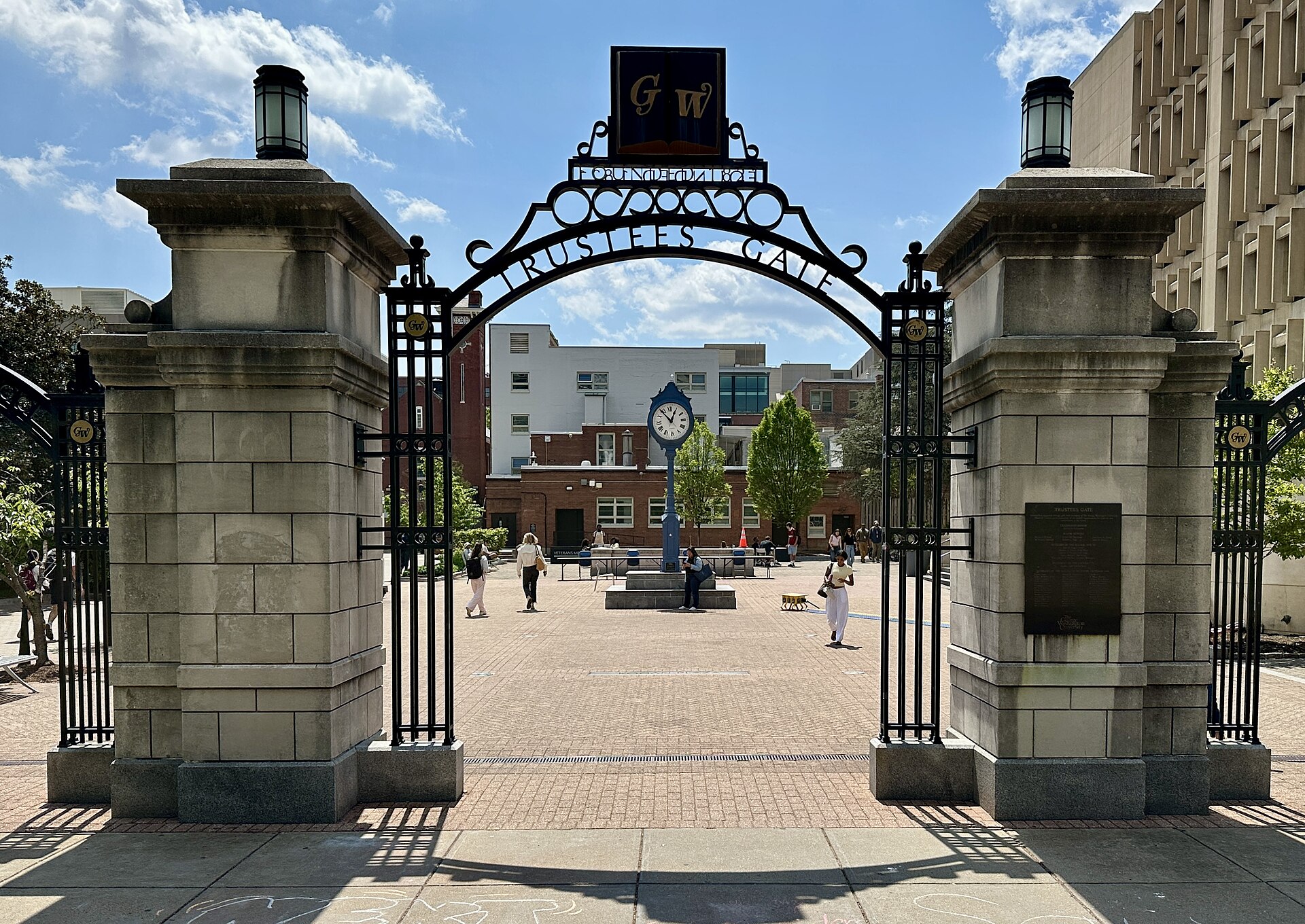
It depends entirely on the admitted major and the department. A direct admit into a top-ranked public program beats a generic private at equal cost; an alternate-major admit at the flagship usually loses to a private that admits directly into the field. The name on the gate matters less than the seat inside it.
UNC Chapel Hill operates under a statutory 18% cap, UT Austin under a Texas law reserving roughly 90% of seats for residents, UVA under a long-standing two-thirds convention, and Georgia designs each class to roughly 80% in-state. These constraints, not academic standards, explain why their out-of-state rates sit in the single digits and low teens.
Fundamentally. At Virginia Tech, UIUC, Washington, Maryland, and the UC campuses, the major is effectively decided at admission, and internal switching into oversubscribed programs is restricted. Full pay is a defensible investment in a direct admit and a questionable one in a hoped-for transfer.
Usually two to four, spread across the bands in the table: one or two from the friendly half as anchors, and one or two capped-state reaches only when the student is genuinely competitive. The construction method, including the early-deadline calendar, is covered in our flagship list-building guide.
Sources: UC Office of the President fall 2026 admissions fact sheet, UC tuition and cost of attendance, University of Maryland cost of attendance, Legislative Analyst’s Office report on UC nonresident tuition, NCES College Navigator, NACAC. School-level figures are sourced in each linked guide.
About Oriel Admissions
Oriel Admissions is a Princeton-based college admissions consulting firm advising families nationwide on elite university admissions strategy. Our team brings deep expertise across every dimension of the application, and our distinctive 360 approach develops strategy, positioning, activities, essays, and interviews as one coherent whole. To discuss your family’s admissions strategy, schedule a consultation.