Princeton High School College Admissions: What Families Need to Know to Compete at Top Schools
By Rona Aydin
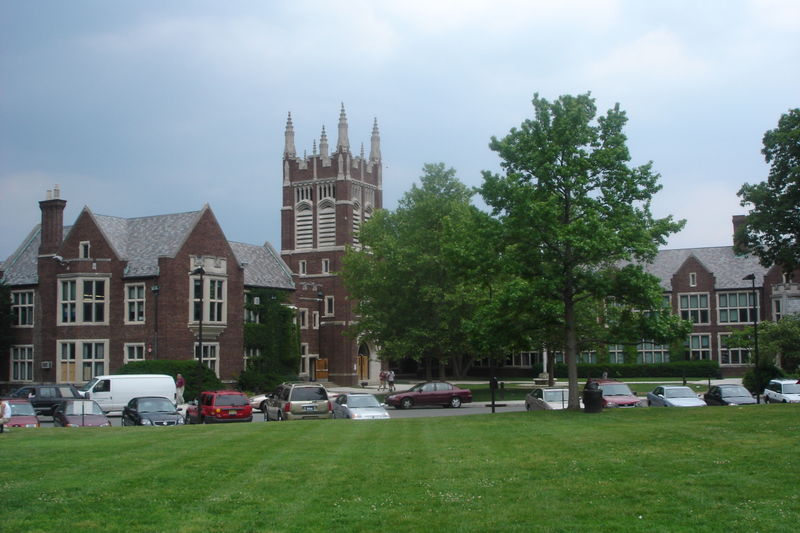
How does Princeton High School compare to other top NJ public schools for college admissions?
Princeton High School ranks first among all New Jersey high schools (public and private) for combined matriculation to Harvard, Princeton, and MIT in the Class of 2024, with 25 students attending those three institutions alone (PolarisList analysis published in NJ Family, April 2025). This positions PHS ahead of other strong NJ public schools including Millburn, Livingston, West Windsor-Plainsboro, Ridgewood, and Tenafly (school-level performance metrics for these districts are published by the New Jersey Department of Education School Performance Reports) for HYPM placement, though PHS’s geographic proximity to Princeton University creates a structural advantage no other NJ public school can match. The school enrolls approximately 1,532 students across grades 9-12 with a student-teacher ratio of 11.8:1, putting class sizes closer to many private school benchmarks than to typical NJ public schools.
| School | Class of 2024 to Princeton | Class of 2024 to Harvard | Class of 2024 to MIT | Combined HYPM |
|---|---|---|---|---|
| Princeton High School | 19 | 1 | 5 | 25 |
| Bergen County Academies | 4-6 (range) | 3-5 | 4-6 | ~13 |
| High Tech HS (Monmouth) | 3-5 | 2-4 | 5-7 | ~12 |
| West Windsor-Plainsboro HS South | 3-5 | 1-3 | 2-4 | ~9 |
| Millburn HS | 2-4 | 2-4 | 1-3 | ~7 |
For broader context on how NJ feeder schools fit into the national admissions picture, see our guides to the elite NJ public high schools, Princeton area public school admissions landscape, and the most competitive colleges in America.
What does Princeton High School’s no-class-rank policy mean for college admissions?
Princeton High School does not report class rank, a deliberate institutional choice the school describes in its 2024-2025 School Profile. This removes one of the strongest signals admissions readers use to differentiate strong applicants from each other. At schools that do rank (Phillips Exeter does not, Andover does not, but most NJ public schools do report some form of decile or quartile ranking), being the valedictorian or salutatorian provides a clear hook. At PHS, that hook is unavailable, which means the academic case must be made entirely through the transcript itself.
The practical implication is that PHS applicants compete in a “show your work” framework. The transcript needs to demonstrate sustained rigor, ideally across multiple AP and honors subjects with strong grades. Both weighted and unweighted GPAs are calculated and posted on the official transcript. Strong PHS applicants targeting top-20 universities typically present unweighted GPAs of 3.95 or higher, weighted GPAs above 4.5, and 8 to 12 AP courses by graduation, with at least one Princeton University course (through the H92021 program) as a differentiator for the strongest students.
What is the realistic acceptance rate for PHS students applying to Princeton University?
This is the single most-asked question in our PHS family consultations. Princeton University’s overall Class of 2029 acceptance rate was 4.4%, and the university does not publish school-specific admit rates. However, PHS sent 19 students to Princeton in the Class of 2024, an outcome that almost certainly reflects an above-average admit rate from the PHS applicant pool. Conservative back-of-envelope analysis suggests roughly 60-100 PHS students apply to Princeton in any given year (15-25% of the senior class given the geographic and cultural pull), implying a PHS-to-Princeton admit rate in the 19-32% range, well above the institutional 4.4%.
This advantage does not transfer to the applicant who is “merely strong.” The PHS-to-Princeton admit rate is an average that includes athletic recruits, faculty children (Princeton University staff is a meaningful share of the PHS parent body), legacy applicants (Princeton ended undergraduate legacy preference in late 2024 but earlier classes still benefited), and the academically exceptional. The unhooked PHS applicant with a 3.95 GPA and a 1500 SAT competes against a deeper Princeton-applicant pool than the same applicant from Kansas. For deeper analysis, see our complete Princeton admissions guide and our companion piece on why high-stat applicants get denied at Ivies.
What course rigor does Princeton High School expect, and what do top colleges look for?
PHS offers more than 200 courses including most Advanced Placement subjects across math, science, English, social studies, world languages, and arts. According to the official school profile, more than 70% of PHS students take at least one AP or accelerated course. For families targeting top-20 universities, the realistic course-rigor expectation is 8-12 APs by graduation, with the specific course mix mattering more than the raw count. Strong intended STEM applicants take AP Calculus BC, AP Physics C (both Mechanics and E&M), AP Chemistry, AP Biology, and ideally Multivariable Calculus & Linear Algebra (offered at PHS as a post-AP course). Strong intended humanities applicants take AP English Literature, AP English Language, AP US History, AP European History, AP World History, and at least one AP world language.
| College Tier Target | Recommended AP Count | Post-AP Courses | Notes |
|---|---|---|---|
| HYPSM (Harvard, Yale, Princeton, Stanford, MIT) | 10-12+ | 2+ recommended | Princeton University courses (H92021) strongly favored as differentiator |
| Top 10 (Columbia, Penn, Duke, Caltech, etc.) | 8-11 | 1-2 strong | Subject-aligned APs critical (e.g., AP CS for engineering) |
| Top 25 (Northwestern, JHU, Vanderbilt, Rice, etc.) | 7-10 | Optional | Strong unweighted GPA matters more than highest count |
| Top 50 | 5-8 | Not expected | Demonstrate rigor relative to PHS offerings |
For sequencing strategy across the four years, see our AP course strategy guide for NJ public school students, which covers how to choose APs when the menu exceeds 25 options.
What test scores do PHS students need for top colleges in 2026?
The testing landscape for PHS Class of 2026 and Class of 2027 applicants is now substantially more demanding than it was during the test-optional pandemic era. Dartmouth was the first Ivy to reinstate the SAT/ACT requirement in February 2024, and Yale, Brown, Harvard, MIT, and Caltech followed within the year (testing policy reinstatements across US colleges are tracked annually in the NACAC State of College Admission report). By the 2025-26 application cycle, all eight Ivies plus Stanford, MIT, and Caltech are either test-required or strongly test-recommended.
For PHS applicants targeting top-20 universities, the realistic SAT target is 1530 or higher (with 1560+ for HYPSM-level applicants), and 34+ on the ACT (35+ for HYPSM). Given that PHS sits in a geographically dense, academically intense region, applicants from PHS face a steeper effective bar than the published mid-50% ranges suggest. The relevant comparison set is not “national applicant pool” but “other strong applicants from PHS, WW-P, Lawrenceville, Pingry, and Princeton Day School.” For the broader testing requirement landscape, see our coverage of which colleges now require the SAT or ACT and our SAT vs ACT guide for Ivy League applicants. For positioning relative to academic peers, the Ivy League Academic Index calculator is the single most useful tool.
How can PHS students take Princeton University courses, and does it help admissions?
PHS Course H92021, the High School Program at Princeton University, allows qualified juniors and seniors to enroll in Princeton University courses in mathematics, biology, physics, chemistry, world languages, computer science, and music when special talent can be demonstrated. To qualify, students must have exhausted all PHS courses in the subject they wish to pursue. The program is offered as a courtesy by Princeton University and is not guaranteed, with the strongest academic students typically receiving placement.
Whether this helps admissions depends on which colleges the student is targeting. For Princeton University admissions itself, demonstrating successful completion of a Princeton University course directly addresses the “can this student handle the academic environment” question better than any other signal available to a high school student. For Harvard, Yale, MIT, and Stanford admissions, the program reads as advanced course rigor and shows the student has exhausted local options. For mid-tier elite admissions, the signal is positive but not transformative. The strongest PHS applicants we work with typically take one Princeton University course in junior year (often a 200-level course in their primary academic interest) and a second in senior year, with the second often being a 300-level course that confirms academic depth.
What extracurricular profile do top colleges expect from PHS applicants?
Top colleges expect depth, not breadth, from PHS applicants. The school’s strong activities ecosystem (200+ courses, robust music program including the audition-only Studio Band, journalism, athletics, debate, and a dense network of student-led clubs) creates an environment where being “club president” signals very little. The differentiating profiles we see admitted to Ivies from PHS show one or two areas of sustained, substantive engagement with measurable external recognition. Examples include published research with a Princeton University faculty mentor, national-level competition placements (USAMO, USACO, Intel/Regeneron STS, RSI), founding and scaling a community organization with quantified impact, sustained creative output (a portfolio, publication record, or performance history), or athletic recruiting at the D1 or All-State level.
The 50-hour community service graduation requirement at PHS does not, by itself, register as meaningful extracurricular depth at top colleges. The students who use community service strategically take it past the requirement to a multi-year, leadership-driven project with measurable outcomes. For deeper analysis of how to build a competitive activities profile, see our summer programs guide for NJ and NYC students, which covers how to convert summers into the substantive depth admissions readers reward.
How does the proximity to Princeton University help PHS applicants?
Geographic proximity creates four practical advantages no other NJ public school can match. First, the Princeton University course program (H92021) gives top PHS students access to Princeton-level academics during high school. Second, Princeton University faculty are a meaningful share of the PHS parent body, creating an unusually strong network for academic mentorship and research opportunities. Third, the cultural saturation of Princeton-as-a-place means PHS students absorb the academic vocabulary, intellectual norms, and tacit knowledge of an Ivy League environment without explicit instruction. Fourth, Princeton’s research labs, the Institute for Advanced Study, and Firestone Library are physically accessible to motivated high school students.
For students applying to Princeton University specifically, this is a meaningful but double-edged advantage. The depth of the PHS-to-Princeton applicant pool is unusually strong, which raises the floor on what counts as “competitive” from PHS. Princeton admissions readers are well aware of the PHS profile, the H92021 program, and the local academic culture, which means the bar for what registers as exceptional from a PHS applicant is materially higher than for an applicant from a less-resourced school.
What essays should PHS applicants write?
The PHS applicant essay strategy faces a specific risk: the geographic, demographic, and intellectual saturation of “growing up in Princeton” produces a recognizable applicant archetype. Admissions readers have seen the “I grew up in the shadow of the University” essay hundreds of times. The strongest PHS essays we work on deliberately avoid that frame, instead anchoring in something specific to the applicant rather than to the place. A research project, a sustained creative pursuit, an unusual intellectual obsession, a non-Princeton family or cultural background, or a specific moment of intellectual growth all work better than essays that lead with Princeton-as-context.
For Princeton University specifically, the supplemental essays should NOT lean heavily on geographic proximity as a “Why Princeton” argument. Princeton readers expect PHS applicants to know the institution well; demonstrating that knowledge is table stakes, not a differentiator. The strongest “Why Princeton” essays from PHS applicants engage substantively with specific Princeton academic resources (a particular professor’s research, a specific independent work program, a residential college community) in a way that signals genuine intellectual fit rather than geographic convenience.
Should PHS students apply Early Decision or Single Choice Early Action?
Princeton University offers Single Choice Early Action (SCEA), which is non-binding but restrictive: applicants cannot apply to other private universities’ early programs. For PHS students whose first choice is Princeton, SCEA is the strongest signal of interest available without binding commitment, and the SCEA admit rate at Princeton historically runs roughly 10-13% versus Regular Decision rates near 4%. For PHS students whose first choice is a binding ED school (Columbia, Penn, Duke, Cornell, Brown, Dartmouth, Northwestern, Vanderbilt, Rice, WashU, JHU, BC, etc.), the binding ED admit rate advantage is materially larger, often 2x to 4x the Regular Decision rate.
The strategic decision for PHS families is whether to deploy the early-round advantage at Princeton (SCEA, smaller statistical bump but compatible with the local cultural fit) or at a binding-ED peer (larger bump, but requires the family to commit before comparing aid packages). For families where Princeton is the unambiguous top choice and aid is not a constraint, SCEA at Princeton is the right call. For families where multiple top schools are in genuine consideration, the binding-ED math at Columbia, Penn, or Brown often produces better outcomes. For deeper analysis, see our Early Decision strategy guide for Columbia, Cornell, and Penn.
How does PHS compare to Princeton-area private schools for college admissions?
The closest peer schools for PHS comparisons are Princeton Day School, Lawrenceville, Hun School of Princeton, Pennington, and Peddie. Each offers a different trade-off relative to PHS. Lawrenceville and Hun (boarding/day with strong matriculation) provide a smaller community and more individualized college counseling but at a tuition cost of $50,000-75,000+ per year. Princeton Day School (day) offers similar academic intensity to PHS with smaller class sizes but a less diverse student body. Hun and Pennington offer slightly easier admissions to the schools themselves and meaningful merit aid, with strong but less-elite matriculation outcomes.
For families weighing PHS against transferring to a private school, the Class of 2024 outcomes data suggests PHS produces top-tier college matriculation at scale, particularly to Princeton University, on par with or exceeding the best regional private alternatives. The decision rarely turns on college outcomes alone. For deeper analysis of the private alternatives, see our Princeton area private school admissions guide.
What are the most common mistakes PHS families make in college admissions?
Five mistakes recur in PHS family consultations. First, assuming the PHS profile and proximity to Princeton automatically translate into admissions advantage at Princeton; the bar from PHS is materially higher than the bar from less-resourced schools. Second, treating the PHS-to-Princeton matriculation count as a guarantee for the merely-strong applicant rather than as an artifact of an unusually deep applicant pool that includes recruits and legacies. Third, leaning on Princeton-as-place in supplemental essays when admissions readers expect specific intellectual engagement. Fourth, under-deploying the H92021 Princeton course program, which is among the strongest academic differentiators available to a US high school student. Fifth, applying broadly to peer Ivies without a binding-ED play, which leaves a substantial admit-rate advantage on the table.
For families seeking expert guidance through these decisions, see our overview of the best college counselors in New Jersey, including how to evaluate fit for your specific applicant.
What is the year-by-year application timeline for PHS families?
The strategic timeline for a PHS Class of 2027 applicant (currently a sophomore) and a PHS Class of 2028 applicant (currently a freshman) follows the same operational structure as other top NJ public schools, with two PHS-specific variations: planning for the Princeton University H92021 program enrollment in junior or senior year, and timing visits to Princeton-area target schools (Penn, Columbia, Yale) that are easily accessible from Princeton.
| Year | Academic Priorities | Testing | Strategic Moves |
|---|---|---|---|
| Freshman | Strongest available course mix; build study habits | None | Identify 1-2 substantive activity areas |
| Sophomore | 2-3 honors/AP courses; PSAT 10 in October | Diagnostic SAT/ACT; PSAT 10 | Begin to deepen activity engagement; summer planning |
| Junior | 4-5 APs; consider H92021 Princeton course | SAT/ACT March, May, June | Visits to top-choice schools; teacher recommendation lead-up |
| Senior fall | 5-6 APs; second H92021 course (if applicable) | Final SAT/ACT September if needed | SCEA/ED applications by November 1 |
For families with rising juniors or sophomores, the 2025 summer is the highest-leverage planning window. Decisions made now about course selection, summer programs, activity depth, and testing strategy compound across the remaining application timeline.
Frequently Asked Questions About Princeton High School College Admissions
Not through a formal quota; colleges read each applicant in the context of their school but do not set a strict limit pitting classmates against one another. A strong school sending many qualified applicants does create a naturally competitive pool. Students should focus on a distinctive, authentic profile rather than local rivalries, since what distinguishes an applicant is an individual story and strengths, not edging out peers from the same high school in some head-to-head count.
It depends on the college; some track engagement such as visits, emails, and interviews, while many of the most selective schools state they do not. Genuine engagement still helps a student write more specific, informed essays. Families should check each target school’s policy and, where interest is tracked, ensure the student engages authentically, since well-researched, specific applications tend to be stronger regardless of whether a college formally measures demonstrated interest.
In a sense yes; colleges evaluate applicants against the opportunities available to them, so a student at a rigorous, resource-rich school is expected to have taken advantage of demanding courses and offerings. This is contextual rather than punitive. Students at strong high schools should pursue the most challenging curriculum available and make full use of their school’s resources, since admissions officers read achievement relative to what each applicant’s environment made possible.
Often yes; including respected in-state public universities adds excellent academic options at lower cost and helps balance a list dominated by highly selective reaches. They can be outstanding choices in their own right, not merely fallbacks. Families should research in-state flagships and honors programs alongside private targets, since a balanced list spanning selectivity and cost, anchored by strong public options, produces a more secure and financially sensible outcome than reaches alone.
It can, when used purposefully; college courses can show initiative and the ability to handle advanced material, especially in subjects a student’s high school does not offer. They do not replace a rigorous core schedule, though. Students should pursue dual enrollment to deepen genuine interests rather than to pad a transcript, since admissions officers value authentic academic challenge, and outside coursework is most persuasive when it complements a strong record in the main high school curriculum.
Occasionally, if it is substantive; a letter from a professor who genuinely worked with a student, such as through research or a course, can add insight, but a generic note from a famous name carries little weight. Quality and specificity matter far more than prestige. Students should seek an additional letter only when the writer can speak concretely to their abilities, and confirm a school accepts extra recommendations, since an empty name-drop can even detract from an application.
Commonly around sophomore or early junior year, allowing time to prepare, sit for a first official exam, and retake if needed before fall applications. The right timing depends on the student’s pace and course load. Families should plan a testing calendar that fits the student’s readiness rather than rushing or waiting too long, since starting with enough runway permits a relaxed schedule, room to improve scores, and completion well before senior-year deadlines arrive.
Many apply to roughly eight to twelve, balancing reach, target, and likely schools, though the right number depends on goals and finances. Quality and fit matter more than sheer quantity. Students should build a thoughtful, balanced list anchored by genuine interest and affordability rather than applying everywhere, since a well-constructed range across selectivity levels offers both strong options and security, while an excessively long list can dilute the care each application receives.
About Oriel Admissions
Oriel Admissions is a Princeton-based college admissions consulting firm advising families nationwide on elite university admissions strategy. Our team includes former admissions officers from Harvard, Princeton, and Columbia. To discuss your family’s admissions strategy, schedule a consultation.