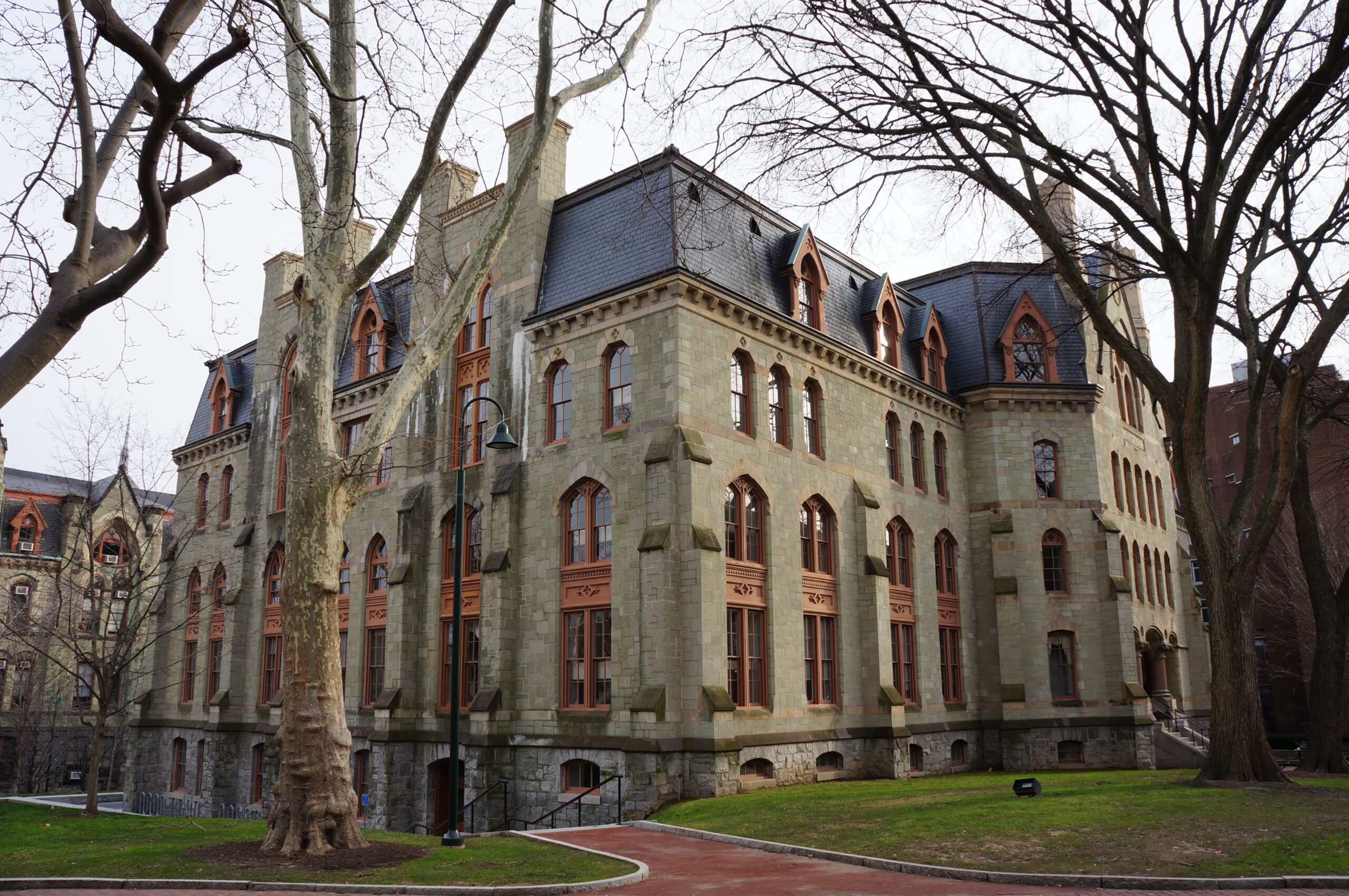
University of Pennsylvania at a glance: University of Pennsylvania is a private Ivy League research university in Philadelphia, Pennsylvania, founded in 1740. It is best known for the Wharton School of business, a strongly pre-professional and career-focused culture, and elite programs in nursing, medicine, and the applied sciences. Families weighing Penn against peer schools can schedule a consultation to build a targeted college list.
Source: University of Pennsylvania (www.upenn.edu).
What Is University of Pennsylvania Known For?
The University of Pennsylvania, usually called Penn, is known for combining Ivy League prestige with an unusually pre-professional, career-focused culture. Founded in 1740 and located in Philadelphia, Penn is one of the oldest universities in the United States and a member of the Ivy League, and it consistently ranks among the top universities in the world. It is best known for the Wharton School, one of the most respected business schools anywhere, but its reputation also rests on strong programs in nursing, medicine, engineering, and the applied sciences. For many students, Penn’s appeal lies in pairing an elite education with a clear path toward a profession.
Penn is also known for its One University policy, which lets undergraduates take courses across all of its schools, including Wharton, the College of Arts and Sciences, Engineering, and Nursing. This flexibility supports the interdisciplinary, applied approach that defines a Penn education, and it allows students to combine, for example, business with the liberal arts or engineering with entrepreneurship. The university’s location in Philadelphia and its large medical and research enterprise give students access to internships, clinical experience, and research across fields. That blend of pre-professional focus, cross-school flexibility, and Ivy League resources is central to what Penn is known for.
Which Academic Programs Is Penn Best Known For?
The Wharton School. One of the most respected business schools in the world, and the first collegiate business school in the United States, known for finance, management, and entrepreneurship.
Nursing and the health sciences. Penn’s School of Nursing is consistently ranked among the very best in the country, and the university’s large medical center anchors strength across the health professions.
Medicine and biomedical research. The Perelman School of Medicine and Penn’s academic medical center make it a leader in clinical care and biomedical research.
Engineering and applied science. The School of Engineering and Applied Science is known for computer science, bioengineering, and close ties to entrepreneurship and business.
The One University model. Penn is known for letting undergraduates take courses and pursue combined degrees across all of its schools, blending business, the liberal arts, engineering, and nursing.
Economics and the social sciences. Strong programs in economics, political science, and the liberal arts in the College of Arts and Sciences complement the university’s professional schools.
| Category | What Penn Is Known For |
|---|---|
| Founded | 1740, one of the oldest universities in the United States |
| Signature school | The Wharton School, the first collegiate business school in the country |
| Academic strengths | Business and finance, nursing, medicine, engineering, and economics |
| Academic model | One University, allowing coursework across all schools |
| Setting | University City in Philadelphia, Pennsylvania |
| Campus culture | Pre-professional and social, with strong Greek life and athletics |
| Athletics | Ivy League competition and the historic Penn Relays |
What Is Penn Known For Beyond the Classroom?
Beyond the classroom, Penn is known for a lively campus in the University City section of Philadelphia and a strong tradition of school spirit. Its athletic programs compete in the Ivy League, and traditions like the annual Penn Relays, one of the oldest track and field events in the country, are part of campus life. The university is home to the nation’s first collegiate business school in Wharton and to a large academic medical center that anchors its strength in the health sciences. Penn’s alumni include leaders in finance, business, medicine, law, and public life, and its network is especially powerful in the worlds of business and entrepreneurship.
What Is Penn’s Campus Culture Like?
Penn is known for a culture that balances rigorous academics with a strong social scene, sometimes described as work hard, play hard. Undergraduate life includes an active Greek system, spirited athletics, and a wide range of pre-professional clubs in business, consulting, and finance, reflecting the career focus many students share. At the same time, the university’s interdisciplinary structure encourages students to explore across schools and to build unusual combinations of interests. Students often describe a collaborative but ambitious environment, shaped by the presence of Wharton and by a large, diverse student body in a major city, which gives Penn a distinctly energetic feel.
What Career Outcomes Is Penn Known For?
Penn is known for outcomes that reflect its pre-professional strengths. Graduates are heavily recruited into finance, consulting, and technology, and Wharton in particular is a leading feeder to investment banking, private equity, and management consulting. The university also produces large numbers of physicians, nurses, engineers, and entrepreneurs, supported by its medical center and its culture of applied learning. Many students continue to top graduate and professional programs, and Penn’s powerful alumni network, especially in business, opens doors across industries. For families weighing the return on an elite education, Penn’s combination of Ivy League prestige and a direct pipeline into competitive careers is a major part of its appeal.
What Type of Student Thrives at Penn?
Penn tends to fit students who have a clear sense of direction, are drawn to applying their education toward a profession, and want the flexibility to combine fields across schools. Because admission is holistic and highly selective, strong grades and scores are expected, but the university looks for students who show initiative, leadership, and a fit with its pre-professional, interdisciplinary culture. Applicants who thrive at Penn often pair academic excellence with real-world interests in business, health, technology, or public service, and can explain why Penn’s specific schools and One University model suit their goals better than a more traditional liberal arts environment.
If Penn’s strengths line up with your goals, the next step is turning interest into a plan. Our college admissions timeline, along with How to Get Into Penn’s Huntsman Program (International Studies and Business), How to Get Into Penn’s LSM Program (Vagelos Life Sciences and Management), and How to Get Into Penn’s MandT Program (Jerome Fisher), can help you map testing, activities, and essays around a Penn-level target.
How Does Penn Compare to Its Peers?
Penn is most often compared to the other Ivy League universities, as well as to schools like Duke and Northwestern that blend strong academics with a pre-professional bent. What distinguishes Penn is the Wharton School and its unusually career-focused, interdisciplinary culture, along with elite programs in nursing and the health sciences. Harvard and Yale are known for their broad prestige and professional-school influence, and Princeton for its undergraduate focus, while Penn is known for combining Ivy League standing with a direct path into business and the professions. For many applicants, the decision comes down to whether Penn’s applied, cross-school model fits their ambitions.
Related reading: As you weigh where Penn fits among your options, see our guide on how to build a college list and use the College List Builder to sort your targets into reach, match, and safety schools.
Frequently Asked Questions About Penn
Penn is best known for the Wharton School of business, a strongly pre-professional and career-focused culture, and elite programs in nursing, medicine, engineering, and the applied sciences, all within an Ivy League setting in Philadelphia.
No. The University of Pennsylvania, or Penn, is a private Ivy League university in Philadelphia, while Penn State is a large public university system based in State College. They are entirely separate institutions.
Wharton is one of the most respected business schools in the world and the first collegiate business school in the United States. It is especially known for finance, and it feeds careers in banking, private equity, consulting, and entrepreneurship.
Yes. Penn is among the most selective universities in the country, with a very low acceptance rate. Admission is holistic, so strong grades and scores are expected alongside leadership, initiative, and a clear fit with Penn’s pre-professional culture.
One University lets undergraduates take courses and pursue combined degrees across all of Penn’s schools, including Wharton, the College of Arts and Sciences, Engineering, and Nursing, supporting an interdisciplinary, applied education.
Yes. Between Wharton, its pre-professional clubs, and its powerful alumni network, Penn is one of the strongest universities for students targeting careers in finance, consulting, and business.
Yes. Penn graduates are heavily recruited in finance, consulting, technology, and the health professions, and the university’s alumni network, especially in business, opens doors across industries and to top graduate programs.
For many families it is. Penn meets full demonstrated financial need, so many students pay less than the sticker price, and its pre-professional strengths and alumni network support strong career outcomes and return on investment.
Sources: University of Pennsylvania, The Wharton School, Penn Nursing, Penn Engineering, NCES College Navigator, College Board BigFuture.
About Oriel Admissions
Oriel Admissions is a Princeton-based college admissions consulting firm advising families nationwide on elite university admissions strategy. Our strength is a deeply experienced team and a distinctive 360 approach that treats every part of the application – academics, testing, activities, essays, and interviews – as one connected strategy. To discuss your strategy, schedule a consultation.