What is Dartmouth’s acceptance rate for the Class of 2029?
Dartmouth admitted 1,702 of 28,230 applicants for the Class of 2029, an overall rate of 6.03% (Dartmouth News, March 2025). Within that, the Early Decision rate was 17.07% (606 admits from 3,550 applicants), and Regular Decision came in near 4.4%. The applicant pool grew roughly 32% over the past five years before settling at 28,230 this cycle, while admit numbers stayed nearly flat. The Class of 2030 cycle showed continued tightening, with overall admit rates trending toward 5.8%.
| Round | Applications | Admits | Acceptance Rate |
|---|---|---|---|
| Early Decision | 3,550 | 606 | 17.07% |
| Regular Decision (est.) | 24,680 | 1,096 | ~4.4% |
| Overall Class of 2029 | 28,230 | 1,702 | 6.03% |
For broader Ivy benchmarking, see our Ivy Day 2026 results recap and our most competitive colleges in America overview.
How did Dartmouth’s testing reinstatement change admissions strategy?
In February 2024, Dartmouth became the first Ivy League institution to formally reinstate the SAT/ACT requirement, with the Class of 2029 the first cohort to apply under the new policy. Internal research published by Dean Lee Coffin’s office concluded that test scores were a better predictor of academic success at Dartmouth than test-optional applications, particularly for students from under-resourced high schools where transcripts alone provided limited signal. Yale, Brown, Harvard, and MIT followed within months, and by the 2025-26 cycle, all eight Ivies plus Stanford, MIT, and Caltech were either test-required or test-recommended for first-year admission.
For Class of 2030 and 2031 applicants, this means scores are non-negotiable. The mid-50% SAT range for admitted students sits at roughly 1500-1560, with ACT composite scores typically 33-35. Strong applicants from competitive Northeastern public and private high schools should target the 75th percentile (1560+ SAT, 35 ACT) given the depth of the regional applicant pool. For testing strategy details, see which colleges now require the SAT or ACT, our SAT vs ACT decision guide for Ivy League applicants, and our junior year testing strategy.
What does Dartmouth actually look for in applicants?
Dartmouth’s holistic review centers on five elements: academic rigor (96% of admitted Class of 2029 students placed in the top 10% of their high school class), demonstrated intellectual depth, character, fit with Dartmouth’s distinctive undergraduate-focused culture, and contribution to a residential community of 4,500 undergraduates. Unlike Harvard or Penn, where graduate enrollment dwarfs the college, Dartmouth’s identity revolves around undergraduate teaching – small classes, a quarter system that enables off-campus terms, and a tight-knit campus in Hanover, New Hampshire.
Admitted Class of 2029 students included a projected 25%+ valedictorians or salutatorians, 16% first-generation college students, 15% international, 15% from rural backgrounds, and 21-22% Pell-eligible (a Dartmouth record). The applicant most likely to succeed at Dartmouth shows sustained academic intensity paired with genuine intellectual curiosity outside the classroom – independent reading projects, research, original creative work, or substantive community engagement that goes well beyond a leadership title.
What GPA and course rigor does Dartmouth expect?
Dartmouth’s Common Data Set does not publish a GPA cutoff, but in practice the admitted-student academic profile maps to a 3.95+ unweighted GPA at a competitive high school, with at least 8-10 AP, IB Higher Level, or post-AP courses by senior year. The transcript narrative matters more than the number: admissions readers expect upward trajectory, deliberate course selection that signals intellectual focus (e.g., a humanities applicant taking AP Latin and AP Art History rather than an extra AP science), and clear evidence the student took the most rigorous program available to them – what the NACAC State of College Admission report ranks as the single most important academic factor in selective admissions.
For Northeastern applicants from feeder schools (Phillips Exeter, Andover, Deerfield, Lawrenceville, Pingry, Horace Mann, Trinity), the bar effectively rises – the comparison set is the strongest students from those schools, not the national applicant pool. For more on academic positioning, see our Ivy League Academic Index calculator.
What test scores does Dartmouth require?
Dartmouth requires either the SAT or ACT for all first-year applicants beginning with the Class of 2029. The mid-50% scoring range for admitted students sits at approximately 1500-1560 on the SAT (770-790 EBRW, 760-790 Math) and 33-35 on the ACT composite. AP exam scores are not required but strongly recommended for academic subjects relevant to the applicant’s intended concentration; 5s in 4-6 AP exams substantially strengthen the academic file.
| Test | 25th Percentile | 75th Percentile | Recommended Target |
|---|---|---|---|
| SAT Composite | 1500 | 1560 | 1530+ |
| SAT EBRW | 740 | 780 | 760+ |
| SAT Math | 760 | 790 | 780+ |
| ACT Composite | 33 | 35 | 34+ |
How does Dartmouth Early Decision work, and is it worth applying?
Dartmouth’s Early Decision is binding: applicants who are admitted must withdraw all other applications and enroll. The November 1 deadline produces results in mid-December. For the Class of 2029, ED admitted 17.07% of applicants and filled roughly 36% of the entering class – a meaningful statistical advantage compared to Regular Decision’s ~4.4% rate, but one that comes with real constraints.
Apply ED to Dartmouth only if (1) Dartmouth is unambiguously the top choice and the applicant has visited or done substantial virtual engagement, (2) the academic file (GPA, rigor, scores) is finalized at a competitive level by November 1, and (3) the family has run Dartmouth’s Net Price Calculator and is comfortable with the financial aid estimate, since ED admits cannot compare aid offers. Applicants whose senior year transcripts will materially strengthen the file or whose test scores will improve in winter testing should generally apply Regular Decision instead. For broader ED strategy, see our Early Decision strategy guide.
What does Dartmouth cost, and what financial aid is available?
For 2025-26, Dartmouth’s tuition is $69,207 and the total cost of attendance (tuition, room, board, and fees) is $91,935, a 4.75% increase over the prior year. Dartmouth meets 100% of demonstrated financial need without loans for all admitted students, including international applicants. Two thresholds matter most for affluent and middle-income families:
| Family Income | Tuition Contribution | Notes |
|---|---|---|
| Under $65,000 | $0 parent contribution | Full ride for admitted students; raised threshold via Britt bequest |
| Under $125,000 | $0 tuition | 27% of Class of 2029 qualified for free tuition |
| $125,000-$250,000 | Sliding scale | Need-based grants typical for this band |
| $250,000+ | Generally full pay | Aid possible with multiple students in college simultaneously |
For families earning $200,000+ with significant assets, Dartmouth typically expects full pay, though households with multiple students in college simultaneously, single-parent households, or families with high medical expenses sometimes qualify for need-based grants. Run the official Net Price Calculator on the Dartmouth Financial Aid site before applying ED to confirm the aid estimate works for the household.
Is Dartmouth need-blind for international applicants?
Yes. Beginning with the Class of 2026, Dartmouth became need-blind for international applicants – the sixth U.S. institution to offer this policy, alongside Harvard, Yale, MIT, Princeton, and Amherst. The change was funded by a $40 million anonymous gift announced in June 2022. International students now apply on identical terms to domestic applicants: ability to pay does not factor into admission decisions, and admitted international students receive the same need-based aid package as their domestic peers. This is a meaningful shift for international applicants from East Asia, South Asia, and Europe who historically faced reduced odds at need-aware peers.
How Should Applicants Approach Dartmouth Supplemental Essays?
Dartmouth’s supplemental essays carry significant weight in admissions decisions because they differentiate among academically qualified applicants. Strategy varies meaningfully by prompt, word limit, and the specific qualities Dartmouth looks for. For complete prompts, strategic approach for each prompt, common rejection patterns, and the timeline applicants should follow, see our deep-dive guide: Dartmouth Supplemental Essays Strategy.
What kind of extracurricular profile does Dartmouth admit?
Dartmouth values depth over breadth. The strongest admitted profiles concentrate sustained, substantive engagement in 2-3 areas rather than a long list of memberships. Concrete examples from recent admitted students: a published research paper with a faculty mentor; a varsity sport at the recruited or All-State level; founding and scaling a community nonprofit with measurable impact; sustained creative output (a portfolio, a published collection, a performance record); or competitive recognition at the national or international level (Intel/Regeneron STS, USAMO, national debate, RSI, IMO).
For applicants from competitive Northeastern high schools, “club president” is table stakes – it signals nothing distinctive in a pool where 25%+ of admits are valedictorians or salutatorians. The differentiating factor is what the applicant produced or built outside the institutional structures of the high school. For more on extracurricular positioning, see our summer planning guide for rising juniors and our analysis of why valedictorians get rejected from Ivies.
How does Dartmouth compare to other Ivies for similar applicants?
For students choosing among Ivy League options, Dartmouth’s distinctive value proposition is its undergraduate-first identity, the quarter system, and the residential intensity of Hanover. Compared to Harvard, Yale, and Princeton (Big Three), Dartmouth has a marginally higher acceptance rate but a similar academic profile among admitted students. Compared to Brown’s Open Curriculum, Dartmouth offers more structured distribution requirements and a more traditional residential college culture. Compared to Cornell, Dartmouth admits a smaller class with no formal applicant routing into specialty undergraduate colleges (e.g., Cornell’s CALS or ILR).
For deeper school-specific guidance, see our complete guides: Harvard, Yale, Princeton, Brown, Cornell, Columbia, Penn, and MIT.
How does Dartmouth’s D-Plan quarter system shape the admissions case?
Dartmouth runs on a four-quarter calendar (the “D-Plan”) rather than the traditional two-semester structure. Students attend three of four quarters per year and select which quarter to take off, with sophomore summer required on campus. This structure unlocks foreign study terms, off-campus research, internships during traditional academic terms, and a more flexible academic timeline than peer institutions. Roughly two-thirds of Dartmouth students study abroad at some point, and the off-campus internship and research programs draw applicants who specifically want non-summer professional or research experience.
For applicants writing the supplement, demonstrating awareness of the D-Plan goes beyond merely naming it. The strongest essays articulate which quarter the applicant would take off and why, what off-campus program (Foreign Study Program, Language Study Abroad, exchange) aligns with their academic goals, or how they’d use sophomore summer. This level of specific engagement signals genuine fit and distinguishes the application from generic “Why Dartmouth” copy.
Does legacy or recruited athlete status matter at Dartmouth?
Legacy preference at Dartmouth – applicants whose parents earned a Dartmouth degree – remained part of admissions review through the Class of 2029, though the institution has signaled growing skepticism about the practice in recent public statements. Approximately 8-10% of admitted classes historically include legacy applicants. Recruited athletes account for roughly 12-15% of the entering class, with coaches signaling support to admissions during the pre-read process for applicants meeting the Ivy League Academic Index threshold. Both pathways operate inside the regular review process and do not guarantee admission, but they represent meaningful signals to the admissions committee.
For non-legacy, non-recruited applicants from competitive Northeastern high schools, the practical implication is that 20-25% of the admitted class enters with a structural advantage, and the remaining 75-80% of seats are allocated through the conventional academic and extracurricular review. This shapes realistic expectations: a strong but unhooked applicant from Phillips Exeter or Trinity competes against a pool that has been pre-narrowed by these institutional preferences.
What is Dartmouth’s transfer admissions process?
Dartmouth admits a small transfer cohort each year, typically fewer than 30 students, drawn from a pool of roughly 600-700 applicants. The transfer admit rate hovers around 4-5%. Transfer applicants must have completed at least one year of full-time college coursework at an accredited institution and submit college transcripts, original high school records, and SAT or ACT scores under the testing requirement. Strong transfer candidates typically have a 3.8+ college GPA in rigorous coursework, a clear academic reason for the transfer (a major Dartmouth offers that their current institution does not, or a research opportunity unique to Dartmouth), and evidence of meaningful engagement at their current college.
For applicants considering a gap year before applying, Dartmouth allows admitted students to defer enrollment for one year for structured purposes (work, service, research, language immersion). The university does not require a specific structured gap-year program but reviews each request individually.
What is the Dartmouth application timeline for Class of 2030 and 2031 applicants?
For students applying in the 2025-26 cycle (Class of 2030) or the 2026-27 cycle (Class of 2031), the operational timeline is identical. Early Decision applications are due November 1, with decisions released in mid-December. Regular Decision applications are due January 3, with decisions released on Ivy Day in late March. The financial aid CSS Profile and FAFSA must be submitted by mid-November for ED applicants and by early February for RD applicants.
| Milestone | Early Decision | Regular Decision |
|---|---|---|
| Application deadline | November 1 | January 3 |
| Financial aid forms due | November 15 | February 1 |
| Decision release | Mid-December | Late March (Ivy Day) |
| Reply deadline | N/A (binding) | May 1 |
For Class of 2030 applicants currently in junior year, the testing window is critical: most competitive applicants take the SAT in March, May, or June of junior year and complete subject AP exams in May. Students aiming for ED should plan to have testing finalized by August so the file is complete by November 1. For Class of 2031 applicants currently in sophomore year, the priority is course selection for junior year (taking the most rigorous available program) and identifying the 2-3 extracurricular areas where sustained depth is achievable.
Frequently Asked Questions About Dartmouth Admissions
Dartmouth sits in the small town of Hanover, in New Hampshire’s Upper Valley along the Connecticut River near the Vermont border, on a classic green-centered New England campus. Its rural setting amid forests and mountains is a defining feature, supporting a strong outdoor culture and tight-knit community. The location is more remote than most Ivies, appealing to students who want an immersive small-town college experience surrounded by nature.
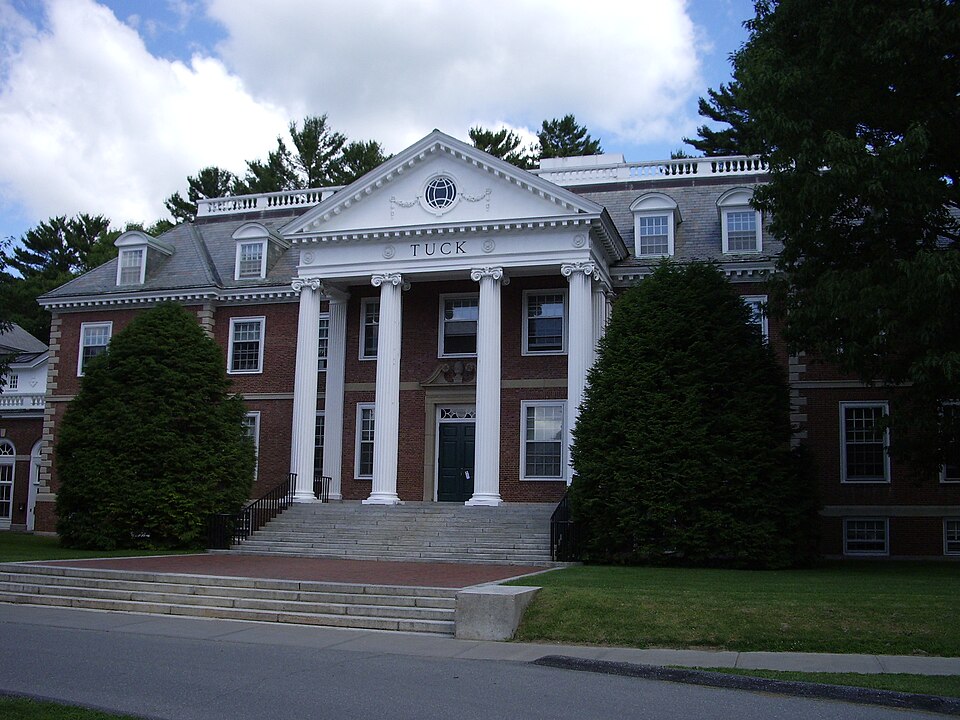
Dartmouth is an Ivy League institution known for its intense focus on undergraduate teaching, strength in the liberal arts, and respected graduate schools in business (Tuck), engineering (Thayer), and medicine. It is also famous for an outdoorsy culture, strong alumni loyalty, and school spirit. Among the Ivies it stands out for prioritizing undergraduates and for a close, residential community shaped by its small size and rural setting.
Yes; Dartmouth is a member of the Ivy League, the athletic conference of eight historic Northeastern universities that also includes Harvard, Yale, Princeton, Columbia, Penn, Brown, and Cornell. The smallest of the eight, it is consistently ranked among the top national universities and is highly selective. Dartmouth’s Ivy status and elite academic standing are well established, distinguished by its unusual emphasis on undergraduate education within the group.
Yes; Dartmouth considers an applicant’s highest section scores across multiple test dates, forming the best composite, which rewards strategic retakes. The college accepts both the SAT and ACT and has updated its testing requirements in recent cycles, including reinstating testing, so applicants should confirm the current policy on its admissions site. Where scores are submitted, the superscoring practice benefits applicants who take a test more than once.
No; like all Ivy League schools, Dartmouth awards only need-based financial aid and gives no merit, athletic, or academic scholarships. It meets full demonstrated need with a generous, often loan-reduced program. A high-achieving applicant cannot earn a tuition discount for grades, but families with financial need frequently find Dartmouth far more affordable than the published sticker price, since aid is tied entirely to financial circumstances rather than achievement.
Dartmouth is the smallest Ivy, enrolling roughly 4,400 undergraduates with a comparatively modest graduate and professional population. The intimate size supports small classes, close faculty relationships, and a strong undergraduate focus uncommon among research universities. Students who want Ivy League resources combined with the personal attention and tight-knit residential community more typical of a small college often find Dartmouth’s scale a major draw.
Dartmouth retains the name ‘College’ for historic reasons, reflecting its 18th-century founding and enduring emphasis on undergraduate education, even though it also houses graduate and professional schools and functions as a research university. The name signals its identity and priorities rather than a lack of advanced programs. This focus on undergraduates, captured in keeping the ‘College’ title, is central to how Dartmouth sees itself among its Ivy peers.
Dartmouth is known for a spirited, close-knit, and outdoorsy culture, with strong traditions, an active Greek system, and an enthusiastic relationship with its rural surroundings through hiking, skiing, and the Dartmouth Outing Club. The small size and remote setting foster tight community bonds and school pride. Students who enjoy the outdoors, tradition, and a tight residential community often thrive, while those seeking a big-city campus may find it isolated.
About Oriel Admissions
Oriel Admissions is a Princeton-based college admissions consulting firm advising families nationwide on elite university admissions strategy. Our team includes former admissions officers from Harvard, Princeton, and Columbia. To discuss your family’s admissions strategy, schedule a consultation.