What is Wellesley College’s overall acceptance rate, and how selective is it?
Wellesley College admitted 13.7% of applicants for the Class of 2029, selecting from just over 8,700 applications received (Wellesley official “Welcome, Class of 2029!” announcement, March 25, 2025). The admitted Class of 2029 hails from 47 states plus the District of Columbia, reflecting Wellesley’s national recruitment strength despite the smaller pool that women’s-college applicants represent relative to coeducational peers.
The strategic implication for affluent families is that Wellesley sits firmly in the same selectivity tier as the top East Coast LACs (Williams 8.5%, Amherst 7.4%, Swarthmore 7.4%, Pomona estimated 7-7.2% for the Class of 2029). Wellesley’s slightly higher acceptance rate (13.7%) reflects the smaller applicant pool that women’s colleges receive rather than meaningfully lower selectivity in the admissions evaluation. The applicants Wellesley evaluates compete head-to-head with applicants to Williams, Amherst, and the Ivies in academic profile and intellectual seriousness. For a head-to-head comparison of the top East Coast LACs, see our Williams vs. Amherst vs. Swarthmore guide.
What is Wellesley’s Early Decision strategy, and how does it shape admissions?
Wellesley offers binding Early Decision I (November deadline) and Early Decision II (January deadline). The Class of 2029 ED-specific acceptance rate has not been formally published by Wellesley (per institutional admissions reports). For historical context, Wellesley’s Class of 2028 ED acceptance rate was 30.23%, more than double the overall rate, consistent with the meaningful ED advantage observed across peer LACs.
The strategic implication is that Wellesley’s ED program offers a substantial statistical advantage over Regular Decision, and Wellesley fills a meaningful share of its incoming class through ED I and ED II combined. The choice to apply ED to Wellesley should be driven by genuine first-choice fit with Wellesley’s distinctive women’s-college culture rather than perceived statistical advantage. Wellesley’s admissions readers are skilled at identifying strategic ED applications without authentic engagement with the college’s specific institutional identity. For broader analysis of ED versus RD strategy, see our ED vs. RD Advantage Calculator.
What does the Class of 2029 student profile look like?
| Metric | Wellesley Class of 2029 |
|---|---|
| Total applications | ~8,700 |
| Overall acceptance rate | 13.7% |
| Geographic representation | 47 states plus District of Columbia |
| Class of 2028 ED acceptance rate (historical) | 30.23% |
| Total undergraduate enrollment | ~2,300 students |
| Setting | Suburban (Wellesley, Massachusetts; 12 miles west of Boston) |
| Institutional identity | Women’s college (transgender-inclusive admissions policy) |
| Cross-registration partners | MIT, Olin, Babson, Brandeis |
| Exchange program | Twelve College Exchange Program |
| 2025-26 cost of attendance | ~$100,541 (one of first elite colleges to cross $100K) |
| Financial aid policy | Need-blind for U.S. applicants; meets 100% of demonstrated need without loans |
What is Wellesley’s institutional identity as a women’s college, and what does that mean for applicants?
Wellesley is a women’s college, founded in 1870, and the institutional identity remains central to the contemporary undergraduate experience. The college’s mission statement, curriculum, and campus culture are explicitly oriented toward the education and leadership development of women. Wellesley alumnae include Hillary Rodham Clinton, Madeleine Albright, Diane Sawyer, Soong Mei-ling, and many other prominent women in government, journalism, business, science, and the arts. The institutional emphasis on women’s leadership is genuine and consequential for what the undergraduate experience produces.
Wellesley’s admissions policy on gender identity is transgender-inclusive: the college admits applicants who live and identify as women, including transgender women and non-binary applicants who were assigned female at birth. The policy was formalized in 2015 and is publicly stated by the college. For most applicants, the women’s-college identity is the central consideration: families considering Wellesley should evaluate whether the applicant genuinely thrives in environments that center women’s voices and leadership. Applicants who view a women’s college as merely an alternative to coeducational peers without engaging with the institutional identity often signal poor fit.
The trade-off is real. Students drawn to traditional coeducational social life often prefer Williams, Amherst, or the Ivies. Students drawn to women’s-led intellectual community, leadership development, and the distinctive Wellesley alumnae network find the institutional identity transformative. The choice is not whether women’s colleges are “better” or “worse” than coeducational peers; it is whether the women’s college experience matches what the applicant wants from undergraduate education.
How do Wellesley’s cross-registration and exchange programs expand the academic experience?
Wellesley students benefit from substantial cross-registration with neighboring institutions, including MIT, Olin College of Engineering, Babson College, and Brandeis University. The cross-registration with MIT is particularly consequential: Wellesley students can take MIT courses, including MIT engineering and computer science, alongside their Wellesley liberal arts curriculum. The arrangement effectively gives Wellesley students access to one of the world’s premier STEM institutions while remaining enrolled at Wellesley. Olin College adds engineering depth, Babson adds business and entrepreneurship, and Brandeis adds research-university breadth.
Wellesley also participates in the Twelve College Exchange Program, which allows students to spend a semester or full year at peer institutions including Amherst, Bowdoin, Connecticut College, Dartmouth, Mount Holyoke, Smith, Trinity, Vassar, Wesleyan, and Williams. The combination of MIT cross-registration plus Twelve College Exchange means Wellesley students access a remarkably broad academic ecosystem despite the small home college size of approximately 2,300 undergraduates.
The strategic implication for applicants is that the Wellesley experience is not constrained by the college’s small size. Strong applicants articulate specific cross-registration interests in their supplemental essays: a Wellesley applicant interested in computer science and women’s studies can frame the educational pathway as Wellesley liberal arts + MIT CS, which no other women’s college and few coeducational LACs can match. Generic applications that ignore the cross-registration ecosystem signal poor fit.
What is Wellesley, Massachusetts like as a setting?
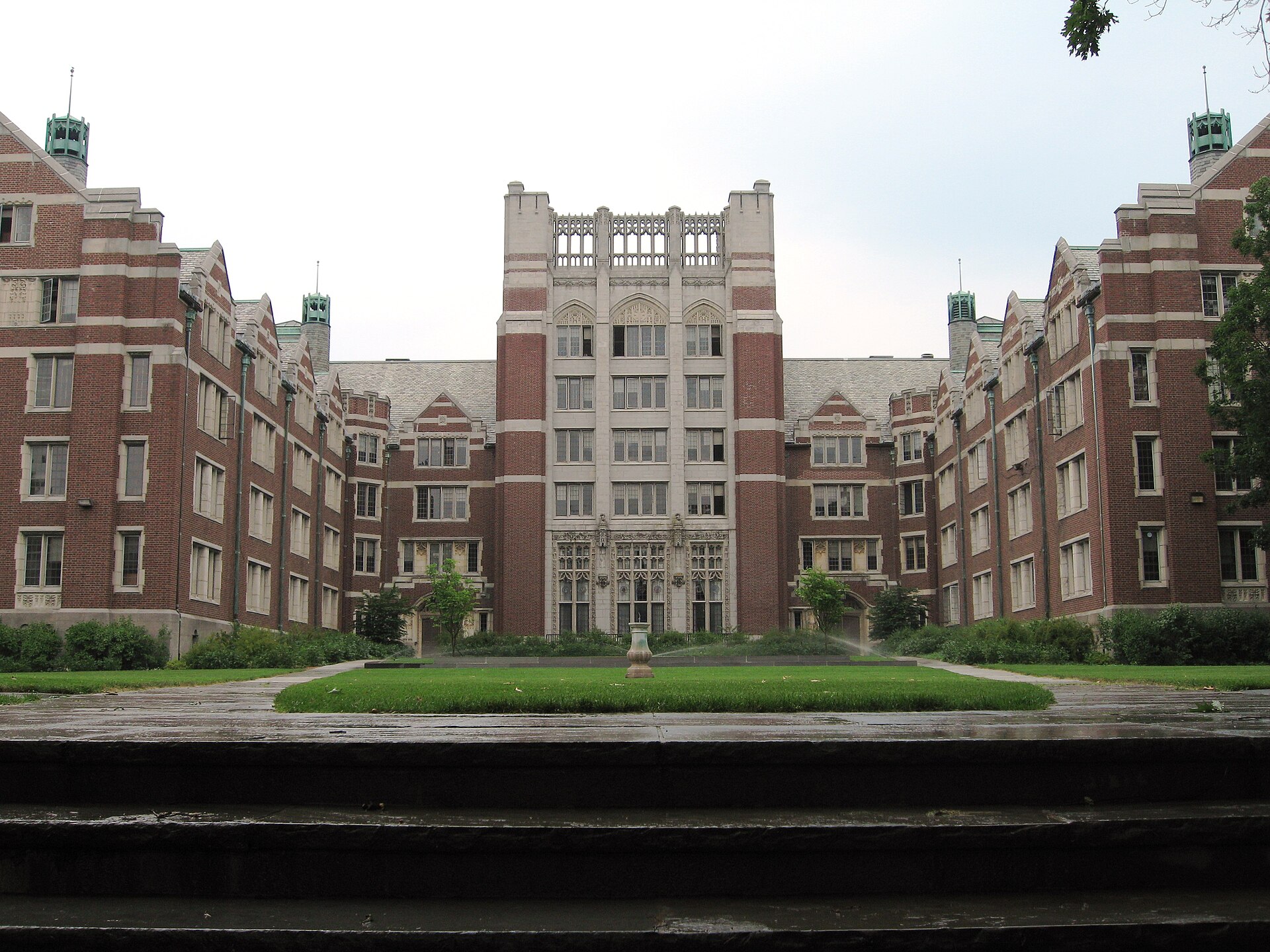
Wellesley College occupies a 500-acre campus in the affluent Boston suburb of Wellesley, Massachusetts, located 12 miles west of downtown Boston. The campus has traditional collegiate Gothic architecture, contained quads, Lake Waban (a meaningful campus feature for outdoor activities and the iconic college aesthetic), and a strong residential character. Wellesley itself is one of the wealthiest towns in Massachusetts, with median household incomes well above state and national averages. The town is suburban-collegiate: walkable village center with cafes and bookstores, but daily life centers on the Wellesley campus rather than on the town.
Boston is accessible by commuter rail (the Wellesley Square station serves the MBTA Framingham/Worcester line) and by the campus’s Wellesley-MIT and Wellesley-Cambridge shuttles, which run regularly during the academic year. The combination of suburban residential campus plus Boston access plus MIT cross-registration produces an experience that is genuinely distinctive: the contained intellectual community of a small LAC, the urban access of a Boston-area institution, and the STEM resources of MIT all in one. The contrast with Williams (rural Berkshires), Amherst (small New England town), and Smith (Northampton) is real: Wellesley offers proximity to a major American city that those peers cannot match.
What kind of applicant does Wellesley actually admit?
Wellesley admissions readers are looking for intellectual seriousness, leadership orientation, and authentic fit with the women’s-college identity. The college’s institutional ethos centers on women’s leadership development, and admissions readers screen for fit with that framing: applicants who present primarily through individual achievement metrics (rankings, awards, scores) without demonstrating leadership orientation, intellectual ambition, and authentic engagement with women’s-college culture often face deferral or denial.
The strongest Wellesley applications demonstrate three things. First, intellectual depth in at least one substantive area, demonstrated through coursework, independent reading, original work, or research. Second, leadership orientation and willingness to take initiative, demonstrated through sustained engagement with peers, community, or causes beyond resume-building. Third, genuine fit with Wellesley’s specific identity, demonstrated through specific knowledge of programs (the Davis Scholars program for non-traditional students, the Wellesley-MIT cross-registration, the Albright Institute for Global Affairs, the Madeleine Korbel Albright Institute fellowships), named faculty, or distinctive Wellesley features. Generic applications that emphasize standardized achievement without these three elements consistently underperform expectations.
Wellesley, like its East Coast LAC peers, weighs character and personal qualities heavily in the admissions calculus. The supplemental essays probe how applicants think, what they care about, how they would engage with a women’s-led intellectual community, and how they understand leadership. Applicants who treat the supplements as opportunities to demonstrate intellectual personality and authentic engagement with the women’s-college identity are the applicants who succeed.
How Should Applicants Approach Wellesley Supplemental Essays?
Wellesley’s supplemental essays carry significant weight in admissions decisions because they differentiate among academically qualified applicants. Strategy varies meaningfully by prompt, word limit, and the specific qualities Wellesley looks for. For complete prompts, strategic approach for each prompt, common rejection patterns, and the timeline applicants should follow, see our deep-dive guide: Wellesley Supplemental Essays Strategy.
How does Wellesley compare on cost and financial aid for high-income families?
Wellesley’s 2025-26 total cost of attendance is approximately $100,541, making Wellesley one of the first elite institutions to cross the $100,000 sticker-price threshold. The 2026-27 figures (tuition $72,570 + housing $12,020 + meals $11,186 + activity fee $360) suggest the trend continues. The headline cost is meaningfully higher than peer elite LACs (Williams, Amherst, Swarthmore, all in the $90,000-$97,000 range for 2025-26).
Wellesley’s institutional financial position supports substantial financial aid. The college is need-blind for U.S. applicants and meets 100% of demonstrated financial need without loans. For families across most income brackets, actual costs after aid are substantially lower than sticker price. Wellesley’s financial aid threshold for full grant aid (no expected family contribution toward tuition) currently extends to families with incomes up to approximately $100,000-$125,000 with typical assets, comparable to peer LACs. For broader analysis of how high-income families fare under elite financial aid policies, see our Harvard financial aid expansion guide.
What are Wellesley’s distinctive programs and post-graduation outcomes?
Wellesley offers several distinctive programs that differentiate it from peer LACs. The Madeleine Korbel Albright Institute for Global Affairs hosts a competitive fellowship program for students interested in international affairs, named after Wellesley alumna and former Secretary of State Madeleine Albright. The Davis Scholars Program admits non-traditional women students (typically over 24) into the regular Wellesley undergraduate experience. The Wellesley-MIT cross-registration produces a STEM pathway unavailable at any other women’s college, and the college’s substantial science infrastructure supports strong pre-med, pre-graduate-school, and research-focused outcomes.
Wellesley’s post-graduation outcomes are exceptional. The college’s medical school placement is among the strongest in the country relative to its size; its PhD placement rates rival those of the East Coast elite coed LACs; its placement into top law schools, finance, consulting, and tech industries is competitive with peer institutions. The Wellesley alumnae network is a meaningful career asset: with a 150-year history of educating women leaders, the alumnae community is deep, well-organized, and actively engaged with current students through mentorship, internship pipelines, and post-graduation hiring. The Wellesley brand carries weight particularly in government, journalism, philanthropy, and women-led organizations.
What is the right academic profile for a Wellesley applicant?
Wellesley’s admitted student profile is comparable to other top-5 LACs at the upper end of the academic profile. Successful applicants typically present unweighted GPAs in the 3.9-4.0 range with rigorous course loads (multiple AP, IB, or college-level courses, particularly in their area of intellectual focus). Standardized testing remains relevant: Wellesley returned to a test-required policy for the Class of 2029 admissions cycle after several test-optional years, and admitted students typically reported SAT scores in the 1480-1560 range or ACT scores of 33-35.
Beyond grades and scores, the academic profile that succeeds at Wellesley demonstrates intellectual depth, leadership orientation, and authentic engagement with women’s-led intellectual community. Successful applicants often show evidence of independent reading beyond the curriculum, sustained leadership engagement (not just title-collecting), and authentic engagement with a specific intellectual question or social cause over multiple years. The “spike plus leadership” profile that succeeds at Wellesley is meaningfully different from the “spike plus collaborative” profile that succeeds at Pomona or the “spike plus character” profile that succeeds at Wake Forest. Wellesley is selecting for women who will lead intellectually, professionally, and civically, and the application should demonstrate that orientation. For testing benchmarks at the most selective LAC tier, see our Academic Index Calculator.
What are the most common mistakes applicants make when applying to Wellesley?
Five mistakes recur. First, treating Wellesley as a “safety” relative to coeducational top-10 LACs. Wellesley’s 13.7% Class of 2029 acceptance rate is competitive, and Wellesley applicants compete head-to-head with Williams, Amherst, and Ivy applicants in academic profile. Second, ignoring the women’s-college identity in supplemental essays. Wellesley is explicitly selecting for applicants who genuinely thrive in women’s-led intellectual community.
Third, generic “why Wellesley” essays that could apply to any small liberal arts college. Strong essays demonstrate specific engagement with Wellesley’s institutional identity, the MIT cross-registration ecosystem, named programs (Davis Scholars, Albright Institute), and the alumnae network. Fourth, applying ED based on perceived statistical advantage rather than authentic fit. Wellesley’s ED program works because applications demonstrate real commitment to the women’s-college culture, not because of statistical strategy. Fifth, presenting through individual achievement metrics without demonstrating leadership orientation. Wellesley’s institutional ethos centers on women’s leadership development, and applications without leadership narratives miss what Wellesley is selecting for.
For deeper analysis of why high-stat applicants get rejected from elite institutions, see why valedictorians get rejected from Ivies. For broader application strategy, see our college application spike strategy guide. Wellesley’s pattern of admissions reader recognition is broadly consistent with NACAC-documented norms across the most selective LACs (see the National Association for College Admission Counseling State of College Admission report).
Best for which student?
Best for intellectually serious applicants who genuinely thrive in women’s-led intellectual communities and want a small residential college experience: Wellesley. Best for applicants who want LAC academic intensity plus access to MIT-level STEM resources: Wellesley’s MIT cross-registration is unmatched among women’s colleges and rivals coed LACs in STEM access. Best for applicants seeking a leadership-development-focused undergraduate experience with a deep alumnae network in government, journalism, business, and the arts: Wellesley. Best for applicants seeking the highest statistical Early Decision advantage at a top-5 LAC: Wellesley ED at approximately 30% acceptance (Class of 2028 historical anchor) versus 13.7% overall.
Frequently Asked Questions About Getting Into Wellesley College
Wellesley is in the town of Wellesley, Massachusetts, about 12 miles west of Boston. Its 500-acre campus, set around Lake Waban with woodlands and a botanic garden, is considered one of the most beautiful in the country. The location offers a quiet suburban setting with quick access to Boston by car or commuter rail, giving students both a self-contained campus and the resources of a major city nearby.
Wellesley is a women’s college for undergraduates, so it admits women rather than men to its undergraduate program. Men can take some courses through cross-registration arrangements with partner institutions, but they cannot enroll as degree-seeking undergraduates. The single-sex undergraduate model is central to Wellesley’s mission of educating women for leadership, and it does not admit men to its main undergraduate degree program.
Yes; Wellesley’s admission policy is open to anyone who consistently identifies and lives as a woman, which includes transgender women, along with certain nonbinary applicants depending on how they relate to the college’s mission. The approach reflects Wellesley’s commitment to educating women while remaining inclusive of gender diversity. Anyone unsure about eligibility should review Wellesley’s current published gender policy directly, since the specifics matter for individual situations.
Wellesley is known as one of the most prestigious women’s colleges in the world, with exceptional strength across the liberal arts and sciences and a long record of producing women leaders, including alumnae Hillary Clinton and Madeleine Albright. It is celebrated for academic rigor, a beautiful campus, and strong outcomes in graduate study, public service, and business. Among elite colleges it stands out for combining liberal arts excellence with a women’s-leadership mission.
Wellesley is one of the historic Seven Sisters, the group of elite Northeastern women’s colleges founded as counterparts to the then all-male Ivy League, but it is not itself an Ivy League member, since the Ivy League is a specific athletic conference of eight universities. Wellesley’s prestige and selectivity rival many Ivies, and its Seven Sisters heritage is central to its identity, but the Ivy label does not apply to it.
Hard; Wellesley’s acceptance rate sits in the mid-to-high teens, making it highly selective though somewhat more accessible than the most competitive coed liberal arts colleges. Admitted students typically present strong grades and rigorous courses. Because Wellesley uses holistic review and values genuine fit with its women’s-leadership mission, essays and demonstrated interest carry real weight alongside academics in deciding among a deep pool of qualified applicants.
Wellesley has used a test-optional policy in recent cycles, letting applicants choose whether to submit SAT or ACT scores without penalty for withholding them, and for those who do submit, it considers the best section scores across test dates. Testing policies shift often among selective colleges, so confirm the current requirement on Wellesley’s admissions site, but submitting strong scores can still strengthen a file under a test-optional framework.
No; Wellesley awards only need-based financial aid and gives no merit, athletic, or academic scholarships. All aid follows demonstrated financial need, and Wellesley meets full need for admitted students with generous, often loan-reduced packages, reflecting a strong commitment to access. A high-achieving applicant cannot earn a discount for grades or scores, but families with financial need frequently find Wellesley far more affordable than its published sticker price.
About Oriel Admissions
Oriel Admissions is a Princeton-based college admissions consulting firm advising families nationwide on elite university admissions strategy. Our team brings deep expertise across every dimension of the application, and our distinctive 360 approach develops strategy, positioning, activities, essays, and interviews as one coherent whole. To discuss your family’s admissions strategy, schedule a consultation.