What Makes a College One of the Best Colleges for Psychology?
Psychology is taught almost everywhere, so the question is not whether a college offers the major but what kind of psychology education a student will get. Five things matter more than the name on the diploma when a family asks which colleges are best for a psychology major.
- Research access for undergraduates. Psychology is a laboratory science. The best departments run formal programs that place first- and second-year students in faculty labs, and they expect majors to present or publish before graduation.
- Breadth of faculty. UCLA lists 83 psychology faculty and Williams lists 16. A large department can cover clinical, cognitive, developmental, social, and biological psychology; a small one trades that breadth for a thesis with a professor who knows the student.
- An honors thesis path. Graduate programs in psychology, especially PhD programs in clinical psychology, treat an independent empirical thesis as the strongest signal an undergraduate can send.
- Degree structure. Some schools offer a BS with heavier statistics and neuroscience requirements alongside the BA; others offer separate majors such as cognitive science or biopsychology. The right structure depends on whether the student is heading toward clinical practice, research, medicine, or industry.
- Whether the major is open. At a few large public universities psychology is a capped or capacity-constrained major that students must apply into after enrolling. That changes the risk of choosing the school.
Which Colleges Are Best for Psychology?
The table below groups the best colleges for psychology by how selective the university is overall, because a student’s list needs schools at every level of selectivity. Every entry names a specific feature of the undergraduate program taken from the department’s own pages, and each school name links to our analysis of its acceptance rate.
| University | Psychology degree options | What stands out for undergraduates | Selectivity |
|---|---|---|---|
| Stanford University | BA, 70 units, six advising pathways | Honors is a full senior year of supervised research ending in a thesis; the alternative capstone is an applied course | Most selective |
| Harvard University | AB with three tracks: General; Cognitive Neuroscience and Evolutionary Psychology; Cognitive Science | Thesis is optional, but High and Highest Honors require one; non-thesis students need a 3.85 concentration GPA for plain Honors | Most selective |
| Yale University | BA or BS; the BS requires empirical senior research; optional Neuroscience Track | Every major writes a senior essay of at least 5,000 words; the department says most of its labs take undergraduates | Most selective |
| Princeton University | AB; statistics (PSY 251) required to declare | Every senior completes a year-long thesis and a 60-minute oral departmental exam, after a junior paper | Most selective |
| University of Pennsylvania | BA, 13 course units | Departmental Honors is a two-semester empirical project with a seminar and no formal GPA cutoff | Most selective |
| Columbia University | BA, 11 courses across three groups; separate Neuroscience and Behavior major | Honors is capped at 10 percent of the graduating class and requires a 3.6 major GPA and a thesis | Most selective |
| Duke University | AB (11 courses) or BS (16 courses) under the fall 2026 curriculum | Nine-week summer Vertical Integration Program with a $4,500 stipend; Graduation with Distinction requires a defended thesis | Most selective |
| Brown University | AB (12 credits) or ScB (17 credits with five extra science and math courses) | Honors is a faculty-directed research project applied for in the seventh semester | Most selective |
| Northwestern University | BA, 16 units including two quantitative courses | Yearlong empirical honors thesis at a 3.5 GPA; the department calls psychology one of the most popular majors on campus | Most selective |
| University of Chicago | BA, 12 courses, no application to declare | Earl R. Franklin Research Fellowship funds summer research for third-years heading into a senior honors thesis | Most selective |
| Vanderbilt University | BA, 30 credit hours, plus a second psychology department at Peabody College | All majors take a comprehensive exam in the final semester; honors requires a 3.3 GPA, a thesis, and an oral defense | Most selective |
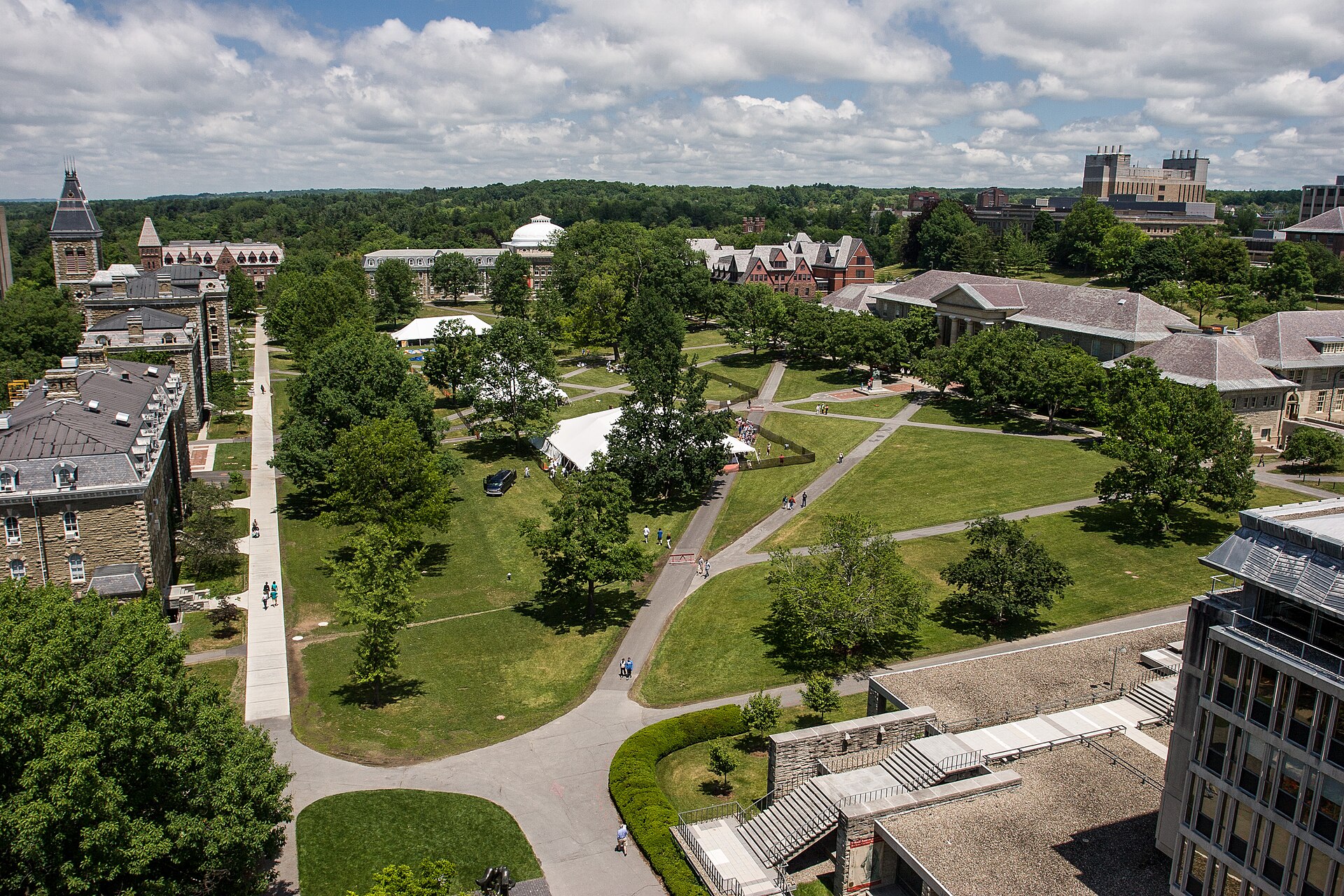
| Cornell University | BA; areas in cognition, development, social and personality, and neuroscience | Combined Honors Program requires a 3.7 GPA in psychology courses and a year-long independent project | Most selective |
| Washington University in St. Louis | Two majors: Psychological and Brain Sciences, and Cognitive Neuroscience | Senior honors is a full empirical investigation; the Stern Undergraduate Research Fund pays students’ research costs | Most selective |
| Pomona College | BA in Psychological Science | The department says it is the only one in the country that requires an empirical senior thesis of every graduate | Most selective |
| Williams College | BA, 9 courses ending in a 400-level senior seminar | 16 faculty; year-long empirical honors thesis approved by the full faculty | Most selective |
| Amherst College | BA, 9 courses including statistics and research methods | Almost half of all Amherst students take Psychology 100; thesis places are not guaranteed to every applicant | Most selective |
| Swarthmore College | Course major or Honors major; statistics required | Culminating experience by practicum, clinical placement, or thesis by application; honors work is graded by outside examiners | Most selective |
| UCLA | Psychology BA, Psychobiology BS, Cognitive Science BS | Over 4,000 undergraduates and 83 faculty; the major is entered by application after seven prep courses, guaranteed at a 2.9 prep GPA | Most selective |
| UC Berkeley | BA; declaration is admission-based after five prerequisites | Declaration is guaranteed with a 2.0 prerequisite GPA inside the eligibility window; URAP places undergraduates in faculty labs for credit | Highly selective |
| University of Michigan | Psychology BA plus a separate Biopsychology, Cognition, and Neuroscience major | UROP pairs more than 1,300 students with over 800 faculty; honors thesis at a 3.4 GPA | Highly selective |
| Emory University | BA (12 courses) or BS (16 courses) | Honors requires a 3.7 GPA and a thesis defended before three faculty | Highly selective |
| UNC Chapel Hill | Psychology BA, Psychology BS, Neuroscience BS | Over 3,000 majors and minors with about 60 core faculty; honors thesis at a 3.3 GPA; Gil Internship for credit | Highly selective |
| Carnegie Mellon University | Psychology BS or BA; Cognitive Science BS | Two required research methods courses; SPUR summer research program and the Meeting of the Minds presentation day | Highly selective |
| UT Austin | BA or BS sharing a 28-hour core; BS adds 25 hours of science, recommended for pre-health | PUMP pairs undergraduates with graduate mentors for a semester; honors is by application with limited spaces | Highly selective |
| University of Washington | BA or BS; capacity-constrained major | Application after three psychology courses and math with a 2.5 GPA; completing prerequisites does not guarantee admission | Selective |
| University of Wisconsin-Madison | BA or BS; declare with a C or better in introductory psychology | One of the largest majors in Letters and Science; year-long honors thesis at a 3.3 major GPA | Selective |
| University of Minnesota | BA (second language) or BS (18 outside credits and a lab capstone) | Honors thesis is a year-long mentored project read by two faculty | Less selective |
| University of Illinois Urbana-Champaign | BS in Liberal Arts and Sciences with ten concentrations | Concentrations include Behavioral Neuroscience and Clinical and Community; a bachelor’s thesis earns Departmental Distinction | Selective |
| Ohio State University | BA or BS | Two thesis tracks: Research Distinction at a 3.0 GPA and Honors Research Distinction at 3.4, each with a defense | Selective |
| Penn State | BA (with foreign language) or BS with four options including Neuroscience and Quantitative Skills | Research credit through PSYCH 294 and 494 and a senior thesis course; labs post openings on the department site | Selective |
| Indiana University Bloomington | BA in Psychology; BS in Psychology, Neuroscience, or Clinical Psychological Science | Honors thesis defended before a three-member committee at a 3.3 GPA | Less selective |
| Michigan State University | BA (counseling, education, law, business) or BS (research, healthcare, neuroscience) | Honors College students can complete a thesis capstone or a literature review | Less selective |
Which Highly Selective Universities Have the Strongest Psychology Programs?
The Ivy League and its peers differ less in prestige than in how much independent research they require. Princeton requires every psychology major to write a year-long senior thesis and sit a 60-minute oral exam. Yale requires a senior essay of at least 5,000 words from every major and offers a BS for students who complete empirical research, and the department states that most of its laboratories take undergraduates. Stanford’s honors program is a full senior year of supervised research. Harvard offers three tracks and makes the thesis optional, though the higher honors require one.
Columbia is the most explicitly competitive: departmental honors go to no more than 10 percent of the graduating class, with a 3.6 major GPA and a thesis required. Duke rewrote its curriculum for fall 2026 so that the BS requires 16 psychology courses against 11 for the AB, and it funds a nine-week summer Vertical Integration Program with a $4,500 stipend for majors. Brown’s ScB adds five science and math courses to the AB. Northwestern requires two quantitative courses inside its 16-unit major and describes psychology as one of the most popular majors on campus.
The University of Chicago admits students to the major without an application and funds summer research through the Earl R. Franklin Fellowship, with priority for students heading into a senior honors thesis. Vanderbilt is unusual in requiring a comprehensive exam of every psychology major in the final semester, and it has a second psychology department at Peabody College. Cornell’s honors program requires a 3.7 GPA in psychology courses. Washington University in St. Louis splits the field into two majors, Psychological and Brain Sciences and Cognitive Neuroscience, and pays undergraduate research costs through the Stern fund.
For a student aiming at a clinical psychology PhD, which is among the most selective graduate programs in any field, the schools that require or strongly reward a thesis produce the application a doctoral committee wants to see. For a student who wants flexibility, Harvard’s optional thesis and Chicago’s open declaration are advantages.
Which Public Universities Are Best for Psychology?
The large public universities have the biggest departments. UCLA reports more than 4,000 undergraduates across its Psychology BA, Psychobiology BS, and Cognitive Science BS, taught by 83 faculty. UNC Chapel Hill reports over 3,000 majors and minors with about 60 core faculty and offers a Neuroscience BS alongside the Psychology BA and BS. Michigan runs separate Psychology and Biopsychology, Cognition, and Neuroscience majors and places more than 1,300 students a year in faculty research through UROP, which is the model other universities copy.
Berkeley makes declaration admission-based after five prerequisite courses but guarantees it to students who meet a 2.0 prerequisite GPA inside the eligibility window, and its URAP program gives undergraduates course credit for lab work. UT Austin offers a BA and a BS that share a 28-hour core; the BS adds 25 hours of majors-level science and the department recommends it only for pre-health students. Its Psychology Undergraduate Mentoring Program pairs students with graduate mentors for a semester that ends in a poster.
Further down the selectivity scale, Wisconsin describes psychology as one of the largest majors in Letters and Science and lets students declare with a C or better in the introductory course. Illinois offers ten concentrations inside its BS, from Behavioral Neuroscience to Clinical and Community. Indiana offers a BS in Clinical Psychological Science, which is rare at the undergraduate level. Ohio State, Penn State, Minnesota, and Michigan State all offer both degrees and a thesis route. For a strong student who is not admitted to the top tier, these departments offer more faculty, more labs, and more courses than most private universities.
For most families the public flagships are the core of a list of the best colleges for psychology, with the caveat in the next section about majors that are not open. Our guides to the UCLA, UC Berkeley, and University of Michigan acceptance rates cover admission to the universities themselves.
Which Liberal Arts Colleges Are Best for Psychology Majors?
Liberal arts colleges cannot match a flagship’s 80 faculty, but they offer something the flagships cannot: a thesis for everyone. Pomona’s Department of Psychological Science says it is the only department in the country that requires an empirical thesis of every graduate, and it was the first to require a course on culture and ethnicity. Williams, with 16 faculty, ends its nine-course major in a 400-level senior seminar and awards honors for a year-long empirical thesis. Amherst reports that almost half of its students take Psychology 100, and it is candid that thesis places cannot be guaranteed to every applicant. Swarthmore’s honors majors are examined by outside faculty.
The trade-off is breadth. A student who wants a specialized area such as clinical neuroscience or industrial psychology will find more courses and more labs at a research university. A student who wants to run a study from start to finish with a faculty member who knows them will usually get there sooner at a liberal arts college. See our comparison of liberal arts colleges and research universities.
Is Psychology a Capped or Impacted Major Anywhere?
Yes, and families should know before the student enrolls. At the University of Washington, psychology is a capacity-constrained major. Students apply after completing three psychology courses and a math course with at least a 2.0 in each and a 2.5 cumulative GPA in the psychology courses, and the university states that completing the prerequisites does not guarantee admission.
At UCLA, students who enter as freshmen apply to the Psychology major after seven preparation courses. A preparation GPA of 2.9 or higher guarantees admission; students between 2.5 and 2.89 enter a competitive pool that the department says will likely not be admitted, and it advises them to identify an alternate major. Berkeley’s declaration is also admission-based, but it is guaranteed for students who meet the prerequisite GPA within the eligibility window.
At most private universities and at Wisconsin, Chicago, and the liberal arts colleges, the major is open to any student who completes the introductory course. The practical advice is simple: a student whose heart is set on psychology at a capped-major school needs a realistic plan for earning the prep GPA in the first two years, or an alternate major they would accept.
Should You Choose a BA or a BS in Psychology?
The BA and the BS in psychology lead to the same careers, and graduate programs admit both. The difference is the amount of mathematics, laboratory science, and neuroscience built into the degree. A BS usually requires calculus or additional statistics, biology or chemistry, and more laboratory courses. A BA leaves room for a second major, a language, or a minor. Students drawn to the biological side of psychology should also compare our guides to the best colleges for neuroscience and the best colleges for biology.
A student who wants a research PhD, medical school, or a quantitative career such as data science or user research should lean toward the BS or toward the most statistics-heavy version of the BA the school offers. A student heading toward counseling, social work, law, education, or business is well served by the BA plus a strong statistics sequence. Whatever the letters on the degree, the research methods and statistics courses should come early, because those are the courses that open the door to a faculty lab.
How Do You Judge a Psychology Program Beyond the Rankings?
Rankings of psychology programs almost always measure graduate research output, which says little about what a 19-year-old will experience. Four questions on a department website separate the best colleges for psychology from the rest.
- How do undergraduates get into labs? Look for a named program with an application cycle and a course number, not a sentence saying students are encouraged to contact faculty.
- Is there an honors track, and how many students complete it? Departments that are proud of their thesis program publish the titles of past theses or the number of students who graduated with honors.
- How large are the introductory and methods courses? Introductory psychology is one of the largest courses on most campuses. The methods and statistics sequence is where class size matters, because that is where students learn to run a study.
- Where do majors go afterward? Some departments publish outcomes for graduates, including PhD, PsyD, and medical school placements. Silence on this point is itself information.
What Do Admissions Officers Look for in a Psychology Applicant?
At most private universities and liberal arts colleges, psychology is housed in the college of arts and sciences and students are not admitted to the major itself, so declaring psychology does not change the odds of admission the way engineering or nursing can. What it does change is what the application needs to prove. Psychology is one of the most frequently declared intended majors, so a vague interest in understanding people reads as filler. Admissions readers look for evidence.
- Coursework. AP Psychology is useful but not decisive. AP Statistics, AP Biology, and calculus matter more, because they show the student understands that psychology is a quantitative science.
- Research exposure. A summer in a university lab, a science fair project with a behavioral hypothesis and real data, or a research course through a selective summer program all carry weight.
- Sustained work with people. Peer counseling, tutoring students with learning differences, camps for children with disabilities, or hospital volunteering that lasts two or three years shows commitment that a one-week program does not.
- Reading and writing. Students who can name the researchers and ideas that shaped their interest, and who can write about them specifically in a supplemental essay, stand out from students who cite a single popular book.
Oriel Admissions builds this profile over two to three years with students who start in 9th or 10th grade: a statistics course by junior year, one research experience with a finished product, and one long-running commitment to people, so that the application tells a single story by the fall of senior year. Our guide to intended major strategy explains how the choice of major interacts with admissions odds more broadly. For other fields, see our guide to the best colleges by major.
Does the College Matter for a Psychology Career?
Psychology was the fifth most popular bachelor’s degree in the United States in 2021-22, with 129,600 degrees, according to the National Center for Education Statistics, behind business, health professions, social sciences and history, and biological sciences, and just ahead of engineering. A degree this common does not open doors by itself.
The American Psychological Association reports that as of 2023, 53 percent of people with a bachelor’s degree in psychology had not gone on to a graduate degree, which means close to half had, and 31 percent were pursuing or had earned a graduate degree outside psychology, in fields such as law, business, education, and medicine. The most common occupations for bachelor’s-level graduates were management, social services, and administration.
That pattern is why the choice among the best colleges for psychology matters. For the half who go to graduate school, the undergraduate research record, the thesis, and the faculty letters decide where they get in, and those depend on the program. For the half who go straight to work, the statistics and research methods training is what employers in user research, people analytics, and marketing pay for, and the strongest programs require it rather than offer it.
Frequently Asked Questions About the Best Colleges for Psychology
There is no single answer, because the best colleges for psychology depend on what the student wants from the degree. Among private universities, Stanford, Harvard, Yale, Princeton, Columbia, and Duke have large departments with strong undergraduate research programs. Among public universities, UCLA, Berkeley, Michigan, UNC Chapel Hill, and UT Austin stand out for size and research access. Among liberal arts colleges, Pomona requires an empirical thesis of every graduate. The right choice depends on whether the student wants research, clinical practice, medicine, or industry.
At most private universities and liberal arts colleges, students are admitted to the college of arts and sciences and declare psychology later, so the major does not change admission odds. At a few large public universities the major is capped. The University of Washington calls psychology a capacity-constrained major, and UCLA admits students to the major by application after seven preparation courses, with admission guaranteed at a 2.9 preparation GPA.
Both lead to the same careers and graduate programs admit both. The BS usually adds calculus or more statistics, biology or chemistry, and laboratory courses, which helps a student heading to a research PhD, medical school, or a quantitative career. The BA leaves room for a second major or a language and suits students heading to counseling, law, education, or business.
Clinical psychology is a doctoral specialty, so the best undergraduate preparation is a program with a required or strongly supported honors thesis and clinical research labs. Indiana University offers a BS in Clinical Psychological Science, Illinois offers a Clinical and Community concentration, and Princeton, Pomona, Yale, and Columbia require or reward a senior thesis.
AP Statistics, AP Biology, and calculus matter more than AP Psychology, because psychology is a quantitative science and the first courses a major must pass are statistics and research methods. AP Psychology is useful for confirming interest but rarely counts toward the major at selective colleges.
It is the single most important factor for graduate admission. PhD programs in psychology expect applicants to have worked in a laboratory for a year or more and to have produced a thesis, poster, or publication. Programs such as Michigan UROP, Berkeley URAP, Duke Vertical Integration, and UT Austin PUMP exist to make that possible from the first or second year.
Pomona, Williams, Amherst, and Swarthmore all run small departments where a senior thesis is the norm. Pomona requires an empirical thesis of every graduate. Williams has 16 faculty for a nine-course major. Amherst reports that almost half of its students take the introductory course. Swarthmore examines its honors majors with outside faculty.
It matters through the research record rather than the name. Graduate committees read the thesis, the posters, and the faculty letters, so a student who runs a study at a public flagship or a liberal arts college is often better placed than a student who sat in large lectures at a more famous university. Oriel Admissions builds psychology lists around research access for this reason.
Sources: NCES Condition of Education: Undergraduate Degree Fields, NCES Digest of Education Statistics, Table 322.10, American Psychological Association: What can you do with a bachelor’s degree in psychology, UCLA Psychology: Major application and directions, University of Washington Admissions: Psychology, University of Michigan UROP, Duke Psychology and Neuroscience: Summer Vertical Integration Program, Pomona College Department of Psychological Science, NCES College Navigator
About Oriel Admissions
Oriel Admissions is a Princeton-based college admissions consulting firm advising families nationwide on elite university admissions strategy. Our team brings deep expertise across every dimension of the application, and our distinctive 360 approach develops strategy, positioning, activities, essays, and interviews as one coherent whole. To discuss your family’s admissions strategy, schedule a consultation.