University of Minnesota Acceptance Rate: Class of 2029 Data, the Upside Down Residency Split, and What It Means by College
By Rona Aydin
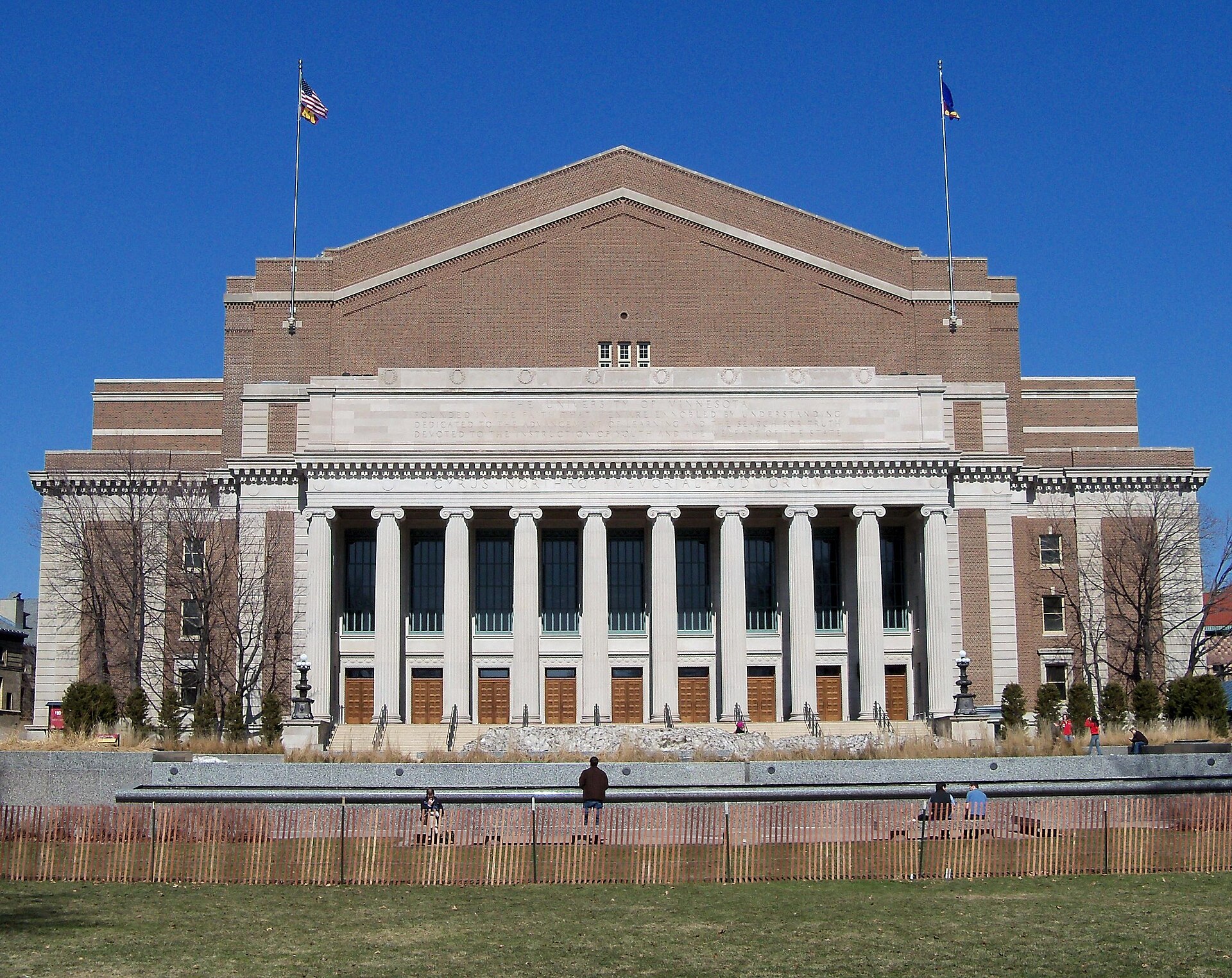
TL;DR: The University of Minnesota acceptance rate was 78.9% for the Class of 2029, with 34,648 students admitted from 43,929 applications to the Twin Cities campus and 7,180 enrolling (University of Minnesota Common Data Set 2025-2026). The residency math runs upside down: Minnesota residents were admitted at 63.6%, out-of-state applicants at 85.3%, and international applicants at 76.4%, which makes the Twin Cities the rare flagship where the nonresident door is the easier one. The headline number is high because yield is low, about 21%, and because the university has to make many offers to fill 7,000 seats. The rate that decides a competitive file is the college rate: the College of Science and Engineering, the Carlson School of Management, the College of Biological Sciences, and the School of Nursing admit at middle 50% profiles far above the campus line, and applicants are reviewed by the colleges they list in order. Test optional continues through the 2027 entering class, Early Action I closes November 1, and there is no Early Decision. For a family deciding which college to list first, schedule a consultation with Oriel Admissions.
What Is the University of Minnesota Acceptance Rate?
The University of Minnesota acceptance rate for the Class of 2029, the students who entered the Twin Cities campus in fall 2025, was 78.9%. The university received 43,929 first-year applications, admitted 34,648, and enrolled 7,180, according to its Common Data Set for 2025-2026. One year earlier the numbers were 41,496 applications, 33,091 admits, and 7,391 enrolled, a 79.7% rate. Two years earlier the rate was 77.5% on 34,699 applications. The UMN acceptance rate, as most applicants search for it, has therefore sat near 80% for three cycles while the applicant pool grew by more than 9,000, because the university expanded its offers almost as fast as its applications.
Yield, the share of admitted students who enrolled, was 20.7%, down from 22.3% the prior year and 25.1% the year before. That is the number that explains the acceptance rate. A flagship that enrolls one admitted student in five has to admit nearly five students for every seat, and as yield falls the admit rate has to rise to hold the class steady. Families should read the 78.9% as a statement about how many students turn Minnesota down, not about how easy the more selective colleges are to enter.
| Entering Class | Applied | Admitted | Acceptance Rate | Enrolled | Yield |
|---|---|---|---|---|---|
| Fall 2025 (Class of 2029) | 43,929 | 34,648 | 78.9% | 7,180 | 20.7% |
| Fall 2024 (Class of 2028) | 41,496 | 33,091 | 79.7% | 7,391 | 22.3% |
| Fall 2023 (Class of 2027) | 34,699 | 26,880 | 77.5% | 6,736 | 25.1% |
Source: University of Minnesota Common Data Sets 2025-2026, 2024-2025, and 2023-2024, Twin Cities campus, section C1. Rates calculated from the reported counts and rounded to one decimal place.
Class of 2030 figures, for students entering in fall 2026, will appear in the 2026-2027 Common Data Set, which the university’s Institutional Data and Research office has been publishing the following spring. The admitted-student profile the admissions office has already published for fall 2026 suggests the class will look similar in strength, with the selective colleges continuing to pull away from the campus average.
Why Is the Out-of-State Acceptance Rate Higher Than the In-State Rate at Minnesota?
Because the pools are different and the university needs the nonresident applicants more than they need it. For fall 2025, Minnesota admitted 6,222 of 9,780 in-state applicants (63.6%), 22,386 of 26,246 out-of-state domestic applicants (85.3%), and 6,040 of 7,903 international applicants (76.4%). At almost every other public flagship the resident rate is the higher one, often by twenty points or more. At Minnesota it is the lower one by more than twenty points.
Two things drive that. First, the in-state pool includes nearly every college-bound senior in Minnesota who wants to stay home, across the full range of academic records, while the out-of-state pool is self-selected: a student in Illinois or California who applies to a flagship two states away usually has the profile to be admitted somewhere comparable. Second, yield by residency is lopsided. Residents enrolled at a 76.4% yield in 2025, out-of-state admits at 8.7%, and international admits at 8.1%. Minnesota admitted 22,386 nonresidents to enroll 1,937 of them. The university cannot know in March which of those admits will choose Madison, Champaign, or their own flagship at in-state prices, so it admits generously and lets the deposits sort it out. Our analysis of the Wisconsin out-of-state acceptance rate shows the more typical pattern for comparison, and our out-of-state acceptance rates hub collects the peer figures.
| Residency (Fall 2025) | Applied | Admitted | Acceptance Rate | Enrolled | Yield |
|---|---|---|---|---|---|
| Minnesota residents | 9,780 | 6,222 | 63.6% | 4,752 | 76.4% |
| Out-of-state (domestic) | 26,246 | 22,386 | 85.3% | 1,937 | 8.7% |
| International | 7,903 | 6,040 | 76.4% | 491 | 8.1% |
| Total | 43,929 | 34,648 | 78.9% | 7,180 | 20.7% |
Source: University of Minnesota Common Data Set 2025-2026, section C1, residency detail. The enrolled class was 66.2% Minnesota residents, 27.0% out-of-state, and 6.8% international.
The residency gap widened sharply in the 2025 cycle. In fall 2023 residents were admitted at 75.1% and nonresidents at 79.1%, a four point gap. In fall 2024 it was 75.5% against 83.6%, an eight point gap. In fall 2025 the resident rate fell twelve points to 63.6% while the nonresident rate rose to 85.3%, and the reported in-state applicant count fell from 14,395 to 9,780. Part of that shift may reflect how the university classified applicants from tuition reciprocity states, which include Wisconsin, North Dakota, and South Dakota, so families should treat the 2025 residency split as reported rather than as a settled trend. What is not in doubt is the direction: a Minnesota resident with an average record faces a tighter review at the Twin Cities campus than the headline rate suggests.
Which University of Minnesota Colleges Are Hardest to Get Into?
Minnesota admits first-year students to one of eight freshman-admitting colleges, not to the university as a whole, and the applicant lists the colleges in order of preference. The admissions office reviews the file for the first-choice college, then the second, and if neither admits the student it automatically considers the other freshman-admitting colleges that fit the record. That cascade is the single most applicant-friendly feature of Minnesota admissions: a miss at the Carlson School of Management or the College of Science and Engineering can still end in a Twin Cities admission through the College of Liberal Arts, with an internal transfer path later. It also means the 78.9% is a blended figure across colleges whose selectivity differs by a wide margin.
The admissions office publishes the middle 50% profile of admitted students by college. For fall 2026 admits, the campus-wide middle 50% was a 3.51 to 3.96 unweighted GPA, a 75th to 95th percentile class rank, a 27 to 33 ACT, and a 1350 to 1490 SAT. The College of Science and Engineering, which houses computer science and all engineering majors, admitted a middle 50% of 3.63 to 4.00 GPA and 1390 to 1510 SAT. The School of Nursing admitted at 3.80 to 4.00. The College of Design and the College of Education and Human Development sit well below the campus line. A student with a 3.5 GPA and a 1320 SAT is a comfortable admit to Liberal Arts and a below-median applicant to Science and Engineering, and listing the ambitious college first costs nothing because of the cascade.
| College (Fall 2026 admits, middle 50%) | Class Rank Percentile | Unweighted GPA | ACT | SAT |
|---|---|---|---|---|
| College of Science and Engineering | 83 to 98 | 3.63 to 4.00 | 29 to 34 | 1390 to 1510 |
| School of Nursing | 88 to 98 | 3.80 to 4.00 | 27 to 31 | 1340 to 1450 |
| College of Biological Sciences | 85 to 98 | 3.72 to 4.00 | 28 to 33 | 1360 to 1490 |
| Carlson School of Management | 82 to 96 | 3.67 to 3.97 | 28 to 32 | 1350 to 1470 |
| College of Food, Agricultural and Natural Resource Sciences | 70 to 94 | 3.39 to 3.91 | 26 to 32 | 1280 to 1460 |
| College of Liberal Arts | 67 to 92 | 3.37 to 3.88 | 26 to 32 | 1330 to 1470 |
| College of Design | 67 to 92 | 3.37 to 3.88 | 25 to 30 | 1260 to 1440 |
| College of Education and Human Development | 66 to 90 | 3.35 to 3.84 | 24 to 30 | 1240 to 1410 |
| All colleges | 75 to 95 | 3.51 to 3.96 | 27 to 33 | 1350 to 1490 |
Source: University of Minnesota Office of Admissions, Freshman Admissions Overview, middle 50 percentile of fall 2026 admitted freshmen. The university does not publish admit rates by college.
Two colleges deserve a specific note. The School of Nursing runs on its own calendar: applicants must apply by November 1 and receive decisions by December 15, and there is no second look. Computer science sits inside the College of Science and Engineering rather than in a separate school, so a student who is admitted to CSE has access to the major without a second gate, which is a real advantage over flagships that run direct-to-major admission for computer science. Our guides to the best colleges for engineering and the best colleges for computer science place CSE among its peers.
What GPA and Test Scores Do You Need for the University of Minnesota?
Minnesota is test optional through the 2027 entering class, and the admissions office states that students receive full consideration whether or not they submit a score. In practice most students do send one, and it is usually the ACT. For the Class of 2029, 33.6% of enrolled students submitted an ACT and 7.3% submitted an SAT. Among submitters, the middle 50% ACT was 26 to 32 with a median of 29, and the middle 50% SAT was 1310 to 1460 with a median of 1390. Those enrolled ranges sit a little below the admitted ranges in the college table above, which is what you would expect: the strongest admits are the ones most likely to enroll elsewhere.
| Measure (Enrolled Class of 2029) | 25th Percentile | Median | 75th Percentile |
|---|---|---|---|
| ACT Composite (33.6% submitted) | 26 | 29 | 32 |
| SAT Composite (7.3% submitted) | 1310 | 1390 | 1460 |
| SAT Evidence-Based Reading and Writing | 640 | 690 | 740 |
| SAT Math | 650 | 700 | 750 |
Source: University of Minnesota Common Data Set 2025-2026, section C9. Scores are for enrolled students who submitted them.
The Common Data Set does not report an average high school GPA for Minnesota, but it does report class rank for the 39.9% of the class whose schools rank. Of those students, 37.7% graduated in the top tenth of their class, 71.2% in the top quarter, and 96.8% in the top half. The practical threshold is the college one. A student below a 3.4 unweighted GPA is at the bottom of the admitted range for every college on campus, and a student below 3.6 should not list Science and Engineering, Biological Sciences, Nursing, or Carlson first without a strong test score to offset the transcript. Our analysis of whether test optional is really optional covers when a score helps at a public flagship that reads it.
Does the University of Minnesota Have Early Decision or Early Action?
Minnesota offers Early Action but not Early Decision, and its Early Action is nonrestrictive, so students may apply early to other schools at the same time. There are two early rounds and a regular round. Early Action I closes November 1 with decisions posted by January 31. Early Action II closes December 1 with decisions by February 28. The regular deadline is January 1 with decisions by March 31. In practice the university begins releasing decisions in September and continues weekly, so a strong Early Action I applicant may hear well before the January 31 promise. Applicants who are deferred from an early round are reviewed a second time and receive a final decision by March 31. The application fee is $55, the reply deadline is May 1, and the university allows admitted students to defer enrollment for up to one year.
| Round | Deadline | Decision By | Notes |
|---|---|---|---|
| School of Nursing | November 1 | December 15 | Required deadline for all first-year nursing applicants |
| Early Action I | November 1 | January 31 | Nonrestrictive; also the priority date for merit scholarship consideration |
| Early Action II | December 1 | February 28 | Nonrestrictive |
| Regular | January 1 | March 31 | Deferred early applicants also decided by March 31 |
| Waitlist update | N/A | Mid-June | Waitlisted applicants receive a status update by mid-June |
Source: University of Minnesota Office of Admissions, Admission Decision Timing; Common Data Set 2025-2026, section C21. May 1 is the enrollment reply deadline.
The early rounds matter more for money than for odds at Minnesota. Because the admit rate is high and there is no binding round, applying early does not meaningfully change whether a student is admitted; it changes whether the student is in the pool when the university’s merit awards are assigned, and it gets the decision back in time to compare offers. A student who wants a Minnesota scholarship should treat November 1 as the deadline. Our college admissions timeline places the Minnesota dates alongside the rest of a typical list, and our comparison of Early Action and Early Decision explains why a nonrestrictive Early Action is the cheapest lever in admissions.
What Are Your Chances on the University of Minnesota Waitlist?
Minnesota reports that it maintains a waitlist policy but does not publish how many students it offers a place, how many accept, or how many are admitted from the list, and it does not rank the list. The admissions office tells waitlisted applicants they will receive a status update by mid-June. Given a 20.7% yield and an admit pool of nearly 35,000, the waitlist functions as a fine-tuning tool for specific colleges rather than as a major source of the class, and the students most likely to move are those waitlisted at Science and Engineering, Carlson, or Nursing who would be admitted elsewhere on campus.
A waitlisted student should accept the place, confirm whether the university will take an update, and send a short note on new grades or achievements if it will. Our guide to writing a letter of continued interest covers the format. The more useful move at Minnesota is often to ask whether a different freshman-admitting college is open; the cascade sometimes produces an admission to a second-choice college while the first choice sits on the waitlist.
How Does the University of Minnesota Acceptance Rate Compare to Other Big Ten Schools?
Minnesota is the most accessible of the large Big Ten flagships at the university level. It admits more than four times the share Michigan does, about thirty points more than Ohio State after Columbus tightened to 49%, and it sits above Wisconsin, Illinois, and Purdue and close to Indiana. That ranking inverts once residency is considered. Wisconsin, Illinois, and Michigan all admit nonresidents at sharply lower rates than residents, while Minnesota admits nonresidents at a higher rate. For an out-of-state student, Minnesota is the easiest door in the conference by a wide margin. For a Minnesota resident, the 63.6% rate is far closer to the Ohio State and Purdue range than to the 85% the headline implies.
Where Minnesota competes at the top of the conference is inside the College of Science and Engineering, whose admitted profile (3.63 to 4.00 GPA, 1390 to 1510 SAT) is comparable to the engineering colleges at Purdue and Illinois. A student choosing among Big Ten engineering programs should compare college to college, and our analyses of the Purdue acceptance rate, the UIUC out-of-state acceptance rate, the Ohio State acceptance rate, and the Indiana University acceptance rate give the peer numbers. Our top 25 admissions statistics covers the national picture.
What Does the University of Minnesota Acceptance Rate Mean for Your Strategy?
Three things follow from the data. First, classify Minnesota by college and by residency, not by the 78.9%. For an out-of-state student with a 3.6 GPA applying to Liberal Arts, Minnesota is a likely school and a sensible anchor for a list of Big Ten flagships. For a Minnesota resident with the same record, it is a target. For any student listing Science and Engineering, Nursing, Biological Sciences, or Carlson first, the relevant profile is the college table above, and the campus rate is irrelevant.
Second, use the cascade deliberately. List the ambitious college first and an honest second choice, because the second choice is a real review and not a formality, and because an admission to Liberal Arts with a plan to transfer internally into Carlson or CSE is a legitimate path the university supports. Do not list a college you would not attend just to improve the odds; the cascade will find it anyway, and the offer will be to that college.
Third, apply by November 1 and send a score if it sits at or above the college median. Test optional is real at Minnesota, but a 30 ACT or a 1400 SAT strengthens a file for the selective colleges and for merit consideration, and the Early Action I deadline is the scholarship deadline in practice. Out-of-state families should also price the offer before they celebrate it: nonresident tuition at the Twin Cities campus is competitive for a flagship, and reciprocity for Wisconsin and Dakota residents brings it close to in-state, but merit awards are what make the difference for everyone else. Our guide to whether an out-of-state flagship is worth it frames that decision.
Frequently Asked Questions
78.9 percent. The University of Minnesota admitted 34,648 students from 43,929 first-year applications to the Twin Cities campus for fall 2025 and enrolled 7,180, per its 2025-2026 Common Data Set. The prior year the rate was 79.7 percent, and the year before that it was 77.5 percent.
Yes. For fall 2025, out-of-state domestic applicants were admitted at 85.3 percent, international applicants at 76.4 percent, and Minnesota residents at 63.6 percent. Minnesota is one of the few public flagships where nonresidents are admitted at a higher rate than residents, largely because the out-of-state pool is self-selected and nonresident yield is under 9 percent.
Because yield is low. Only 20.7 percent of admitted students enrolled for fall 2025, so the university has to admit nearly five students for every seat in a class of about 7,200. The campus rate also blends eight freshman-admitting colleges, several of which, including Science and Engineering, Nursing, Biological Sciences, and Carlson, admit at profiles well above the campus average.
Yes. Submitting an ACT or SAT score is not required for the 2025, 2026, and 2027 entering terms, and the admissions office states that all students receive full consideration with or without a score. Most students still submit one: 33.6 percent of the fall 2025 enrolled class sent an ACT, with a middle 50 percent of 26 to 32, and 7.3 percent sent an SAT, with a middle 50 percent of 1310 to 1460.
The middle 50 percent unweighted GPA of admitted students for fall 2026 was 3.51 to 3.96 across all colleges. The College of Science and Engineering admitted at 3.63 to 4.00, the School of Nursing at 3.80 to 4.00, and the College of Liberal Arts at 3.37 to 3.88. Of enrolled students whose schools reported rank, 71.2 percent were in the top quarter of their class.
No. Minnesota offers nonrestrictive Early Action only. Early Action I closes November 1 with decisions by January 31, Early Action II closes December 1 with decisions by February 28, and the regular deadline is January 1 with decisions by March 31. School of Nursing applicants must apply by November 1 and hear by December 15.
By admitted profile, the College of Science and Engineering and the School of Nursing. For fall 2026, CSE admitted a middle 50 percent of 3.63 to 4.00 GPA, 29 to 34 ACT, and 1390 to 1510 SAT, and Nursing admitted at 3.80 to 4.00 GPA. The College of Biological Sciences and the Carlson School of Management follow closely. The university does not publish admit rates by college.
It depends on residency and college. For an out-of-state student with a solid record applying to the College of Liberal Arts, Minnesota is a likely school. For a Minnesota resident, the 63.6 percent in-state rate makes it a target rather than a safety. For any student listing Science and Engineering, Nursing, Biological Sciences, or Carlson first, the college profile governs and the campus rate does not apply.
Sources: University of Minnesota Common Data Set 2025-2026, Twin Cities, University of Minnesota Common Data Set 2024-2025, Twin Cities, University of Minnesota Institutional Data and Research, Common Data Set archive, University of Minnesota Office of Admissions, Freshman Admissions Overview, University of Minnesota Office of Admissions, Admission Decision Timing, NCES College Navigator.
About Oriel Admissions
Oriel Admissions is a Princeton-based college admissions consulting firm advising families nationwide on elite university admissions strategy. Our team pairs deep admissions expertise with a distinctive 360 approach spanning academic planning, extracurricular strategy, essays and application execution. To discuss your strategy, schedule a consultation.